
- Procedures & Tests
- Symptoms A-Z
- Symptom Checker
- Kidney Diet
- First Aid
- Anatomy Atlas
- Ask MedicalVideos
- Drug Guide
- Lab Values
- Vital Signs
- Muscles A–Z
- Clinical Signs
- Medical Abbreviations
- Medical Terminology
- Physical Examination
- Surgical Examination
- Ophthalmology
- Clinical Skills
- Orthopedics
- Surgery Videos
- Laparoscopy
- Pediatrics
- Funny Videos
- Cardiothoracic Surgery
- Nursing Videos
- Plastic Surgery
- Otorhinolaryngology
- Histology and Histopathology
- Neurosurgery
- Dermatology
- Pediatric Surgery
- Urology
- Dentistry
- Oncology and Cancers
- Anatomy Videos
- Health and Fitness
- Radiology
- Anaesthesia
- Physical Therapy
- Pharmacology
- Interventional Radiology
- Cardiology
- Endocrinology
- Gynecology
- Emergency Medicine
- Psychiatry and Psychology
- Childbirth Videos
- General Medical Videos
- Nephrology
- Physiology
- Diet and Food Health
- Diabetes Mellitus
- Neurology
- Women Health
- Osteoporosis
- Gastroenterology
- Pulmonology
- Hematology
- Rheumatology
- Toxicology
- Nuclear Medicine
- Infectious Diseases
- Vascular Disease
- Reproductive Health
- Burns and Wound Healing
- Kidney Zone Podcast
- Other

Dislocated Knee Replacing

Educational only: videos on MedicalVideos.com are for general information and are not medical advice. Always consult your own doctor about your health.
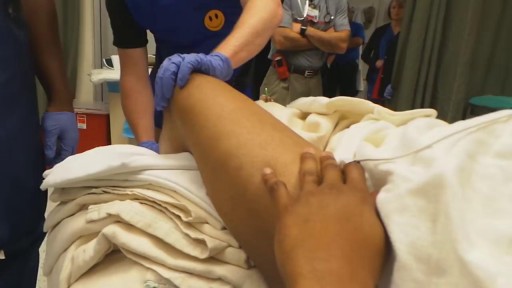
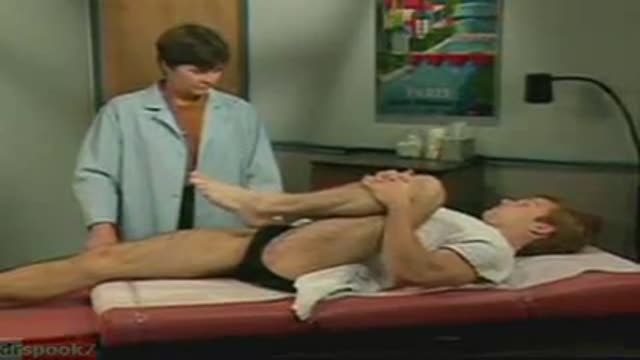
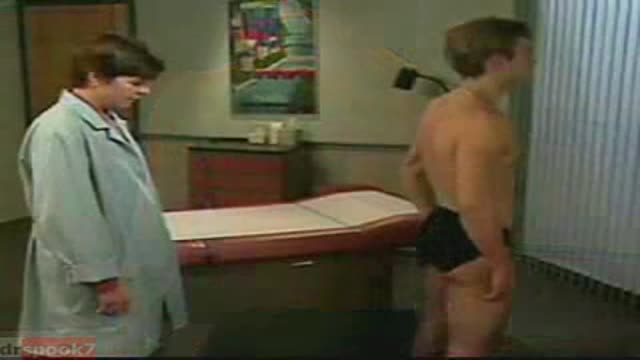
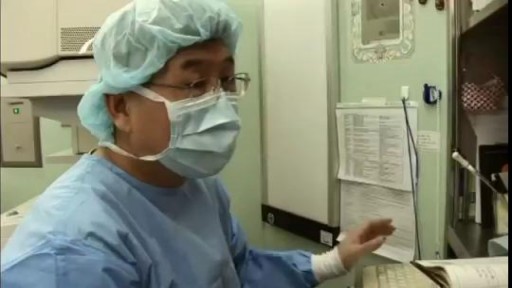
This video has been shortened for quicker review of the procedure. This patient's knee was dislocated during a motor vehicle accident. In this video the reduction of the dislocated knee is demonstrated.
This video in 30 seconds
Emergency department footage shows a dislocated knee being reduced after a car crash. The team checks sensation and pulses, the patient is sedated, the femoral condyles are stabilized while traction is applied to the tibia until the joint reduces, and pulses and an ankle-brachial index are checked afterwards.
Key points
- The clinician asks about the crash and checks sensation in the leg and foot
- Sedation is given before the reduction is attempted
- The femoral condyles are stabilized while tibial traction is applied
- The joint is shown reducing back into place
- Strong pulses and an ankle-brachial index measurement are confirmed afterwards
Chapters
- 0:00 — Crash history and initial assessment
- 1:00 — Sensation and pain checks
- 2:21 — Reduction maneuver described and performed
- 2:53 — Ankle-brachial index measurement
- 3:19 — Reduction technique recap
- 4:02 — Pulses confirmed after reduction
Video Transcript
Emergency-department teaching footage of a dislocated knee being put back after a car crash. The team sedates the patient, checks sensation and pulses, stabilizes the femoral condyles while applying traction to the tibia until the joint reduces, and then confirms strong pulses and an ankle-brachial index measurement.
Read the full transcript
So sir in your car accident, what did you hit with your knee? Was it a head-on accident or? Pardon? Hit the back of the van. Hit the back of the van, got it. It's still pretty faint. Yeah, that's pretty good. Unlikely. Before we get on that, you're biopasic? No, I'm not biopasic for sure. Alright, now you're getting good. That's for yourself. Okay, we got a little time then to do the procedure station. This is good. Any pain while pushing your pelvis, sir? No? Any pain when I move your hip in and out?
You feel me touching everywhere? What about over here? Up here? What about right here between your toes? Underneath? All that feels normal? Same on both sides? Okay. So how much pop-up are you gonna use? One per kilo. Okay. It's me staying just a little bit going in, okay? Yeah, get that red roll. You doing alright? I'm kind of sleeping. I appreciate you letting us do the video. Okay, he's there, huh? He's got pain medicines already on board, too. Are you awake still? Are you awake? No, I think he's out.
So what are you doing? Just pushing all the femoral condyles out here. Try to release it. Oh! He felt it. So did you see any fractures on the entry at all? I just looked pretty quickly at his knee. I didn't see any either. We're gonna get a CT of the knee. Okay. I'm stabilized the femur and traction on that little jaw. Let me take the ABI. I don't know if we can pull it in. Ankle brachial index coming up. So what was the ABI? So his Dorsal's PSN, his posterior tibial arteries were,
the signal dissipated around 115 millimeters of mercury, which his systolic was around 110. Okay. So you're, so your technique and reduction. So we just kind of stabilize the femoral condyles with this, this gentleman where he was more subluxated posteriorly. We stabilize the femoral condyles and pull tibial traction while pulling anteriorly and essentially came back reduced right into place. Okay. Yeah, it worked. It worked nice. It worked well with the procedure. Yep. Thank you for participating. I think the patient has allowed me to do this. Nice strong pulses.
Nice strong pulses. Great. And nothing needs to be done urgently. You'll be okay. That kind of thing. It was a pretty bad dissonance, but I think you're doing better now. What's that, sir? We all, we all work together. Yes, sir. But, but you did the, you did the reduction. It looks good right now, but I'm Dr. Kennedy. Appreciate it. You did a great job. But it looks good right now. I'm just telling you don't long time. If I don't need some work down there. Okay.
Transcript auto-generated from the video’s audio for accessibility and study. Educational content only — not medical advice.
Related reading
Medical Videos
Free medical and surgery videos for patients, students and professionals — trusted since 2007.
Founded by Dr. Mohamed Ibrahim, MD, PhD — physician-scientist.
Follow us on Facebook · Instagram
SORT BY-
Top Comments
-
Latest comments