
- Procedures & Tests
- Symptoms A-Z
- Symptom Checker
- Kidney Diet
- First Aid
- Anatomy Atlas
- Ask MedicalVideos
- Drug Guide
- Lab Values
- Vital Signs
- Muscles A–Z
- Clinical Signs
- Medical Abbreviations
- Medical Terminology
- Physical Examination
- Surgical Examination
- Ophthalmology
- Clinical Skills
- Orthopedics
- Surgery Videos
- Laparoscopy
- Pediatrics
- Medical Humor
- Cardiothoracic Surgery
- Nursing Videos
- Plastic Surgery
- Otorhinolaryngology
- Histology and Histopathology
- Neurosurgery
- Dermatology
- Pediatric Surgery
- Urology
- Dentistry
- Oncology and Cancers
- Anatomy Videos
- Health and Fitness
- Radiology
- Anaesthesia
- Physical Therapy
- Pharmacology
- Interventional Radiology
- Cardiology
- Endocrinology
- Gynecology
- Emergency Medicine
- Psychiatry and Psychology
- Childbirth Videos
- General Medical Videos
- Nephrology
- Physiology
- Diet and Food Health
- Diabetes Mellitus
- Neurology
- Women Health
- Osteoporosis
- Gastroenterology
- Pulmonology
- Hematology
- Rheumatology
- Toxicology
- Nuclear Medicine
- Infectious Diseases
- Vascular Disease
- Reproductive Health
- Burns and Wound Healing
- Kidney Zone Podcast
- Other







Nursing: Resident Communication
M_Nabil. Nursing: Resident Communication [video]. MedicalVideos.com; 2024 Jan 17 [cited 2026 Nov 24]. Available from: https://www.medicalvideos.com/watch/nursing-resident-communication_UksOOJyWRUNEHsHRckOw.html
M_Nabil (2024, January 17). Nursing: Resident Communication [Video]. MedicalVideos.com. https://www.medicalvideos.com/watch/nursing-resident-communication_UksOOJyWRUNEHsHRckOw.html
M_Nabil. “Nursing: Resident Communication.” MedicalVideos.com, 17 Jan. 2024, https://www.medicalvideos.com/watch/nursing-resident-communication_UksOOJyWRUNEHsHRckOw.html. Accessed 24 Nov. 2026.
@misc{medicalvideos2024_UksOOJyWRUNEHsHRckOw,
  author = {M_Nabil},
  title = {Nursing: Resident Communication},
  publisher = {MedicalVideos.com},
  year = {2024},
  month = {1},
  url = {https://www.medicalvideos.com/watch/nursing-resident-communication_UksOOJyWRUNEHsHRckOw.html},
  note = {Video},
  urldate = {2026-11-24}
}Vancouver (NLM) is the manuscript standard for medical journals. RIS imports into EndNote, Zotero and Mendeley.

Educational only: videos on MedicalVideos.com are for general information and are not medical advice. Always consult your own doctor about your health.
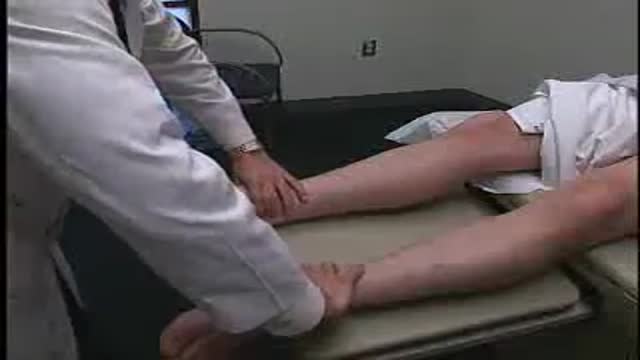
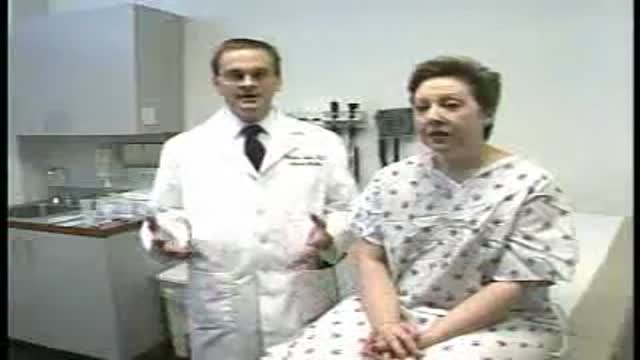
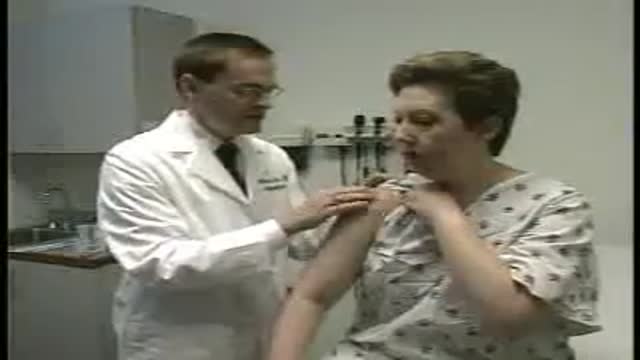
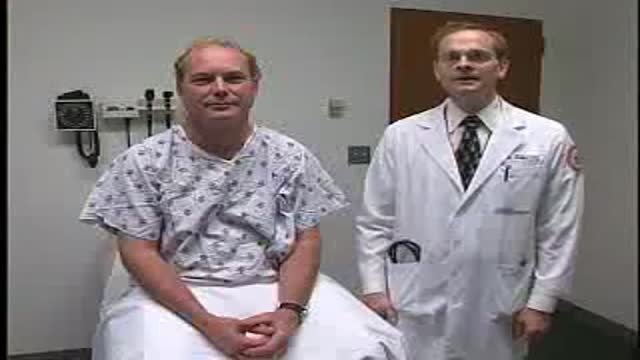
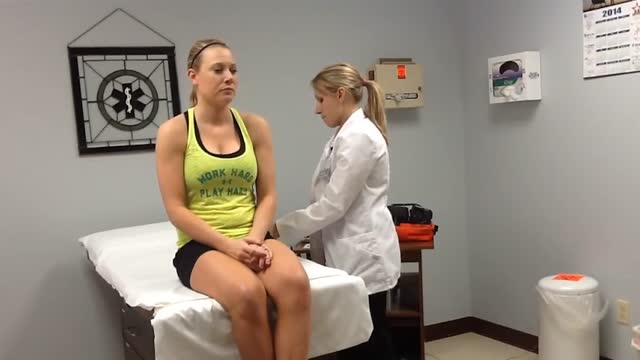
This video explains resident communication skills for nursing and healthcare staff. A nurse educator discusses how body language, tone of voice, and word choice shape what patients understand. The lecture covers basic communication guidelines, special needs, and common barriers to clear communication in care settings, with practical examples for everyday interactions with residents and patients.
Video Transcript
Nurse educator Marj Gostovac presents a lecture on communication for healthcare workers caring for residents. She explains that body language and tone of voice convey most of a message, then outlines basic guidelines such as gaining attention, speaking clearly, and allowing time to respond, before covering special needs and barriers to communication.
Read the full transcript
I'm Marj Gostovac and I'm a nurse and have been in the healthcare industry for over 25 years. I'm currently vice president of health services. Today I'm going to talk to you about one of the most important skills that you can learn to become an exceptional healthcare worker. To me this is the most important skill you can learn. So I hope you pay good attention. I'm going to give you a very few statistics to start with. We're talking about communication. 58, over half of our communication is done through our body language.
So do you lean forward and interested when you talk to someone? Or are you kind of aloof? Be aware that your body language communicates 58% of your message. 38% is your tone of voice. Are you angry? Does your face show it? Does your tone of voice show it? Are you happy? I hope you have a good day. Are you sincere in your tone of voice? That makes up 38% of your communication. The amazing thing to me is that only 7% is the words we use. So when you tell someone I never said that, remember 58% of what you communicated was
your body language, 38% was your tone of voice, and only 7% were those words. So remember that next time you feel you've been misinterpreted. What we're going to go through today is three basic things. We're going to go through some basic guidelines and communication. Then we're going to take a look at some special needs, and we're going to end up with barriers of communication. So let's get started with some basic guidelines. Your student handbook will list several. I'm just going to highlight a few for you. The very first thing you need to do every time is make sure you have the patient's
attention. Knock on the door before you enter. Make sure you have eye contact. Make sure they know who you are and what you're there to do. Next, speak clearly and courteously. Find out what that person likes to be called. Do they want to be called Mrs. Smith or do they want to be called Marge? Find out and use that name. And remember to always have good manners. Next you should allow the time for the patient to talk and respond. When you communicate something, pause a little bit.
Let them react. Let them know if they understood you accurately or not. Another important fact is never interrupt the patient. We're here to find out what that patient has to tell us. So if we start giving our opinions or fill in the end of the sentence for them, we're not going to be practicing good communication tips. Avoid showing that you're rushed or giving unhelpful responses. If you can't help them, let them know. But then give them an out. How can you help them? Perhaps you can get a family member involved or talk to the manager and get that manager
involved. But take your time and make sure that they can be reassured with your communication. Another basic guideline is to ask for clarification if you're unsure of what was said. You don't want to be on two separate topics. Perhaps the patient may not want a family member involved. But in your rush, you weren't real clear if they did or didn't. And so it would be a big mistake to get a family member involved if indeed they didn't want it. So make sure if you're not that you ask the resident and be sure that you're clear
on what they want. Do not be afraid to ask. Another one is to reflect on their feelings and thoughts by reverting the statement into a question. Oh, I feel so bad and you can say, you feel bad. Tell me a little bit more about that. That's going to open it up and they can tell you if I feel bad because I spilt my milk at breakfast or I feel bad because I didn't sleep all night or I feel bad because my daughter wasn't an accident. So if you reword that feeling into a question, it'll open up the topic.
And another basic guideline would be to show interest and concern. And again, if we bring our body language into this, how are you today, Mrs. Smith? And then you're busy writing. She's not going to think you're concerned at all versus, oh, how are you today, Mrs. Smith? Give her a time to respond and then show interest in what she has to say. This makes a tremendous difference. You show the interest. You show your care. And then after all, that is what we're here for. Now let's look at some special needs.
Remember your basic guidelines will apply to all communication, but there are some special needs that some residents may have. The first one we're going to look at is the hearing impaired. Again it's important to make sure you have that person's attention. Make sure they see you so that they know what communication is about to take place. There may be some devices that are available. We have hearing aids. The important thing to remember about those are that they're inserted properly, the battery is in fresh, and that it's working.
Be aware of outside noises like a radio because the hearing aid will amplify all noises. You may have a hearing amplifier, which is a simple device that makes your voice louder. So this may be available for you to use with a person with a hearing impairment. Or it can be as simple as a piece of paper and a pen. And you write a message for them to respond to. But it's another way to accommodate that hearing loss. Oftentimes people will have a good ear. Find out if they hear a little better in one ear and make sure that's communicated so
you can speak to that ear so there's a better chance that they hear you. Use short, simple sentences. If you ramble on and on they're going to get lost in where you're going. So keep your sentences short and simple. Again, your facial expressions, gestures, and body language can help reinforce what you're trying to communicate. Are you thirsty? Would you like something to drink? Simple body language. Help them out. Remember they can't hear. Also remember that sometimes people will be confused or appear confused and they're just not hearing you properly.
So that's an important fact to remember also. Now we're going to take a look at that amplifying device I told you about. Andrew, Andrew come here. I need to see my daughter. It's very important. Mrs. Smith, can we put this on so you can hear me better? I need to see my daughter. It's very important. Can you hear me okay? Oh, I hear you very well. Okay. What is it that you need to tell me? I need to see my daughter. It's very important. Okay. You know your daughter comes in every day after work at four o'clock.
Isn't it four? No, ma'am. It's only 12 o'clock. Oh, so she'll be here later. Yes, ma'am. And I'll be here until four o'clock and as soon as I see her I'll send her right in. Okay? Oh, do you promise? Yes. Oh, good. Because it's important I see her today. I understand, ma'am. Okay, I'll take this off now. Thank you. You're welcome. Oh, he's so nice. I'm glad he's here today. The next special need I want us to take a look at is the visually impaired. It's important again to address by the name they prefer to go by and you may touch
them lightly so that they know that you're there and you don't startle them. Remember, they can't see. So now we're going to count on their hearing for our communication. Identify yourself and explain what you're there to do. So they're not wondering, are they going to take my clothes off? Am I going to go for a walk? Do I have someone here to see me? You know, is my hair combed? So make sure you talk with them. Be very specific when giving directions. They don't have the luxury that we have of seeing what our room looks like, where the
bathroom is. So be very specific when you give them directions. And always remember to have that call light within reach. If they need help, you don't want them getting up and stumbling in or going into a dangerous area. You want them to have that call light so they can summon for help. We're going to take a look at this being demonstrated in meal service. So watch this next one. Mrs. Snick? Here's your lunch. Okay. If you need anything, let me know. Oh, oh dear. Oh, I made a mess already.
Oh, how do I get a hold of him? Talk about doing everything wrong. Andrew couldn't have done a worse job at presenting a meal trait. And he wasn't being mean. He was just trying to get his job done. Now let's take a look at Andrew applying these principles and see what a difference it can make to Mrs. Smith's enjoyment of her meal this time. Watch. Yes? Mrs. Smith? Yes. It's time for lunch. Okay. I have your tray right in front of you. Okay. Let me help you and show you where everything is, okay?
Okay. Okay. Right in front of you, you have your plate. Okay. At 12 o'clock, you have a baked potato. All right. At 3 o'clock, you have a chicken leg. Okay. At 9 o'clock, you have broccoli. Okay. At 1 o'clock, off the tray, you have some milk. Okay. At 11 o'clock, you have some strawberries. And on your right hand side, you have a spoon and a knife. On your left hand side, you have a fork. Okay. Okay. If you need anything, you just call me on the call button and I'll be right with you.
Okay. All right. You enjoy your lunch. Thank you. See what a difference taking that added time to explain and give detail to Mrs. Smith made in her meal. That certainly was a lot less time than it's going to take to get her a new meal tray and clean her up afterwards. So those are very, very important things for you to remember and to take the time to do every time. The next area of special needs we'll look at is called aphasia. People who have had a stroke commonly have aphasia.
This means either they don't understand what's being said to them or they have trouble expressing to us what they need to say to us. So there's some techniques that can help in working with a person with aphasia. Again, it's important. Get their eye contact. Be right in front of them so that they know that you're going to do a communication. Say the person's name. It's a comfort. We've been called by our name our whole life, so it's a comfort to hear our name. So say that person's name.
Use short sentences. Their brains aren't processed in the information like you and I can, so keep it very, very simple. Allow them time to understand what you've said and then allow them additional time to respond back in whatever manner they're capable of doing. Again, nonverbal cues can help. Would you like something to eat? Are you tired? So combine your nonverbal with your verbal very simple. That'll help tremendously. Sometimes they may have seen a therapist and they may have a communication board. Again, it's something visual to help with that verbal.
Communication boards can show letters that they can spell things out. It can show pictures of people who they might want to see. It can show some desires I want, T, I want, bread. So there's different communication boards that are available. Aphasia, the person with aphasia is another reason that we need to become experts not only in using our body to communicate to our residents, but also that we get to learn to read their body language. So if they get real antsy at a certain time, maybe they need to go to the bathroom.
Or maybe they've been sitting up too long and they need to rest. So it's important for us to learn to read nonverbal language, particularly with this type of population. Sometimes you get very frustrated and the resident gets very frustrated. And sometimes what you have to do is tell them, we're both frustrated. You can't figure out what they want. I'm going to give you a break and I'll come back later and maybe we can figure it out. So it gets to be a real detective job with them between you and the resident sometime.
The three most common needs that I've found in my experience with health care is that the person may be in pain. So it's a good question to ask. They may be hungry or they have to go to the bathroom. Oftentimes when we see a restlessness, those are the first three things we key into. And you might have success if you start with those three first. Now we're going to take a look at Andrew and Mrs. Smith. Mrs. Smith has aphasia and the only word she can express is duty.
It doesn't mean anything, but it's the only thing she can say. Andrew is making an assumption in this first scene. He thinks she's anxious and so of course what she needs when you're anxious is reassurance. And so he's going to do his best to make sure she's reassured. Let's see what that looks like. Duty duty duty duty duty duty duty duty duty duty. Mrs. Smith you need to calm down. Duty duty duty duty duty. Everything is okay. You had your medication, you had your breath this and you've been toileted twice.
Please Mrs. Smith calm down. I'll check on you in about an hour. Duty duty duty duty duty. Well Mrs. Smith was not reassured. Andrew feels pretty good because he thinks he did everything that he should have done. But we can see Mrs. Smith is not comforted. Now Andrew is going to go back and do a little bit more methodical, simple questions and see if he can find out what she needs by reading her body language. So let's see how that looks. Duty duty duty duty duty duty duty duty duty duty duty duty duty duty duty.
Are you in pain? Duty duty duty duty duty duty duty. Are you still hungry? Duty duty duty duty duty duty. You need to go to the bathroom. Duty duty duty duty duty. Okay, can I help you? Duty duty duty duty duty duty. Okay, let's stand up and I'll help you to the rest for a minute, okay? Duty duty duty duty. Now we can see from that that they're both doing the right thing. Mrs. Smith is going to get what she wants and Andrew has really indeed helped her this time.
The last special need we're going to look at is cultural differences. And I have a personal example to share from that. We had a lady in a place that I worked once who lived in China her entire life. And she came to the United States when she was in her 70s. Didn't know a word of English. We're trying to get this poor lady to eat. And we give her special foods and think if we go to special Chinese foods and if we serve it hot or if we give her finger foods.
And we are trying our best to try to get her to eat. And she just will not eat. Then one of the healthcare givers said, has anyone ever tried giving her chopsticks? So we put chopsticks on the plate and you wouldn't believe how she cleaned that tray. I swear she could eat soup with chopsticks. Just put it right in. She needed a utensil that she recognized to eat the food. So remember that when you're dealing with people from different cultures. The other area where culture might make a difference is with the language.
And you may be able to get an interpreter to help you. Or you may end up learning from the family some simple phrases that you can use to communicate. So you may be finding yourself becoming multicultural in your language also. So remember to be open and flexible in dealing with cultural differences. Now the last area we're going to address is barriers to communication. We're going to look at a few vignettes in this area. One thing you need to be concerned about is if the resident is anxious or worried about something.
That's going to interfere with their ability to participate in their healthcare. And we need to be sensitive to that. We're going to take a look at Andrew and Mrs. Smith again. And he needs to get her to therapy. Let's see how it goes when he's not sensitive to her concerns. Mrs. Smith. Yes. It's time for your therapy session. I can't go now. My daughter's just been in an accident. Mrs. Smith, I understand your concern regarding your daughter. I'm very worried. But you really need to go to therapy now.
I'm very worried. They just took her to the emergency room. Mrs. Smith, if you continue to refuse care, Medicare is not going to pay for your sessions. Well, I'm not refusing, but she's in the emergency room. Are you going to therapy? Well, not now. Well, then you're refusing care. Well, Andrew was very concerned about getting his schedule in place. But he really wasn't flexible with her. So now what he needs to do is key into what her issues are and see how he can arrange the day.
So she gets her therapy and her concern about her daughter's taken care of. So let's look how that is better handled in this next scene. Yes. Mrs. Smith. Yes. Are you ready for your therapy session? Oh, I can't go now. My daughter was just in an accident. Oh, really? What happened? She was in a car accident and I don't know. They just took her to the emergency room. And you're waiting for her to call? Yes, I need to be here when she calls. Well, how about we reschedule your therapy session for later this afternoon?
That would be better. You can check with me. Okay. About two o'clock. I'll come back and check with you. Okay. Would that be okay? Yeah, that would work out better. Okay. Fine. I'm sorry to hear about your daughter. Oh, thank you. Oh, that'll be good. I'm so worried. In that scenario, they both got what they needed. Mrs. Smith is going to find out about her daughter and she can still get her therapy so Andrew doesn't need to worry that that's going to be missed. Another common barrier is if we talk too much.
It's important for us to remember that our resident is most important at all times. And we can have opinions and we can share our day, but that's not what we go to work for. We're going to work for that resident to share with us their day and their needs. So be careful you don't talk too much. And I think Andrew can give us a good example of that. So let's take a look. Good morning, Mrs. Smith. Good morning. How are you today? Well, not so good. I didn't sleep very good last night.
I didn't get any sleep last night. Oh, I got so much on my mind. It's thinking might be my hip hurts a little bit. Yeah, but I don't get back hurts to me. You know, I really need to call my doctor and get it checked out. I'm not sure if I laid on it wrong or pulled it. They need help on the second floor. But it still hurts. Well, I hope you feel better. I feel a little better talking about it. I'll see you later. I'm going to go get a little sore.
Well, we certainly know a lot about Andrew, but I don't think we're quite sure what Mrs. Smith's greatest concern is. So let's look at that again. This time Andrew is going to hold off his personal opinions and experiences and key into Mrs. Smith. So let's see. Yes. Good morning, Mrs. Smith. Good morning. How are you today? Well, not so good. No, what's the matter? I didn't sleep good at all last night. How come? What's going on? Well, my hip is just aching. Your hip is bothering you?
Yes, it is. Okay. And which side is it? It's on this side, on my left side. On the left side? Yes, very aching. All right. How about I let the nurse know you need something for pain? Is that okay? I think that might help. It's just I'm so uncomfortable. And then I can lay you down as soon as she gives you something. Okay? Yeah, I think that'll help. I've been sitting a long time. Okay. I'll be right back, all right? Yes, thank you. Well, that'll help. This is just bothering me.
Well, doesn't that make a difference? Now we know what Mrs. Smith needed and who cares about Andrew. He can deal with that with his family or on break. A third barrier to communication can be outside noises and distractions. And you can be misinterpreted and then you can misinterpret the person is being confused. We're going to take a look at Andrew and Mrs. Smith again with the radio being on a little loud. And let's see how that communication gets all mixed up. Mrs. Smith? Yes? How's that pain that you were having?
Oh, I heard nothing about anything about a train today and I've had the radio on all day. No, no, no. I'm not talking about a train. I'm talking about the pain. My brain, my brain, yes. No. I have a little headache. No. You know, I think and I listen to so much that I think that does bother. No, no. Your left side. That brain is always active and it gives me a headache. Pain. Pain in your left side. Yes, I think all the time in my strain, my brain, I think, you know, and it's
given me a little bit of a headache. No. I'm not talking about your brain. I'm talking about pain. Yeah. No, no, no. You understand? Well, communication definitely took place in Mrs. Smith's shirt a lot of what she knew, but Andrew didn't get the information he needed. Now let's take a look at what a difference it can make by turning the radio down and eliminating some of those outside distractions. Let's look again. Yes. Yes? Yes. Hi. Can you turn it down for a second? Okay. How are you doing today?
Oh, I'm doing pretty good today. I just want to ask you a few questions about the pain you were having last night. Oh, okay. Okay, is it better? Oh, yes. I don't even know I have it anymore. I feel really good. Okay. And did the medicine upset your stomach at all? No, no. I took that and took plenty of water with that and had a good breakfast this morning and my pain feels good. And you slept better. Yes, yes. Went right back to sleep. It was good.
Well, good. Okay. Well, I'll turn this back up for you. Oh, okay. Is that loud enough? No, a little louder. Oh, that's good. That's good. Okay. Bye now. Okay, let's look at a few more barriers to communication. Another barrier is a passive response. You may want to know, perhaps it's a new person, you want to know how they're adjusting. And again, read their body language. Oh, all right. And that is really not what they're communicating if they go, oh, all right. Probably it's not all right. So pursue that a little bit.
Tell me more, Mrs. Smith. What is it you like about this place? Oh, everything's all right. Well, tell me what specifically you like. Well, the food's good. So you need to work with new people and help them to open up. And be aware that passive response can often be a barrier. It's covering up something. Maybe they're a little uncomfortable talking about. So work with that a little bit. Another thing that can be a barrier is changing the subject. You need to find out if they're ready for their bath.
And they want to eat their supper. So they'll change the subject. Are you ready for your bath? When is supper? I'm hungry. Well, I need to give you your bath now. You know, supper last night was cold and it was no good. So they keep changing the subject and be aware you need to go. You need to go into that supper with them. Tell me a little bit more about the supper so you can deal with their issue. And then maybe you can get into the bath.
But remember that that's another technique that can interfere with our communications. Another thing to be aware of is sensory overload. When there's a number of people living together, this can happen frequently. Maybe the TV's on. Maybe two of your coworkers are having a conversation. Another person may be distraught and is crying. And that other person may be trying to read. And with all of this different commotion coming at them may make them angry or may make them restless. So be aware of some other distractions that can cause barriers to communication.
I'm going to touch on one last area. And this works with people with dementia or people that are confused. And I think it's important to remember not to argue with them. If they claim mom's coming for supper or you don't say, my gosh, Mrs. Smith, you're 84 years old, don't you think your mom's dead? That's not going to help that person. That person is confused or mixed up and they're concerned because their mom's coming for supper. So don't argue with them but get into that emotion state.
Say, oh really, what do you need to get ready for your mom? Or tell me a little bit more about your mother. And if you can not argue with them but go in on their same level, you'll find that you can gain tremendous cooperation. Well, I hope we've been able to demonstrate to you how important communication really is. And to remember that 55% is the body language, 38% your tone of voice, and only 7% the words. I hope we've gone into some special needs and some special barriers
so when you're feeling frustrated or you see your residence feeling frustrated that you've seen some things and learned some skill that'll make you one of the best communicators you can be.
Transcript auto-generated from the video’s audio for accessibility and study. Educational content only — not medical advice.
Related reading
Save videos for later
Create a free account to build your own watch-later list and playlists, and pick up where you left off on any device.
Medical Videos
Free medical and surgery videos for patients, students and professionals — trusted since 2007.
Founded by Dr. Mohamed Ibrahim, MD, PhD — physician-scientist.
Follow us on Facebook · Instagram
SORT BY-
Top Comments
-
Latest comments