- Physical Examination
- Surgical Examination
- Ophthalmology
- Clinical Skills
- Orthopedics
- Surgery Videos
- Laparoscopy
- Pediatrics
- Funny Videos
- Cardiothoracic Surgery
- Nursing Videos
- Plastic Surgery
- Otorhinolaryngology
- Histology and Histopathology
- Neurosurgery
- Dermatology
- Pediatric Surgery
- Urology
- Dentistry
- Oncology and Cancers
- Anatomy Videos
- Health and Fitness
- Radiology
- Anaesthesia
- Physical Therapy
- Pharmacology
- Interventional Radiology
- Cardiology
- Endocrinology
- Gynecology
- Emergency Medicine
- Psychiatry and Psychology
- Childbirth Videos
- General Medical Videos
- Nephrology
- Physiology
- Diet and Food Health
- Diabetes Mellitus
- Neurology
- Women Health
- Osteoporosis
- Gastroenterology
- Pulmonology
- Hematology
- Rheumatology
- Toxicology
- Nuclear Medicine
- Infectious Diseases
- Vascular Disease
- Reproductive Health
- Burns and Wound Healing
- Kidney Zone Podcast
- Other
Gallbladder
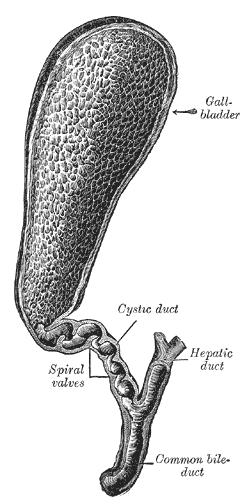
Gray's Anatomy (1918) plate, public domain
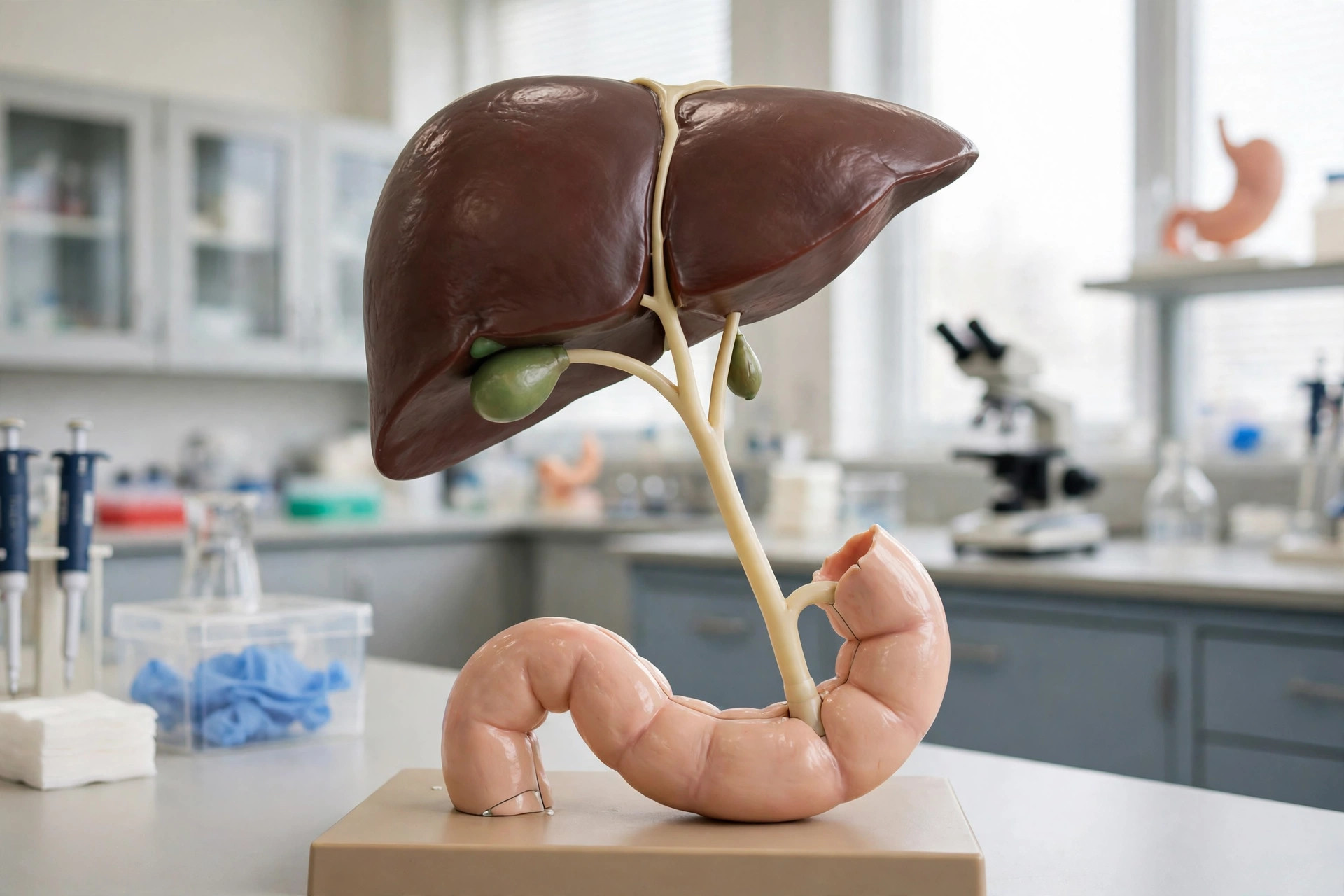
The gallbladder is a small pear-shaped pouch, about 8 cm long, nestled under the liver. It stores and concentrates bile made by the liver; when fatty food reaches the duodenum, a hormone signal makes the gallbladder contract, squeezing bile through the cystic and common bile ducts to emulsify fats. You can live perfectly well without it — bile then drips continuously into the intestine instead of arriving in pulses.
Key facts
- The gallbladder can concentrate bile up to tenfold by absorbing water from it.
- Its contraction is triggered by the hormone cholecystokinin, released when fat enters the duodenum.
- Bile's green colour comes from bilirubin, a breakdown product of red blood cells.
- The gallbladder, cystic duct and liver ducts form a branching pattern that varies between people — important in surgery.
What can go wrong
Gallstones are the dominant problem: crystals of cholesterol or pigment that harden in stored bile. A stone blocking the cystic duct causes biliary colic — waves of upper abdominal pain after fatty meals — or inflammation of the gallbladder (cholecystitis). Stones escaping into the main bile duct can cause jaundice or inflame the pancreas. Ultrasound is the usual first test, and symptomatic gallbladder disease is commonly managed by removing the gallbladder (cholecystectomy).
Related conditions
Related procedures & tests
Related symptoms
Frequently asked questions
Do you need a gallbladder?
No. It is a storage pouch, not the bile factory — the liver keeps making bile after removal, and most people digest food normally without one.
Why do gallstones hurt after fatty meals?
Fat triggers strong gallbladder contractions; if a stone blocks the outlet, pressure builds in the contracting pouch and causes the characteristic colicky pain.
Educational information only. This atlas explains normal anatomy and describes conditions in general terms; it is not medical advice and does not replace assessment by a qualified clinician. If you have symptoms that worry you, seek medical care.