- Physical Examination
- Surgical Examination
- Ophthalmology
- Clinical Skills
- Orthopedics
- Surgery Videos
- Laparoscopy
- Pediatrics
- Funny Videos
- Cardiothoracic Surgery
- Nursing Videos
- Plastic Surgery
- Otorhinolaryngology
- Histology and Histopathology
- Neurosurgery
- Dermatology
- Pediatric Surgery
- Urology
- Dentistry
- Oncology and Cancers
- Anatomy Videos
- Health and Fitness
- Radiology
- Anaesthesia
- Physical Therapy
- Pharmacology
- Interventional Radiology
- Cardiology
- Endocrinology
- Gynecology
- Emergency Medicine
- Psychiatry and Psychology
- Childbirth Videos
- General Medical Videos
- Nephrology
- Physiology
- Diet and Food Health
- Diabetes Mellitus
- Neurology
- Women Health
- Osteoporosis
- Gastroenterology
- Pulmonology
- Hematology
- Rheumatology
- Toxicology
- Nuclear Medicine
- Infectious Diseases
- Vascular Disease
- Reproductive Health
- Burns and Wound Healing
- Kidney Zone Podcast
- Other
Omentum
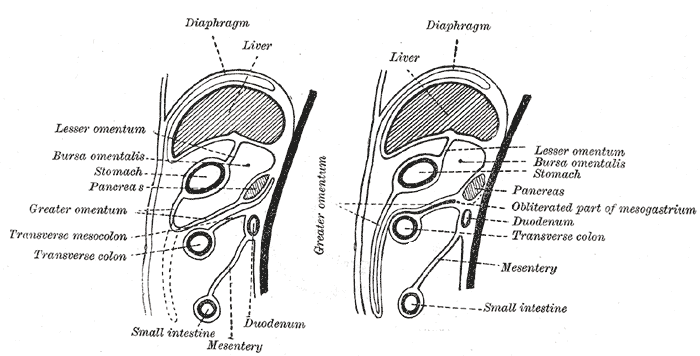
Gray's Anatomy (1918) plate, public domain
The omentum is a double sheet of peritoneum laden with fat that hangs like an apron from the stomach over the intestines. The greater omentum drapes the front of the abdomen; the lesser omentum links the stomach to the liver. Rich in blood vessels and immune cell clusters, it stores fat, cushions the organs and migrates towards inflammation inside the abdomen to help contain it.
Key facts
- The omentum's immune clusters (milky spots) sample the peritoneal fluid for microbes.
- Surgeons sometimes use its rich blood supply to patch repairs or cover grafts.
- Its fat is metabolically active tissue that participates in whole-body energy signalling.
- It can twist on itself (omental torsion) or be involved by spread of abdominal cancers.
What can go wrong
The omentum is more often a bystander than a culprit: it becomes involved when abdominal cancers seed the peritoneum, forming deposits and sometimes a solid mass (omental cake) visible on scans. Rarely it twists or is caught in hernias, causing pain that mimics appendicitis or cholecystitis. Its bulk in obesity contributes to the central fat pattern linked to metabolic disease.
Related conditions
Related procedures & tests
Related symptoms
Frequently asked questions
Why is the omentum called the abdominal policeman?
It moves toward sites of injury or infection in the abdomen and adheres to them, helping to seal perforations and localise inflammation.
What is an omental cake?
A thickened sheet of tumour deposits replacing the normal omentum, seen on imaging when cancers such as ovarian or stomach cancer spread across the peritoneum.
Educational information only. This atlas explains normal anatomy and describes conditions in general terms; it is not medical advice and does not replace assessment by a qualified clinician. If you have symptoms that worry you, seek medical care.