- Physical Examination
- Surgical Examination
- Ophthalmology
- Clinical Skills
- Orthopedics
- Surgery Videos
- Laparoscopy
- Pediatrics
- Funny Videos
- Cardiothoracic Surgery
- Nursing Videos
- Plastic Surgery
- Otorhinolaryngology
- Histology and Histopathology
- Neurosurgery
- Dermatology
- Pediatric Surgery
- Urology
- Dentistry
- Oncology and Cancers
- Anatomy Videos
- Health and Fitness
- Radiology
- Anaesthesia
- Physical Therapy
- Pharmacology
- Interventional Radiology
- Cardiology
- Endocrinology
- Gynecology
- Emergency Medicine
- Psychiatry and Psychology
- Childbirth Videos
- General Medical Videos
- Nephrology
- Physiology
- Diet and Food Health
- Diabetes Mellitus
- Neurology
- Women Health
- Osteoporosis
- Gastroenterology
- Pulmonology
- Hematology
- Rheumatology
- Toxicology
- Nuclear Medicine
- Infectious Diseases
- Vascular Disease
- Reproductive Health
- Burns and Wound Healing
- Kidney Zone Podcast
- Other
Portal Vein
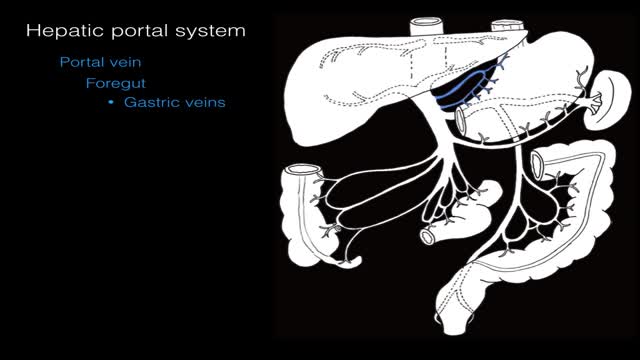
Video still from MedicalVideos.com: hepatic portal system
The portal vein is the wide vessel formed behind the pancreas by the union of the veins draining the intestines, spleen and stomach. It carries nutrient-rich (but oxygen-poor) blood to the liver, supplying about three-quarters of the liver's inflow, so that absorbed food, toxins and gut hormones are processed before reaching the general circulation. Uniquely, it is a vein that begins and ends in capillary networks — in the gut and then in the liver.
Key facts
- Portal blood carries insulin and glucagon from the pancreas to the liver at high concentration — their primary workplace.
- The liver's dual supply (portal vein plus hepatic artery) protects it if one source falters.
- Portal pressure is normally low; when liver scarring raises it, blood finds collateral routes — the cause of varices.
- Bacteria and parasites from the gut can reach the liver by this route, explaining some liver abscesses and infections.
What can go wrong
Raised pressure in the portal system (portal hypertension), usually from cirrhosis, forces blood through collateral veins that bulge in the esophagus (varices, which can bleed dangerously), around the navel and in the rectum, and drives fluid into the abdomen (ascites). The portal vein itself can clot (portal vein thrombosis), especially with liver disease, abdominal infection or clotting disorders.
Related conditions
Related procedures & tests
Related symptoms
Watch: related videos
Frequently asked questions
Why does the liver get gut blood first?
To process absorbed nutrients, store or release glucose, detoxify substances and receive pancreatic hormones at full strength before they are diluted in the general circulation.
What are oesophageal varices?
Swollen collateral veins in the lower esophagus that develop in portal hypertension; they can rupture and bleed severely, which is a medical emergency.
Educational information only. This atlas explains normal anatomy and describes conditions in general terms; it is not medical advice and does not replace assessment by a qualified clinician. If you have symptoms that worry you, seek medical care.