- Physical Examination
- Surgical Examination
- Ophthalmology
- Clinical Skills
- Orthopedics
- Surgery Videos
- Laparoscopy
- Pediatrics
- Funny Videos
- Cardiothoracic Surgery
- Nursing Videos
- Plastic Surgery
- Otorhinolaryngology
- Histology and Histopathology
- Neurosurgery
- Dermatology
- Pediatric Surgery
- Urology
- Dentistry
- Oncology and Cancers
- Anatomy Videos
- Health and Fitness
- Radiology
- Anaesthesia
- Physical Therapy
- Pharmacology
- Interventional Radiology
- Cardiology
- Endocrinology
- Gynecology
- Emergency Medicine
- Psychiatry and Psychology
- Childbirth Videos
- General Medical Videos
- Nephrology
- Physiology
- Diet and Food Health
- Diabetes Mellitus
- Neurology
- Women Health
- Osteoporosis
- Gastroenterology
- Pulmonology
- Hematology
- Rheumatology
- Toxicology
- Nuclear Medicine
- Infectious Diseases
- Vascular Disease
- Reproductive Health
- Burns and Wound Healing
- Kidney Zone Podcast
- Other
Prostate
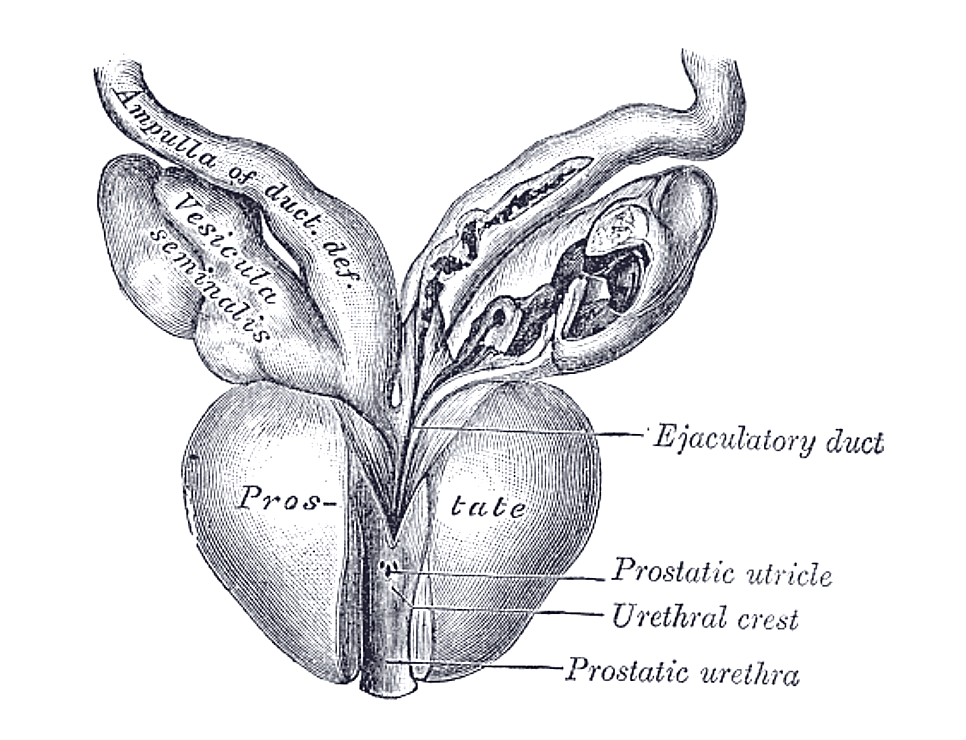
Gray's Anatomy (1918) plate, public domain
The prostate is a walnut-sized gland in men, sitting just below the bladder and wrapping around the first part of the urethra. It produces much of the fluid in semen, nourishing and transporting sperm; its muscles help propel semen during ejaculation. The prostate grows in two phases — at puberty and again gradually from middle age — under the influence of male hormones. It can be felt on rectal examination because it lies just in front of the rectum.
Key facts
- The prostate contributes about a quarter to a third of the volume of semen.
- It produces PSA (prostate-specific antigen), a protein measurable in blood and used — with its known limitations — in prostate assessment.
- Its zones matter clinically: enlargement arises in the central (transition) zone, while most cancers start in the outer (peripheral) zone.
- The gland's fluid contains zinc and citrate at concentrations found nowhere else in the body.
What can go wrong
With age the prostate commonly enlarges (benign prostatic enlargement), squeezing the urethra and causing a weak stream, hesitancy, frequency and night-time voiding. Inflammation (prostatitis) causes pelvic pain and urinary symptoms. Prostate cancer is very common in older men, often slow-growing; it is assessed with PSA testing, MRI and biopsy, and management ranges from monitoring to surgery or radiotherapy depending on risk.
Related conditions
Related procedures & tests
- Prostate biopsy (transperineal / transrectal)
- Prostate screening discussion and PSA testing
- TURP (prostate resection)
- Prostatectomy (radical prostate removal)
Related symptoms
Watch: related videos
Frequently asked questions
Why does an enlarged prostate affect urination?
Because the urethra runs through its centre, growth of the inner zone narrows the channel, weakening the stream and leaving the bladder incompletely emptied.
What is PSA?
Prostate-specific antigen, a protein made by prostate cells. Blood levels rise with enlargement, inflammation and cancer, so an raised PSA needs interpretation rather than assuming cancer.
Educational information only. This atlas explains normal anatomy and describes conditions in general terms; it is not medical advice and does not replace assessment by a qualified clinician. If you have symptoms that worry you, seek medical care.