- Physical Examination
- Surgical Examination
- Ophthalmology
- Clinical Skills
- Orthopedics
- Surgery Videos
- Laparoscopy
- Pediatrics
- Funny Videos
- Cardiothoracic Surgery
- Nursing Videos
- Plastic Surgery
- Otorhinolaryngology
- Histology and Histopathology
- Neurosurgery
- Dermatology
- Pediatric Surgery
- Urology
- Dentistry
- Oncology and Cancers
- Anatomy Videos
- Health and Fitness
- Radiology
- Anaesthesia
- Physical Therapy
- Pharmacology
- Interventional Radiology
- Cardiology
- Endocrinology
- Gynecology
- Emergency Medicine
- Psychiatry and Psychology
- Childbirth Videos
- General Medical Videos
- Nephrology
- Physiology
- Diet and Food Health
- Diabetes Mellitus
- Neurology
- Women Health
- Osteoporosis
- Gastroenterology
- Pulmonology
- Hematology
- Rheumatology
- Toxicology
- Nuclear Medicine
- Infectious Diseases
- Vascular Disease
- Reproductive Health
- Burns and Wound Healing
- Kidney Zone Podcast
- Other
Semicircular Canals
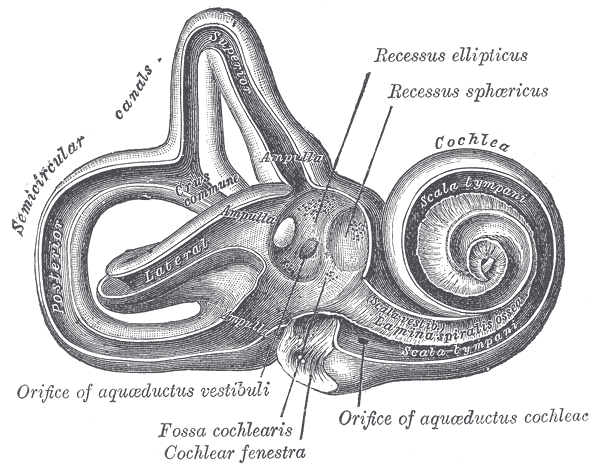
Gray's Anatomy (1918) plate, public domain
The three semicircular canals are the balance organs of the inner ear: fluid-filled loops arranged at right angles to each other, like a gyroscope, beside the cochlea. When the head rotates, fluid lag bends hair-cell bundles in a swelling at each canal's base (the ampulla), signalling rotation speed and direction to the brain via the vestibular nerve. With the otolith organs (which sense gravity and straight-line movement), they stabilise gaze and posture.
Key facts
- Each canal senses rotation in its own plane: nodding, shaking and tilting are covered by the three together.
- Signals from the two ears are compared — the brain reads the difference between the pair.
- The canals are why you can read while walking: they drive reflex eye movements that cancel head motion.
- Their bony shells are among the densest bone in the body, set in the petrous temporal bone.
What can go wrong
The commonest canal disorder is BPPV — benign paroxysmal positional vertigo — where loose crystals (from the otolith organs) stray into a canal and trigger brief spinning when the head moves, classically rolling over in bed; it is diagnosed by position tests and treated with repositioning manoeuvres. Inflammation of the vestibular nerve or labyrinth causes days of vertigo after infections. Ménière's disease affects canals and cochlea together.
Related procedures & tests
Related symptoms
Frequently asked questions
Why do you feel dizzy after spinning?
The canal fluid keeps moving after you stop, bending the hair cells as if rotation continued the other way — the brain reads a mismatch until the fluid settles.
What is BPPV?
Brief vertigo triggered by head position changes, caused by displaced crystals moving in a semicircular canal; specific head manoeuvres can roll the crystals back out.
Educational information only. This atlas explains normal anatomy and describes conditions in general terms; it is not medical advice and does not replace assessment by a qualified clinician. If you have symptoms that worry you, seek medical care.