- Physical Examination
- Surgical Examination
- Ophthalmology
- Clinical Skills
- Orthopedics
- Surgery Videos
- Laparoscopy
- Pediatrics
- Funny Videos
- Cardiothoracic Surgery
- Nursing Videos
- Plastic Surgery
- Otorhinolaryngology
- Histology and Histopathology
- Neurosurgery
- Dermatology
- Pediatric Surgery
- Urology
- Dentistry
- Oncology and Cancers
- Anatomy Videos
- Health and Fitness
- Radiology
- Anaesthesia
- Physical Therapy
- Pharmacology
- Interventional Radiology
- Cardiology
- Endocrinology
- Gynecology
- Emergency Medicine
- Psychiatry and Psychology
- Childbirth Videos
- General Medical Videos
- Nephrology
- Physiology
- Diet and Food Health
- Diabetes Mellitus
- Neurology
- Women Health
- Osteoporosis
- Gastroenterology
- Pulmonology
- Hematology
- Rheumatology
- Toxicology
- Nuclear Medicine
- Infectious Diseases
- Vascular Disease
- Reproductive Health
- Burns and Wound Healing
- Kidney Zone Podcast
- Other
Thyroid
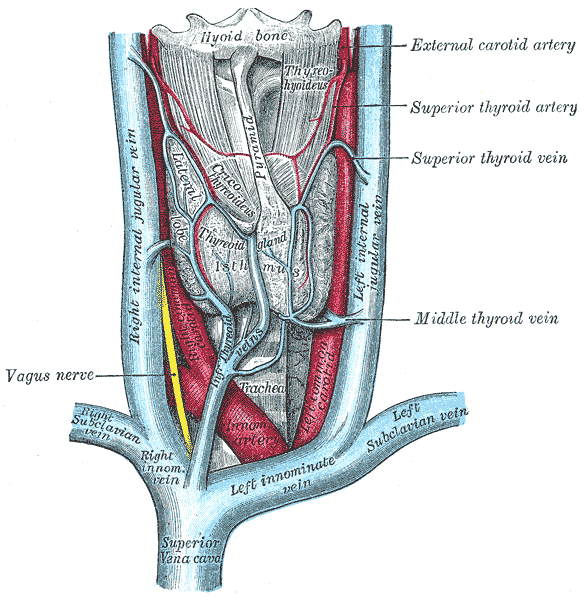
Gray's Anatomy (1918) plate, public domain
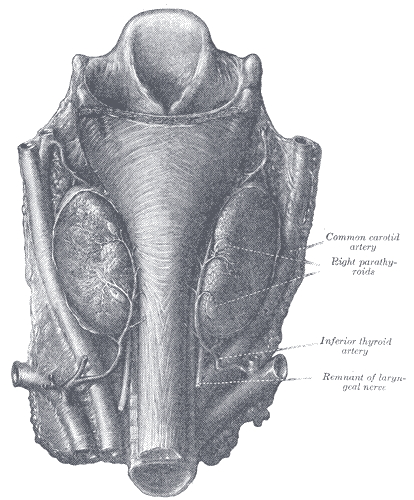
The thyroid is a butterfly-shaped gland wrapped around the upper windpipe in the front of the neck. It makes the hormones thyroxine (T4) and triiodothyronine (T3), which set the body's metabolic pace — energy use, heat production, heart rate and growth. It needs iodine from the diet to build them. Its output is driven by pituitary TSH in a feedback loop, and it also contains C cells that make calcitonin.
Key facts
- The thyroid is one of the most richly perfused organs per gram in the body, which is why it can swell visibly when inflamed or overactive.
- It stores weeks' worth of hormone in its follicles — unusual among endocrine glands.
- T4 is largely a prohormone; tissues convert it to the more active T3 as needed.
- The gland moves upward when you swallow, a sign used in neck examination to confirm a lump is thyroid in origin.
What can go wrong
Thyroid disorders are common: underactivity (hypothyroidism, usually autoimmune Hashimoto's) causes fatigue, weight gain, cold intolerance and dry skin; overactivity (hyperthyroidism, often Graves' disease) causes weight loss, tremor, palpitations and heat intolerance. Enlargement is called a goitre. Lumps (nodules) are frequent and mostly benign, assessed with ultrasound and sometimes needle sampling; thyroid cancer is usually highly treatable.
Related conditions
Related procedures & tests
- Thyroid ultrasound
- Fine needle aspiration (FNA) cytology
- Thyroidectomy (thyroid removal)
- Hormone blood tests (thyroid, cortisol, reproductive)
Related symptoms
Related muscles
Watch: related videos
Frequently asked questions
What blood tests check the thyroid?
Usually TSH first, with free T4 (and sometimes T3 and thyroid antibodies) — the pattern distinguishes underactivity, overactivity and autoimmune causes.
What is a goitre?
Any enlargement of the thyroid gland, whether from iodine deficiency, autoimmune disease, nodules or inflammation; the gland's function may be high, low or normal.
Educational information only. This atlas explains normal anatomy and describes conditions in general terms; it is not medical advice and does not replace assessment by a qualified clinician. If you have symptoms that worry you, seek medical care.