- Physical Examination
- Surgical Examination
- Ophthalmology
- Clinical Skills
- Orthopedics
- Surgery Videos
- Laparoscopy
- Pediatrics
- Funny Videos
- Cardiothoracic Surgery
- Nursing Videos
- Plastic Surgery
- Otorhinolaryngology
- Histology and Histopathology
- Neurosurgery
- Dermatology
- Pediatric Surgery
- Urology
- Dentistry
- Oncology and Cancers
- Anatomy Videos
- Health and Fitness
- Radiology
- Anaesthesia
- Physical Therapy
- Pharmacology
- Interventional Radiology
- Cardiology
- Endocrinology
- Gynecology
- Emergency Medicine
- Psychiatry and Psychology
- Childbirth Videos
- General Medical Videos
- Nephrology
- Physiology
- Diet and Food Health
- Diabetes Mellitus
- Neurology
- Women Health
- Osteoporosis
- Gastroenterology
- Pulmonology
- Hematology
- Rheumatology
- Toxicology
- Nuclear Medicine
- Infectious Diseases
- Vascular Disease
- Reproductive Health
- Burns and Wound Healing
- Kidney Zone Podcast
- Other
Vena Cava
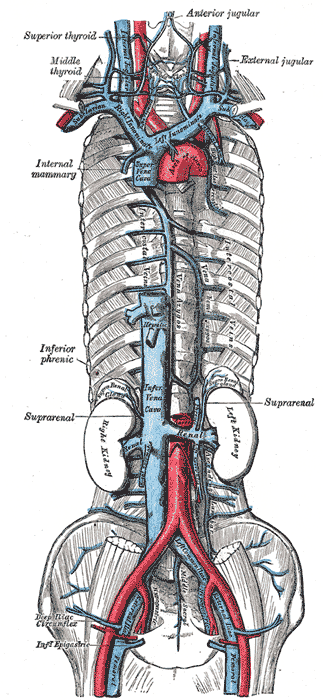
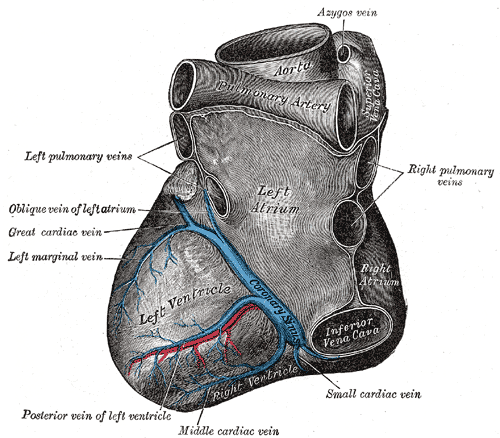
Gray's Anatomy (1918) plate, public domain
The venae cavae are the two great veins delivering blood to the right atrium. The superior vena cava — short and vertical — drains the head, neck, arms and upper chest. The inferior vena cava, the body's widest vein, ascends through the abdomen (receiving the liver, gut and kidney veins) and pierces the diaphragm to drain the lower body. They are thin-walled and low-pressure, and their calibre varies with breathing and posture.
Key facts
- The inferior vena cava has no valves except a rudimentary one at its heart opening.
- It forms embryologically from a patchwork of veins, which is why variants (such as a left-sided cava) occur.
- The liver veins join it just below the diaphragm — the site of congestion when the right heart fails.
- Filters can be placed in the inferior vena cava to trap clots travelling from the legs when anticoagulation is impossible.
What can go wrong
Obstruction of the superior vena cava — usually by tumours or clots around it — causes swelling of the face and arms, visible chest veins and breathlessness (SVC obstruction). The inferior cava can be compressed by tumours, pregnancy or clots, causing leg swelling; in advanced liver disease and right heart failure it becomes engorged, transmitting pressure back to the liver and kidneys.
Related conditions
Related procedures & tests
Related symptoms
Frequently asked questions
What is SVC obstruction?
Blockage of the superior vena cava, usually by a tumour or clot, causing swelling of the face, neck and arms with prominent veins — a presentation that needs prompt investigation.
Why do doctors sometimes place a vena cava filter?
To catch clots travelling from leg veins to the lungs in patients who cannot take blood-thinning medication; it is a mechanical safety net, used selectively.
Educational information only. This atlas explains normal anatomy and describes conditions in general terms; it is not medical advice and does not replace assessment by a qualified clinician. If you have symptoms that worry you, seek medical care.