- Physical Examination
- Surgical Examination
- Ophthalmology
- Clinical Skills
- Orthopedics
- Surgery Videos
- Laparoscopy
- Pediatrics
- Funny Videos
- Cardiothoracic Surgery
- Nursing Videos
- Plastic Surgery
- Otorhinolaryngology
- Histology and Histopathology
- Neurosurgery
- Dermatology
- Pediatric Surgery
- Urology
- Dentistry
- Oncology and Cancers
- Anatomy Videos
- Health and Fitness
- Radiology
- Anaesthesia
- Physical Therapy
- Pharmacology
- Interventional Radiology
- Cardiology
- Endocrinology
- Gynecology
- Emergency Medicine
- Psychiatry and Psychology
- Childbirth Videos
- General Medical Videos
- Nephrology
- Physiology
- Diet and Food Health
- Diabetes Mellitus
- Neurology
- Women Health
- Osteoporosis
- Gastroenterology
- Pulmonology
- Hematology
- Rheumatology
- Toxicology
- Nuclear Medicine
- Infectious Diseases
- Vascular Disease
- Reproductive Health
- Burns and Wound Healing
- Kidney Zone Podcast
- Other
Vitreous Body
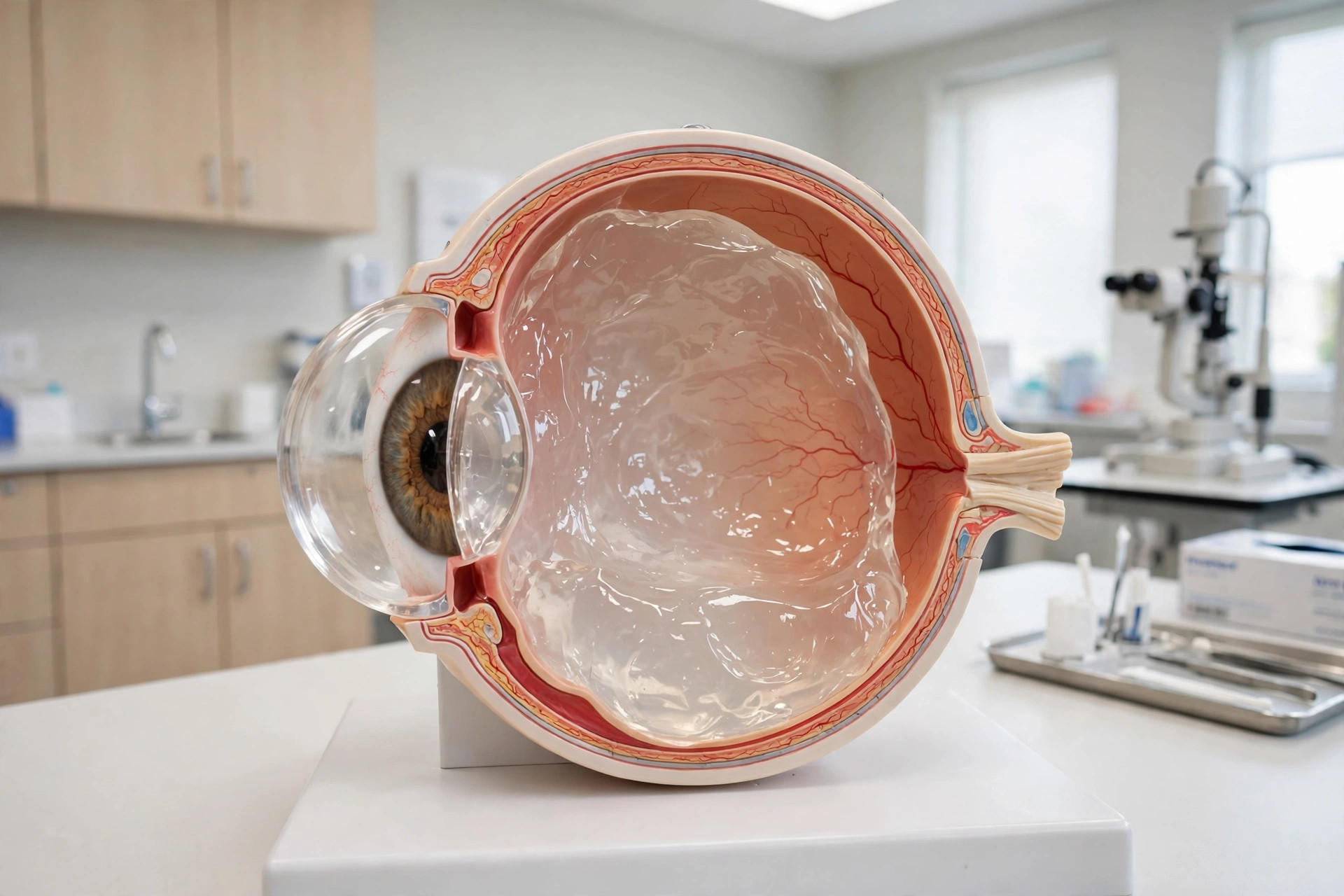
AI-generated anatomical illustration
The vitreous body is the clear gel filling the eye's main chamber, between the lens and the retina — about 4 mL of 99% water structured by collagen fibres and hyaluronic acid. Formed before birth, it is never replaced. It keeps the eyeball's shape, holds the retina gently against the wall and transmits light without distortion. With age it liquefies and shrinks, pulling away from the retina (posterior vitreous detachment) — the usual cause of new floaters.
Key facts
- The vitreous is one of the body's largest acellular structures — almost entirely matrix, with a scattering of cells at its edges.
- Its gel cushioning absorbs shocks that would otherwise jar the retina.
- In youth it is firmly attached at the optic disc, macula and retinal periphery, attachments that loosen with age.
- Debris in the gel — blood, inflammatory cells, condensed fibres — is seen by the patient as floaters.
What can go wrong
The common vitreous event is age-related detachment (PVD): flashes and a shower of floaters as the gel separates, occasionally tearing the retina as it pulls — a tear can lead to retinal detachment, which threatens sight and needs urgent assessment. Bleeding into the vitreous (from diabetic eye disease or a tear) clouds vision suddenly. Floaters that are long-standing and stable are usually harmless, but new ones with flashes warrant prompt examination.
Related conditions
Related procedures & tests
Related symptoms
Frequently asked questions
What are floaters?
Shadows cast on the retina by tiny clumps or strands within the vitreous gel; they drift with eye movements and are most visible against bright, plain backgrounds.
When are flashes and floaters urgent?
A sudden onset of many floaters, flashes of light, or a shadow/curtain across vision can signal a retinal tear or detachment and should be assessed the same day.
Educational information only. This atlas explains normal anatomy and describes conditions in general terms; it is not medical advice and does not replace assessment by a qualified clinician. If you have symptoms that worry you, seek medical care.