
- Physical Examination
- Surgical Examination
- Ophthalmology
- Clinical Skills
- Orthopedics
- Surgery Videos
- Laparoscopy
- Pediatrics
- Funny Videos
- Cardiothoracic Surgery
- Nursing Videos
- Plastic Surgery
- Otorhinolaryngology
- Histology and Histopathology
- Neurosurgery
- Dermatology
- Pediatric Surgery
- Urology
- Dentistry
- Oncology and Cancers
- Anatomy Videos
- Health and Fitness
- Radiology
- Anaesthesia
- Physical Therapy
- Pharmacology
- Interventional Radiology
- Cardiology
- Endocrinology
- Gynecology
- Emergency Medicine
- Psychiatry and Psychology
- Childbirth Videos
- General Medical Videos
- Nephrology
- Physiology
- Diet and Food Health
- Diabetes Mellitus
- Neurology
- Women Health
- Osteoporosis
- Gastroenterology
- Pulmonology
- Hematology
- Rheumatology
- Toxicology
- Nuclear Medicine
- Infectious Diseases
- Vascular Disease
- Reproductive Health
- Burns and Wound Healing
- Kidney Zone Podcast
- Other
Diverticulitis
Diverticulitis is inflammation or infection of small pouches that can form in the wall of the large intestine. This guide explains diverticulitis symptoms, causes, and treatment in plain language, with videos to support your understanding.
✓ Medically reviewed by Dr. Mohamed Ibrahim, MD, PhD — physician-scientist · Last reviewed: November 2026
In short: Many people have small pouches in the bowel wall, called diverticula, without symptoms. Diverticulitis is when one or more pouches become inflamed or infected, causing abdominal pain, fever, and bowel change that need medical care.
Watch: Diverticulitis videos



Read: the plain-language guide
Overview
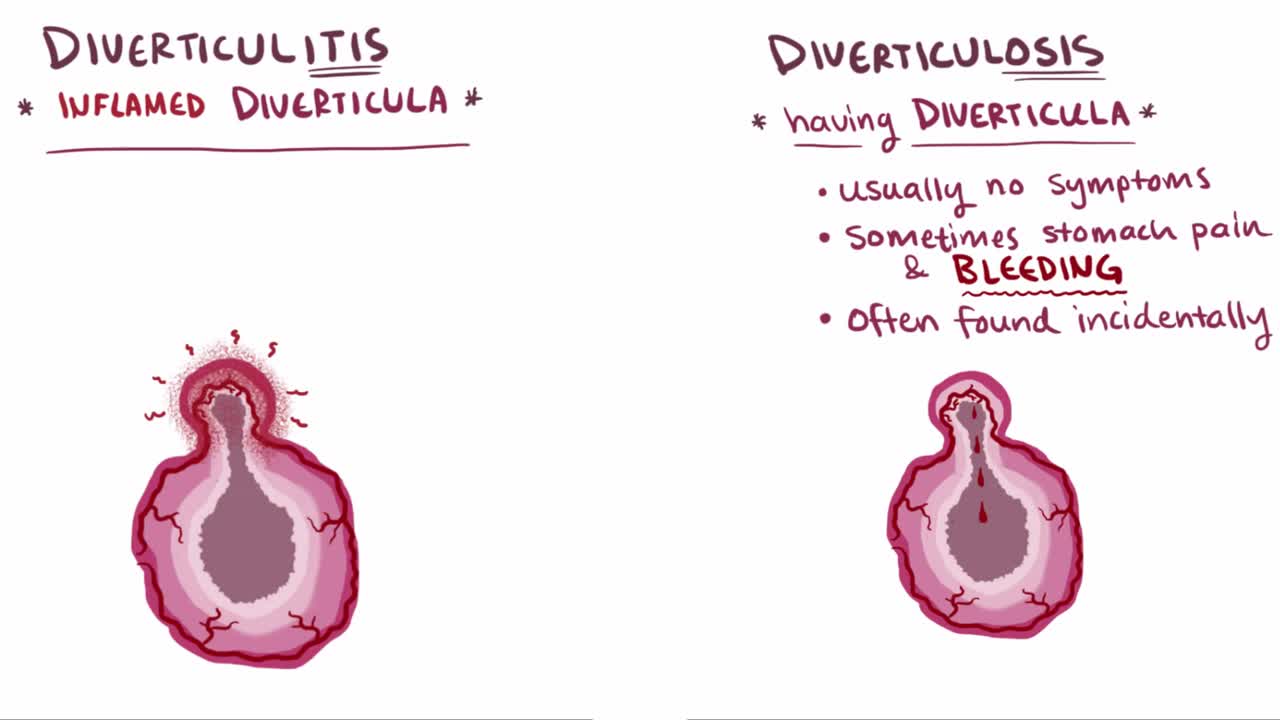
Diverticula are small bulges that push out through weaker spots in the wall of the colon, the large intestine. Having them is called diverticulosis and becomes more common with age, often found by chance during scans or colonoscopy. Most cause no symptoms. Diverticulitis occurs when a pouch becomes inflamed or infected, sometimes with a small tear or a collection of pus nearby. Episodes range from mild inflammation managed at home to severe illness needing hospital care. After an episode settles, clinicians usually discuss diet, bowel habits, and follow-up investigations.
Symptoms
The most common symptom is steady abdominal pain, often in the lower left side, lasting several days. Pain may come with fever, nausea, reduced appetite, bloating, and a change in bowel habit such as constipation or, less often, diarrhoea. Some people notice tenderness when the abdomen is pressed and feel generally unwell. Bleeding from the back passage can occur with diverticular disease, though heavy bleeding is a separate emergency. Symptoms overlap with other conditions, including appendicitis, bowel infection, and irritable bowel syndrome, so assessment is important.
Causes & risk factors
Diverticula form where the bowel wall is weaker, and pressure inside the colon over time is thought to contribute. A low-fibre diet, constipation, increasing age, being overweight, smoking, and lack of exercise are associated with diverticular disease. Diverticulitis itself is now understood mainly as inflammation, sometimes with infection, around a pouch, rather than simply blockage by food. Nuts, seeds, and popcorn were once blamed, but they are not established causes.
How it's diagnosed
A clinician will ask about pain, fever, and bowel habits, examine the abdomen, and usually arrange blood tests to look for inflammation and infection. A CT scan of the abdomen is commonly used during a significant episode because it can confirm diverticulitis and detect complications such as an abscess or perforation. During an acute episode, colonoscopy is usually postponed because of risk; it may be arranged after recovery to view the bowel and exclude other conditions. Diagnosis aims both to confirm the episode and to grade its severity.
Treatment overview
Treatment depends on severity. Mild episodes may be managed at home with rest, fluids, simple pain relief, and dietary adjustments guided by a clinician; antibiotics are used when infection or higher risk is present, not automatically for everyone. More severe episodes need hospital care, intravenous fluids and antibiotics, and sometimes drainage of an abscess. Surgery is reserved for complications such as perforation, blockage, or repeated severe episodes. Long term, a fibre-rich diet once recovered, exercise, and not smoking support bowel health. Plans are individual and clinician-led.
When to seek care
Seek urgent care for severe or worsening abdominal pain, high fever, vomiting, inability to pass stool or gas, a rigid abdomen, faintness, or heavy rectal bleeding. People who are pregnant, have a weakened immune system, or cannot keep fluids down should be assessed promptly. Mild symptoms that do not start improving within a few days also need review.
Frequently asked questions
What is the difference between diverticulosis and diverticulitis?
Diverticulosis simply means pouches are present in the bowel wall, which is common and usually causes no symptoms. Diverticulitis means a pouch has become inflamed or infected, causing pain, fever, and bowel change. Only diverticulitis needs episode treatment; diverticulosis is managed with general bowel-healthy habits advised by a clinician.
Do I need to avoid nuts and seeds?
Older advice told people to avoid nuts, seeds, and popcorn, but research has not shown these foods cause diverticulitis, and routine avoidance is no longer generally recommended. Long-term eating advice should focus on an overall fibre-rich pattern once you have recovered.
Can diverticulitis come back?
Yes, further episodes are possible after recovery, although many people have only one. Looking after bowel habits, eating enough fibre when well, staying active, and not smoking may help general bowel health. If episodes repeat or complications occur, a specialist may discuss further investigations or, in selected cases, surgery.
Will I need surgery for diverticulitis?
Most episodes settle without surgery. Surgery is considered for complications such as perforation, a large abscess that cannot be drained, bowel blockage, or repeated severe episodes affecting quality of life. Decisions are made by specialists based on scans, overall health, and personal preference, usually after the acute episode has settled.
More in Digestive
Related topics on MedicalVideos.com
Sources & further reading
Authoritative references for readers who want to go deeper:
- MedlinePlus: Diverticulitis (MedlinePlus)
- NHS: Diverticular disease and diverticulitis
- MedlinePlus: Diverticulosis and Diverticulitis
This page is for general education only and is not medical advice. Severe abdominal pain, fever, vomiting, or heavy rectal bleeding with suspected diverticulitis needs urgent assessment, not watchful waiting at home.