
- Physical Examination
- Surgical Examination
- Ophthalmology
- Clinical Skills
- Orthopedics
- Surgery Videos
- Laparoscopy
- Pediatrics
- Funny Videos
- Cardiothoracic Surgery
- Nursing Videos
- Plastic Surgery
- Otorhinolaryngology
- Histology and Histopathology
- Neurosurgery
- Dermatology
- Pediatric Surgery
- Urology
- Dentistry
- Oncology and Cancers
- Anatomy Videos
- Health and Fitness
- Radiology
- Anaesthesia
- Physical Therapy
- Pharmacology
- Interventional Radiology
- Cardiology
- Endocrinology
- Gynecology
- Emergency Medicine
- Psychiatry and Psychology
- Childbirth Videos
- General Medical Videos
- Nephrology
- Physiology
- Diet and Food Health
- Diabetes Mellitus
- Neurology
- Women Health
- Osteoporosis
- Gastroenterology
- Pulmonology
- Hematology
- Rheumatology
- Toxicology
- Nuclear Medicine
- Infectious Diseases
- Vascular Disease
- Reproductive Health
- Burns and Wound Healing
- Kidney Zone Podcast
- Other
Pericarditis
Pericarditis is inflammation of the pericardium, the thin sac that surrounds and protects the heart. This page explains its symptoms, causes, and treatment in plain language, with videos to help you follow the key points.
✓ Medically reviewed by Dr. Mohamed Ibrahim, MD, PhD — physician-scientist · Last reviewed: November 2026
In short: In pericarditis, the sac around the heart becomes inflamed, usually causing sharp chest pain that eases when sitting forward. Most cases follow a viral illness and settle with anti-inflammatory treatment, but chest pain must always be checked urgently to rule out a heart attack.
Watch: Pericarditis videos
Read: the plain-language guide
Overview
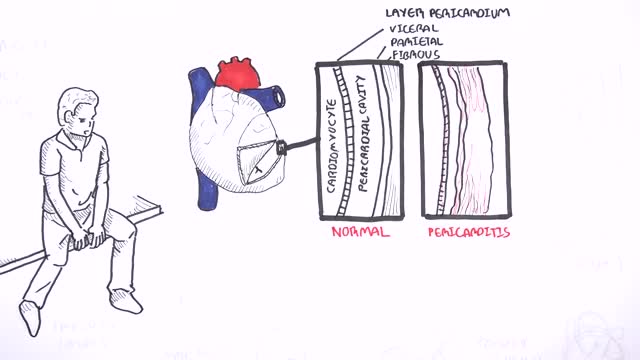
The heart sits inside a double-layered sac called the pericardium, which contains a small amount of fluid so the heart can move smoothly as it beats. In pericarditis this sac becomes inflamed, and the layers rub against each other, producing pain. Sometimes extra fluid collects in the sac; if a lot builds up quickly it can squeeze the heart and interfere with pumping, a complication called tamponade. Most episodes are short-lived and settle fully, although the condition can return. Because its chest pain can closely mimic a heart attack, assessment is always urgent.
Symptoms
The main symptom is chest pain that is sharp or stabbing, felt in the centre or left side of the chest. Characteristically it is worse when lying flat, breathing in deeply, or coughing, and eases when sitting up and leaning forward. There may also be fever, a dry cough, breathlessness, palpitations, and feeling generally unwell, often after a cold or flu-like illness. Pain may spread to the neck or shoulder. Any new chest pain should be treated as an emergency until a heart attack has been excluded.
Causes & risk factors
Most cases of pericarditis follow a viral infection, and often no specific cause is found despite testing. Other causes include bacterial infection, inflammation after a heart attack or heart surgery, autoimmune conditions such as lupus or rheumatoid arthritis, kidney failure, and, less commonly, cancer spread or chest injury. In many parts of the world tuberculosis is an important cause. Finding a cause matters, because the underlying problem may need treatment too.
How it's diagnosed
Assessment begins with a history and examination; a doctor may hear a scratchy rubbing sound when listening to the chest. A heart tracing often shows a characteristic pattern of changes, and blood tests look for inflammation and check whether the heart muscle has been affected. An ultrasound scan of the heart shows whether fluid has collected around the heart and whether it affects how the heart fills. A CT or MRI scan is sometimes used to look at the sac in more detail.
Treatment overview
Treatment aims to relieve pain, settle the inflammation, and watch for complications. Medicines that reduce inflammation, such as anti-inflammatory painkillers, are the main treatment, and a medicine called colchicine is often added because it lowers the chance of recurrence. Rest is advised while symptoms settle, and strenuous exercise avoided until a clinician confirms the inflammation has resolved. If the underlying cause is known, it is treated as well. Should a large amount of fluid collect and squeeze the heart, it is drained with a needle in a hospital procedure.
When to seek care
Call emergency services for any new chest pain, particularly if it is severe or comes with breathlessness, sweating, or faintness. Seek urgent review if diagnosed pericarditis pain worsens, breathlessness increases, or you feel faint, as these can signal fluid compressing the heart.
Frequently asked questions
Is pericarditis the same as a heart attack?
No. Pericarditis is inflammation of the sac around the heart, while a heart attack is a blocked heart artery. The pain can feel similar, however, and the two can occasionally occur together, so every episode of chest pain needs urgent assessment rather than self-diagnosis.
Does pericarditis come back?
It can. Some people have further episodes weeks or months after the first, which is one reason colchicine is often prescribed and follow-up arranged. If chest pain returns, seek assessment again rather than assuming it is the same problem, and keep taking prescribed treatment for the full course.
How long does pericarditis last?
With treatment, pain and fever often improve within days, and many episodes settle over one to three weeks. Inflammation markers and scans are sometimes rechecked to confirm recovery. A minority of people have symptoms that linger or recur over months and need specialist care.
Can I exercise during pericarditis?
No, rest is part of the treatment. Strenuous exercise while the heart's sac is inflamed can worsen the condition, so activity should stay gentle until symptoms have gone and your clinician says it is safe to build up again, which may take several weeks.
More in Heart & Circulation
Related topics on MedicalVideos.com
Sources & further reading
Authoritative references for readers who want to go deeper:
- MedlinePlus: Pericarditis
- NHS: Pericarditis
- American Heart Association: Pericarditis (American Heart Association)
This page is for general education only and is not medical advice. Pericarditis chest pain can feel like a heart attack, so any new chest pain should be treated as an emergency until a clinician has ruled out a heart problem.