
- Physical Examination
- Surgical Examination
- Ophthalmology
- Clinical Skills
- Orthopedics
- Surgery Videos
- Laparoscopy
- Pediatrics
- Funny Videos
- Cardiothoracic Surgery
- Nursing Videos
- Plastic Surgery
- Otorhinolaryngology
- Histology and Histopathology
- Neurosurgery
- Dermatology
- Pediatric Surgery
- Urology
- Dentistry
- Oncology and Cancers
- Anatomy Videos
- Health and Fitness
- Radiology
- Anaesthesia
- Physical Therapy
- Pharmacology
- Interventional Radiology
- Cardiology
- Endocrinology
- Gynecology
- Emergency Medicine
- Psychiatry and Psychology
- Childbirth Videos
- General Medical Videos
- Nephrology
- Physiology
- Diet and Food Health
- Diabetes Mellitus
- Neurology
- Women Health
- Osteoporosis
- Gastroenterology
- Pulmonology
- Hematology
- Rheumatology
- Toxicology
- Nuclear Medicine
- Infectious Diseases
- Vascular Disease
- Reproductive Health
- Burns and Wound Healing
- Kidney Zone Podcast
- Other
Atrial Flutter on an ECG
Atrial flutter on an ECG shows a distinctive sawtooth baseline, caused by a rapid electrical circuit in the upper chambers. This page explains how the pattern is recognised, how it differs from atrial fibrillation, and why it is often treatable with a procedure, in plain language with videos.
✓ Medically reviewed by Dr. Mohamed Ibrahim, MD, PhD — physician-scientist · Last reviewed: November 2026
Watch: Atrial Flutter on an ECG videos
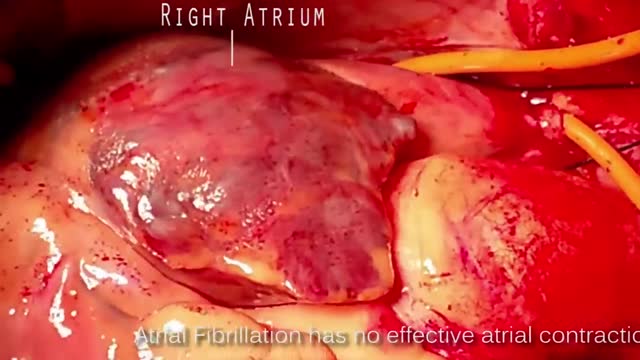 Atrial fibrillation vs Atrial Flutter61,493 views
 Cardioversion of Atrial Flutter13,434 views
 Atrial flutter1,622 views
 Atrial Flutter Drug Treatment1,449 views
Guide
What it is
Atrial flutter is caused by a rapid electrical circuit looping around one of the upper chambers, usually the right atrium. The upper chambers fire in a fast, organised rhythm — typically around 300 times a minute — far too fast for the lower chambers to follow beat for beat. The AV node acts as a filter, letting only some impulses through, so the pulse is fast but often steady. Flutter is closely related to atrial fibrillation and the two often appear in the same person at different times.
What the tracing shows
The giveaway is the baseline between QRS complexes: instead of returning to flat, it rises and falls in a regular zigzag, like the teeth of a saw. These flutter waves are seen best in the leads looking up at the heart from below and in lead V1. The lower chambers respond at a steady fraction of the atrial rate — often every second or fourth flutter wave produces a QRS — so the pulse is frequently regular, a key difference from atrial fibrillation. When the rate is around 150 and regular, flutter is high on the list of suspects.
What it can mean
Atrial flutter matters for the same reasons as atrial fibrillation: blood flow in the upper chambers is disturbed, so stroke prevention with a blood thinner is usually considered, and a persistently fast pulse can strain or weaken the heart. Flutter is often harder to slow with medicines than fibrillation, but it is one of the rhythm problems most curable by catheter ablation, a procedure that interrupts the circuit. Many people have both flutter and fibrillation at different times, so follow-up tracings matter even after successful treatment.
When it is urgent
A new racing, regular pulse near 150, or flutter with chest pain, breathlessness, or fainting, needs urgent assessment. If you are told you have atrial flutter, expect discussion of a blood thinner, rate control, and often referral for possible ablation. Because flutter and fibrillation overlap, report any return of palpitations even after treatment. As with fibrillation, weakness of the face, arm, or leg, or speech problems are stroke warning signs and always an emergency.
Common questions
Is atrial flutter the same as atrial fibrillation?
No. Atrial flutter is an organised, rapid circuit in the upper chambers, while atrial fibrillation is chaotic quivering. They are related, often occur in the same person, and are treated similarly in several ways, but the ECG patterns differ.
Which leads show flutter waves best?
The sawtooth baseline is clearest in the lower-viewing leads (II, III, aVF) and in chest lead V1. In other leads the flutter waves can hide inside the QRS complexes and T waves.
How is atrial flutter treated?
Atrial flutter is often very responsive to a catheter procedure called ablation, which interrupts the circuit in the right upper chamber. Medicines to control rate and blood thinners to reduce stroke risk are also used.
How fast does the heart beat in atrial flutter?
About 300 beats per minute is typical for the upper chambers in flutter. Because the AV node usually blocks some of these impulses, the pulse is often near 150 if every second impulse gets through.
More in Rhythm Patterns
Related
Sources
- Heart Arrhythmia (MedlinePlus)
- Atrial Fibrillation (MedlinePlus)
- Arrhythmia (British Heart Foundation)
- Electrocardiogram (ECG) test (MedlinePlus)
This guide is general information, not medical advice, and does not replace advice from your own clinician. ECG patterns should always be interpreted in context by a trained professional. If you have chest pain, severe breathlessness, fainting or a racing heartbeat that will not settle, seek urgent medical care. Atrial flutter and atrial fibrillation are related but different rhythms; treatment and stroke-risk decisions are made individually with your clinician.