
- Procedures & Tests
- Symptoms A-Z
- Symptom Checker
- Kidney Diet
- First Aid
- Anatomy Atlas
- Ask MedicalVideos
- Drug Guide
- Lab Values
- Vital Signs
- Muscles A–Z
- Clinical Signs
- Medical Abbreviations
- Medical Terminology
- Physical Examination
- Surgical Examination
- Ophthalmology
- Clinical Skills
- Orthopedics
- Surgery Videos
- Laparoscopy
- Pediatrics
- Medical Humor
- Cardiothoracic Surgery
- Nursing Videos
- Plastic Surgery
- Otorhinolaryngology
- Histology and Histopathology
- Neurosurgery
- Dermatology
- Pediatric Surgery
- Urology
- Dentistry
- Oncology and Cancers
- Anatomy Videos
- Health and Fitness
- Radiology
- Anaesthesia
- Physical Therapy
- Pharmacology
- Interventional Radiology
- Cardiology
- Endocrinology
- Gynecology
- Emergency Medicine
- Psychiatry and Psychology
- Childbirth Videos
- General Medical Videos
- Nephrology
- Physiology
- Diet and Food Health
- Diabetes Mellitus
- Neurology
- Women Health
- Osteoporosis
- Gastroenterology
- Pulmonology
- Hematology
- Rheumatology
- Toxicology
- Nuclear Medicine
- Infectious Diseases
- Vascular Disease
- Reproductive Health
- Burns and Wound Healing
- Kidney Zone Podcast
- Other







Romberg Test Reflex
Mohamed. Romberg Test Reflex [video]. MedicalVideos.com; 2024 Jan 17 [cited 2026 Nov 21]. Available from: https://www.medicalvideos.com/watch/romberg-test-reflex_AVV30cGFSjnvEEyqWrFy.html
Mohamed (2024, January 17). Romberg Test Reflex [Video]. MedicalVideos.com. https://www.medicalvideos.com/watch/romberg-test-reflex_AVV30cGFSjnvEEyqWrFy.html
Mohamed. “Romberg Test Reflex.” MedicalVideos.com, 17 Jan. 2024, https://www.medicalvideos.com/watch/romberg-test-reflex_AVV30cGFSjnvEEyqWrFy.html. Accessed 21 Nov. 2026.
@misc{medicalvideos2024_AVV30cGFSjnvEEyqWrFy,
  author = {Mohamed},
  title = {Romberg Test Reflex},
  publisher = {MedicalVideos.com},
  year = {2024},
  month = {1},
  url = {https://www.medicalvideos.com/watch/romberg-test-reflex_AVV30cGFSjnvEEyqWrFy.html},
  note = {Video},
  urldate = {2026-11-21}
}Vancouver (NLM) is the manuscript standard for medical journals. RIS imports into EndNote, Zotero and Mendeley.

Educational only: videos on MedicalVideos.com are for general information and are not medical advice. Always consult your own doctor about your health.
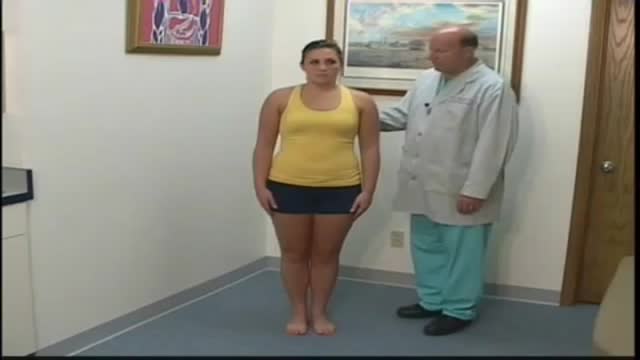
This examination demonstration shows how to perform the Romberg test for position sense. The patient stands with feet together, first with eyes open and then closed, while the examiner watches for loss of balance, then checks pronator drift and the response of the raised arms. It is a study aid for neurological examination skills.
This video in 30 seconds
This video shows the Romberg test, a reflex and balance assessment. The footage demonstrates the test being performed.
Key points
- Shows the Romberg test
- Demonstrates the reflex assessment described
- Presents the clinical test footage
Video Transcript
This examination demonstration shows how to perform the Romberg test for position sense: the patient stands with feet together, first with eyes open and then closed for 20 to 30 seconds, and a positive test is when balance is kept with eyes open but lost with eyes closed. The examiner then checks for pronator drift with the arms held forward, palms up and eyes closed, and finishes by tapping the raised arms briskly downward to watch them return to horizontal.
Read the full transcript
Perform the Romberg test, which primarily tests position sense. To do this, ask the patient to stand with his feet together. Normally, he should be able to maintain this posture with his eyes open, indicating intact cerebellar function. Now have the patient do the same thing for 20 to 30 seconds with his eyes closed. His posture should remain steady, with only minimal swaying, indicating intact position sense. If the patient maintains this posture with his eyes open, but not with his eyes closed, he has a positive Romberg test. Now check for a pronator drift.
To do this, ask the patient to hold his arms forward and parallel with the palms up, and to close his eyes for 20 to 30 seconds. Normally, the patient can maintain this position, but watch for downward drifting of one arm and pronation of the forearm, which suggests mild hemiparesis. Stay just as you are. Finally, ask the patient to keep his arms up and eyes closed while you tap the arms briskly downward. Normally, the patient's arms return smoothly to the horizontal position.
Transcript auto-generated from the video’s audio for accessibility and study. Educational content only — not medical advice.
Related reading
Save videos for later
Create a free account to build your own watch-later list and playlists, and pick up where you left off on any device.
Medical Videos
Free medical and surgery videos for patients, students and professionals — trusted since 2007.
Founded by Dr. Mohamed Ibrahim, MD, PhD — physician-scientist.
Follow us on Facebook · Instagram
SORT BY-
Top Comments
-
Latest comments