- Physical Examination
- Surgical Examination
- Ophthalmology
- Clinical Skills
- Orthopedics
- Surgery Videos
- Laparoscopy
- Pediatrics
- Funny Videos
- Cardiothoracic Surgery
- Nursing Videos
- Plastic Surgery
- Otorhinolaryngology
- Histology and Histopathology
- Neurosurgery
- Dermatology
- Pediatric Surgery
- Urology
- Dentistry
- Oncology and Cancers
- Anatomy Videos
- Health and Fitness
- Radiology
- Anaesthesia
- Physical Therapy
- Pharmacology
- Interventional Radiology
- Cardiology
- Endocrinology
- Gynecology
- Emergency Medicine
- Psychiatry and Psychology
- Childbirth Videos
- General Medical Videos
- Nephrology
- Physiology
- Diet and Food Health
- Diabetes Mellitus
- Neurology
- Women Health
- Osteoporosis
- Gastroenterology
- Pulmonology
- Hematology
- Rheumatology
- Toxicology
- Nuclear Medicine
- Infectious Diseases
- Vascular Disease
- Reproductive Health
- Burns and Wound Healing
- Kidney Zone Podcast
- Other
Pancreas
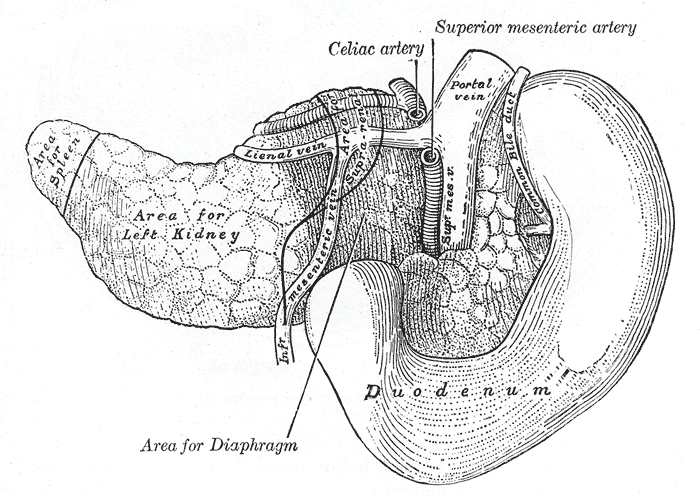
Gray's Anatomy (1918) plate, public domain
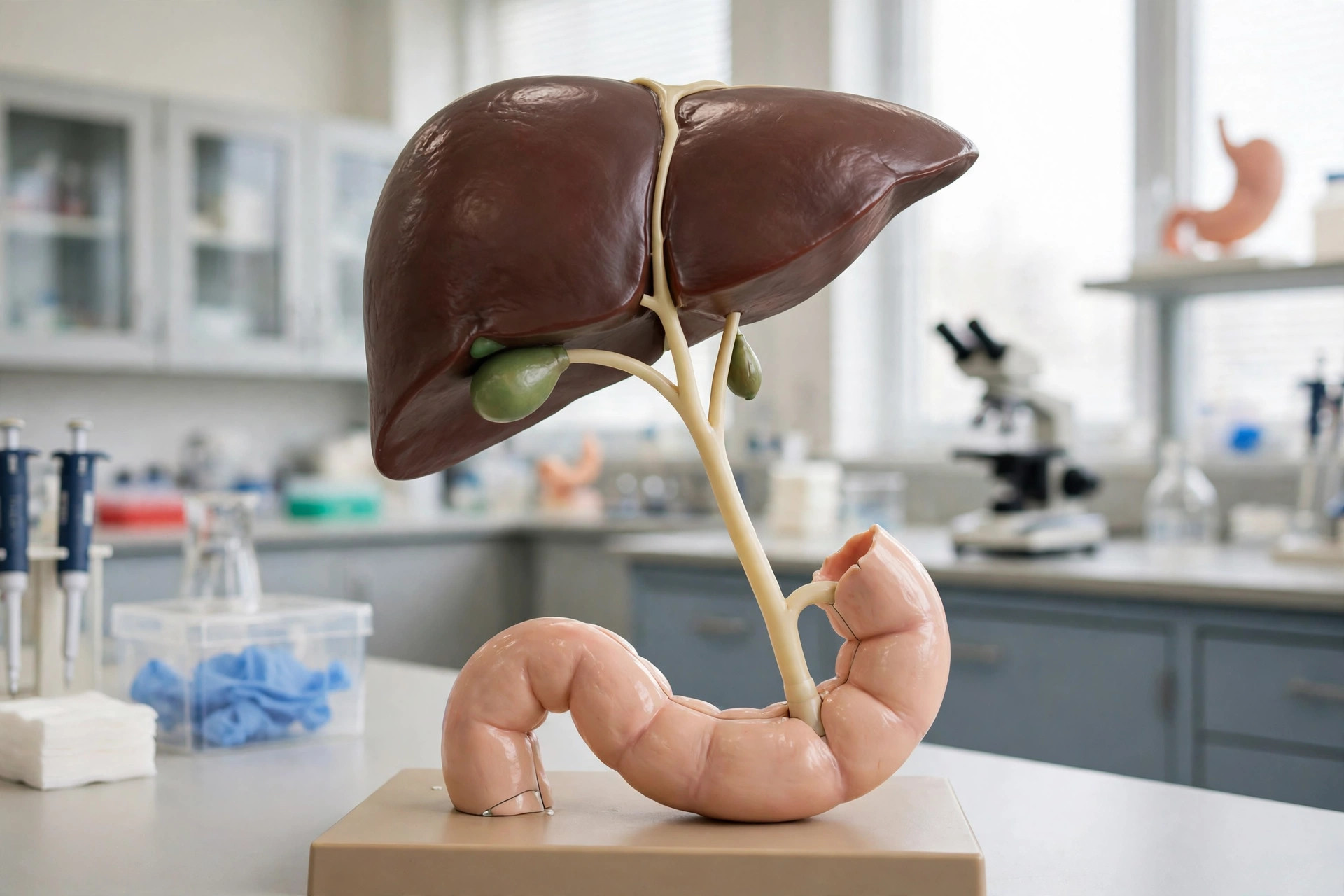
The pancreas is a soft, elongated gland lying across the back of the upper abdomen, behind the stomach. It has two jobs: its bulk produces powerful digestive enzymes that flow through the pancreatic duct into the duodenum, while scattered islands of hormone-producing cells (the islets) release insulin and glucagon into the blood to control sugar levels. Its head nestles into the curve of the duodenum; its tail reaches the spleen.
Key facts
- Pancreatic juice is the most complete digestive fluid, containing enzymes for fats, proteins and carbohydrates.
- Its enzymes are released in inactive form and switched on only inside the intestine, so they do not digest the pancreas itself.
- About 1-2 million islets are scattered through the gland, though they make up only a small fraction of its weight.
- The gland has no complete capsule, which lets inflammation spread to surrounding tissues.
What can go wrong
Inflammation (pancreatitis) — most often from gallstones or alcohol — lets enzymes activate inside the gland, causing severe upper abdominal pain and sometimes life-threatening illness. Long-standing inflammation (chronic pancreatitis) scars the gland, impairing digestion and causing diabetes. Pancreatic cancer often presents late with weight loss, jaundice or new diabetes. Because it lies deep, assessment relies on CT, MRI and endoscopic ultrasound.
Related conditions
Related procedures & tests
Related symptoms
Watch: related videos
Frequently asked questions
Why is the pancreas called a mixed gland?
It is both exocrine — delivering enzymes through a duct into the duodenum — and endocrine, releasing hormones such as insulin directly into the bloodstream.
Can you live without a pancreas?
People do live after its surgical removal, but they need lifelong enzyme replacement with meals and insulin, because both of the gland's jobs must be replaced.
Educational information only. This atlas explains normal anatomy and describes conditions in general terms; it is not medical advice and does not replace assessment by a qualified clinician. If you have symptoms that worry you, seek medical care.