- Physical Examination
- Surgical Examination
- Ophthalmology
- Clinical Skills
- Orthopedics
- Surgery Videos
- Laparoscopy
- Pediatrics
- Funny Videos
- Cardiothoracic Surgery
- Nursing Videos
- Plastic Surgery
- Otorhinolaryngology
- Histology and Histopathology
- Neurosurgery
- Dermatology
- Pediatric Surgery
- Urology
- Dentistry
- Oncology and Cancers
- Anatomy Videos
- Health and Fitness
- Radiology
- Anaesthesia
- Physical Therapy
- Pharmacology
- Interventional Radiology
- Cardiology
- Endocrinology
- Gynecology
- Emergency Medicine
- Psychiatry and Psychology
- Childbirth Videos
- General Medical Videos
- Nephrology
- Physiology
- Diet and Food Health
- Diabetes Mellitus
- Neurology
- Women Health
- Osteoporosis
- Gastroenterology
- Pulmonology
- Hematology
- Rheumatology
- Toxicology
- Nuclear Medicine
- Infectious Diseases
- Vascular Disease
- Reproductive Health
- Burns and Wound Healing
- Kidney Zone Podcast
- Other
Shoulder Joint
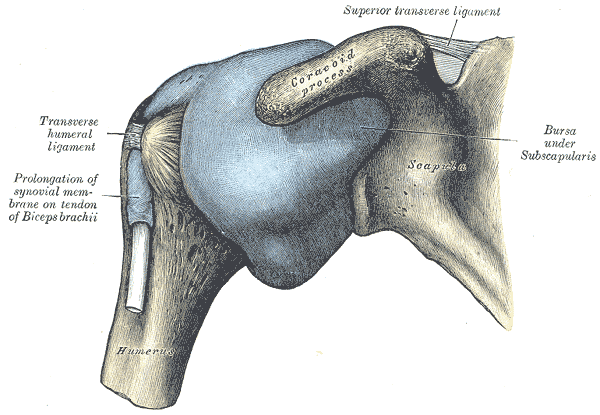
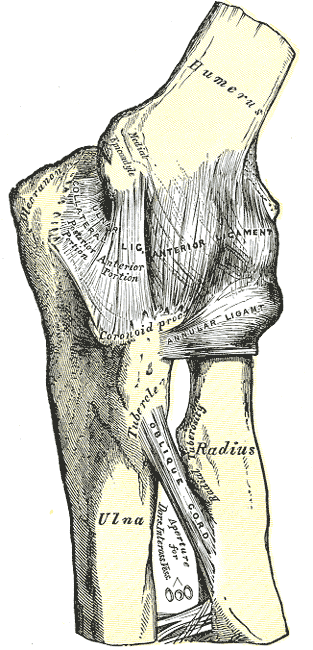
Gray's Anatomy (1918) plate, public domain
The shoulder joint (glenohumeral joint) is the ball-and-socket joint between the humerus head and the shallow socket (glenoid) of the scapula. It is the body's most mobile joint — the golf-ball-on-a-tee socket sacrifices stability for range, and stability comes instead from the rotator cuff muscles, the socket's cartilage rim (labrum), ligaments and capsule. The shoulder blade's movements add further range, letting the arm reach overhead in all directions.
Key facts
- The socket covers only about a third of the ball — the price of its unmatched mobility.
- Four rotator cuff muscles (supraspinatus, infraspinatus, teres minor, subscapularis) centre the ball in the socket during movement.
- Full arm elevation is a partnership: for every 3 degrees, roughly 2 come from the joint and 1 from the shoulder blade.
- It is the most commonly dislocated major joint, usually forward (anterior).
What can go wrong
Because stability is soft-tissue-dependent, the shoulder dislocates more readily than any other major joint, often tearing the labrum and predisposing to recurrences in the young. Rotator cuff tendons wear and tear with age, causing pain and weakness, especially on lifting. Stiffness after injury or from capsular inflammation (frozen shoulder) can restrict movement for months. Arthritis usually follows previous injury or cuff failure.
Related procedures & tests
- Shoulder arthroscopy and rotator cuff repair
- X-ray (general)
- Joint injection (corticosteroid / hyaluronic acid)
Related symptoms
Related muscles
Watch: related videos
Frequently asked questions
Why does the shoulder dislocate so easily?
Its socket is shallow and the ball large, maximising movement; a fall on an outstretched or twisted arm can lever the ball out, especially forward.
What is a frozen shoulder?
Adhesive capsulitis: the joint capsule inflames and tightens, causing pain and progressive stiffness in all directions, typically evolving over many months and often linked with diabetes.
Educational information only. This atlas explains normal anatomy and describes conditions in general terms; it is not medical advice and does not replace assessment by a qualified clinician. If you have symptoms that worry you, seek medical care.