- Physical Examination
- Surgical Examination
- Ophthalmology
- Clinical Skills
- Orthopedics
- Surgery Videos
- Laparoscopy
- Pediatrics
- Funny Videos
- Cardiothoracic Surgery
- Nursing Videos
- Plastic Surgery
- Otorhinolaryngology
- Histology and Histopathology
- Neurosurgery
- Dermatology
- Pediatric Surgery
- Urology
- Dentistry
- Oncology and Cancers
- Anatomy Videos
- Health and Fitness
- Radiology
- Anaesthesia
- Physical Therapy
- Pharmacology
- Interventional Radiology
- Cardiology
- Endocrinology
- Gynecology
- Emergency Medicine
- Psychiatry and Psychology
- Childbirth Videos
- General Medical Videos
- Nephrology
- Physiology
- Diet and Food Health
- Diabetes Mellitus
- Neurology
- Women Health
- Osteoporosis
- Gastroenterology
- Pulmonology
- Hematology
- Rheumatology
- Toxicology
- Nuclear Medicine
- Infectious Diseases
- Vascular Disease
- Reproductive Health
- Burns and Wound Healing
- Kidney Zone Podcast
- Other
Sinoatrial Node
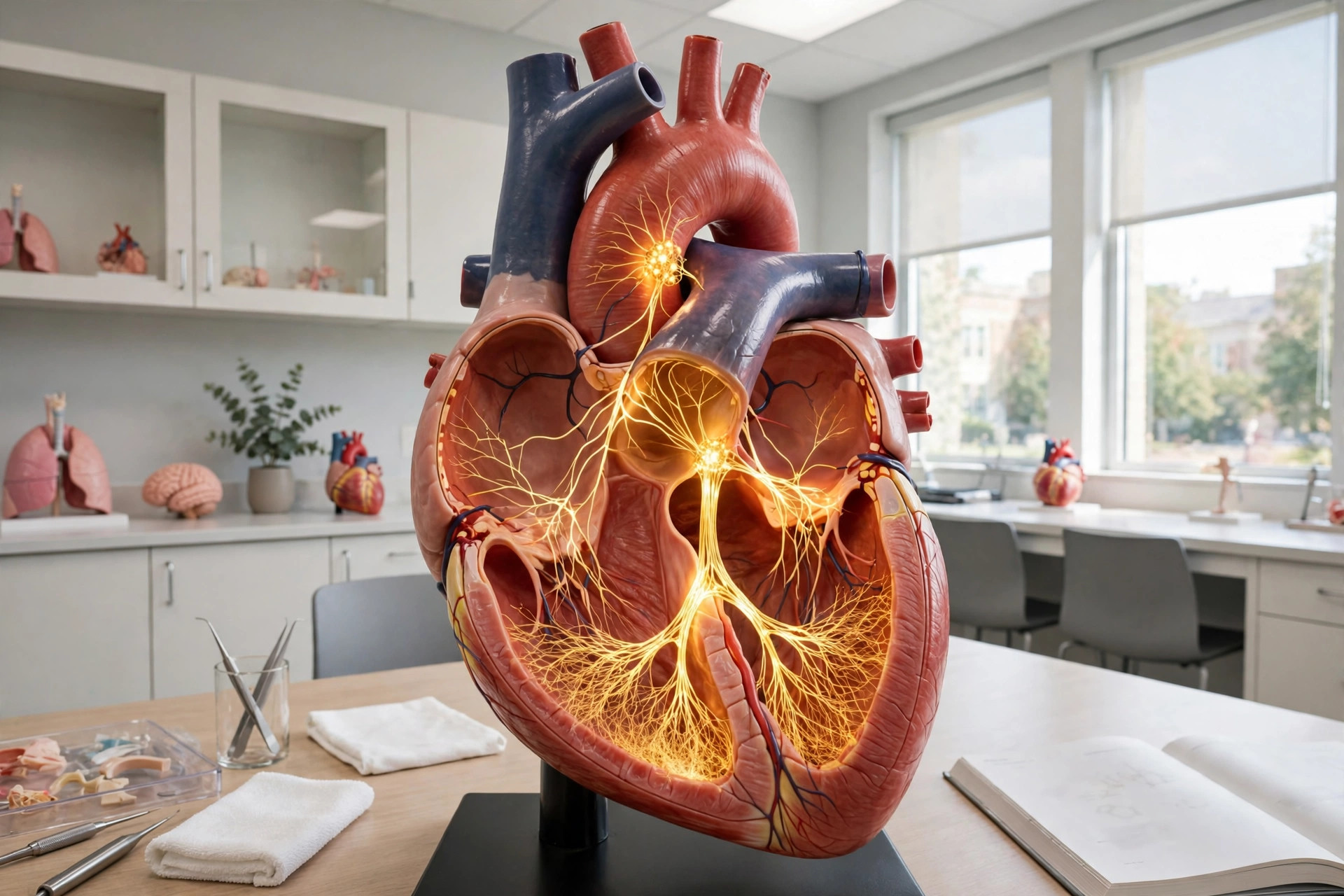
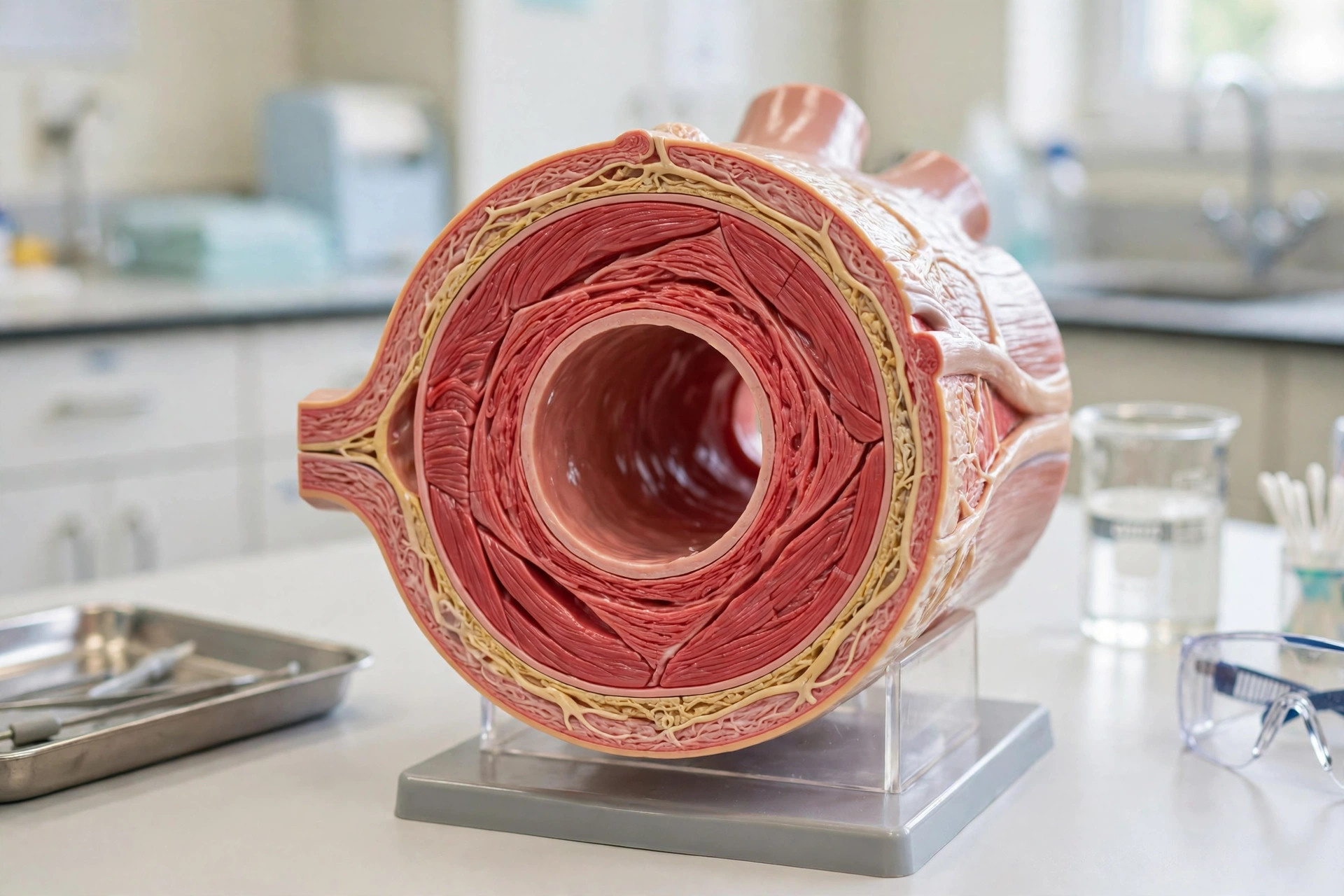
AI-generated anatomical illustration
The sinoatrial (SA) node is the heart's natural pacemaker: a small crescent of specialised cells in the wall of the right atrium, near where the superior vena cava enters. Its cells generate an electrical impulse spontaneously — about 60-100 times a minute at rest — which spreads across the atria, is delayed briefly at the AV node, then races down the ventricles' conduction tissue to trigger a coordinated beat. Nerves and hormones adjust its rate constantly.
Key facts
- The SA node fires fastest of all the heart's potential pacemakers, so it normally overrules the slower backup sites.
- Its rate is set moment-to-moment: adrenaline speeds it, the vagus nerve slows it.
- Even a completely denervated (transplanted) heart keeps beating because the node is intrinsic to the organ.
- The AV node's brief delay lets the atria finish emptying into the ventricles before they contract.
What can go wrong
When the SA node falters — with age-related scarring, after heart surgery, or from medicines — the result can be sick sinus syndrome: pauses, alternating slow and fast rhythms, fainting or fatigue, sometimes needing an artificial pacemaker. If its impulses are chaotic, atrial fibrillation can result, in which the atria quiver rather than contract. The ECG records the node's activity as the P wave before each beat.
Related procedures & tests
- Electrocardiogram (ECG/EKG)
- Pacemaker implantation
- Holter monitor (24–48 hour ECG)
- Implantable loop recorder
Related symptoms
Frequently asked questions
What happens if the SA node stops?
Backup pacemaker tissues take over at slower rates — the AV junction at 40-60 a minute, ventricular tissue slower still — usually preserving consciousness but often causing symptoms.
How does a pacemaker replace its function?
An implanted device senses the heart's activity and delivers a tiny electrical pulse whenever the natural impulse is absent or too slow, restoring a reliable rate.
Educational information only. This atlas explains normal anatomy and describes conditions in general terms; it is not medical advice and does not replace assessment by a qualified clinician. If you have symptoms that worry you, seek medical care.