
- Physical Examination
- Surgical Examination
- Ophthalmology
- Clinical Skills
- Orthopedics
- Surgery Videos
- Laparoscopy
- Pediatrics
- Funny Videos
- Cardiothoracic Surgery
- Nursing Videos
- Plastic Surgery
- Otorhinolaryngology
- Histology and Histopathology
- Neurosurgery
- Dermatology
- Pediatric Surgery
- Urology
- Dentistry
- Oncology and Cancers
- Anatomy Videos
- Health and Fitness
- Radiology
- Anaesthesia
- Physical Therapy
- Pharmacology
- Interventional Radiology
- Cardiology
- Endocrinology
- Gynecology
- Emergency Medicine
- Psychiatry and Psychology
- Childbirth Videos
- General Medical Videos
- Nephrology
- Physiology
- Diet and Food Health
- Diabetes Mellitus
- Neurology
- Women Health
- Osteoporosis
- Gastroenterology
- Pulmonology
- Hematology
- Rheumatology
- Toxicology
- Nuclear Medicine
- Infectious Diseases
- Vascular Disease
- Reproductive Health
- Burns and Wound Healing
- Kidney Zone Podcast
- Other
Tennis Elbow
Tennis elbow is a painful condition on the outside of the elbow, caused by overuse of the forearm muscles and tendons that straighten the wrist and fingers. Despite its name, most people who develop it never play tennis. This page explains its symptoms, causes, and treatment in plain language, with videos to help you follow the key points.
✓ Medically reviewed by Dr. Mohamed Ibrahim, MD, PhD — physician-scientist · Last reviewed: November 2026
In short: In tennis elbow, repeated gripping and wrist movements strain the tendon that anchors the forearm muscles to the outer elbow. It causes aching pain and a weaker grip, and it usually settles with rest from the aggravating activity, exercises, and time rather than surgery.
Watch: Tennis Elbow videos
Read: the plain-language guide
Overview
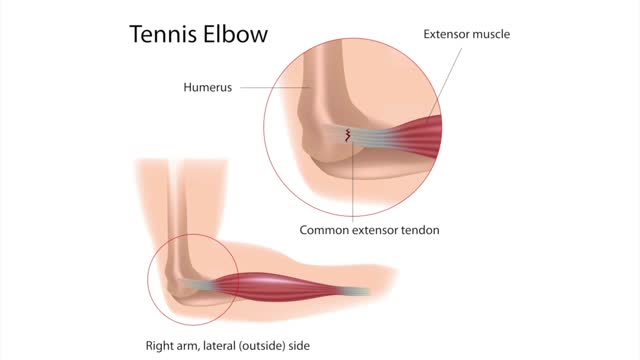
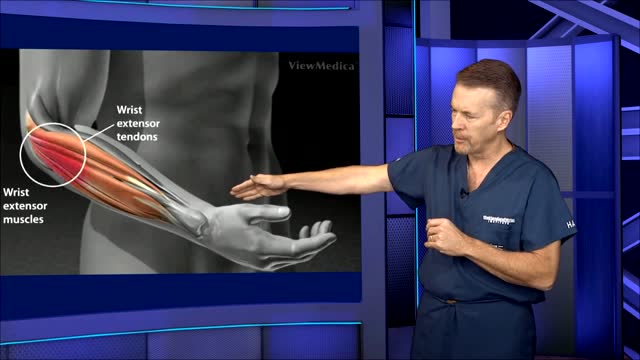
The forearm muscles that lift the wrist and fingers join into a tendon that attaches to the bony bump on the outside of the elbow. When these muscles are overloaded again and again, the tendon attachment becomes sore and its tissue gradually weakens. The result is pain focused at that bony point, sometimes spreading down the forearm. Tennis elbow is a wear-and-overuse problem rather than sudden damage, which is why it builds up over weeks, and why it usually heals once the strain is reduced and the tendon is strengthened.
Symptoms
The main symptom is pain or aching on the outside of the elbow, which may spread into the forearm and wrist. Gripping becomes uncomfortable: lifting a kettle, turning a door handle, shaking hands, or carrying a shopping bag can all hurt. The grip may feel weaker than usual, and the elbow can be stiff first thing in the morning. The bony bump on the outer elbow is often tender to press. Symptoms usually affect the dominant arm and come on gradually, without a single injury that explains them.
Causes & risk factors
Tennis elbow develops when the wrist and forearm muscles are used repetitively under load. Racket sports with a lot of backhand strokes are one trigger, but trades and tasks are more common causes: plumbing, carpentry, painting, bricklaying, typing and mouse work, and repeated lifting or tool use. It most often appears in adults in their thirties to fifties. Poor technique, equipment that does not suit the user, and a sudden increase in activity can all add to the strain on the tendon.
How it's diagnosed
A clinician can usually diagnose tennis elbow from the story and a simple examination. Pressing on the bony bump and asking you to straighten the wrist against resistance typically reproduce the pain. Scans are not usually needed. They may be arranged if the diagnosis is uncertain, if symptoms follow an injury, or if another problem such as arthritis or a trapped nerve is suspected. The neck and shoulder are sometimes checked too, because problems there can cause similar arm pain.
Treatment overview
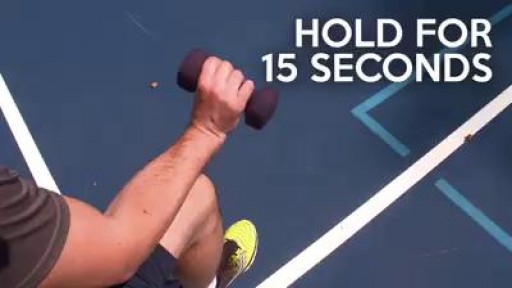
Treatment starts with easing the strain: avoiding or adapting the movements that hurt, using ice after activity, and simple pain relief if needed. A physiotherapist can teach exercises that gradually load and strengthen the tendon, which is the mainstay of recovery. A forearm strap or brace may reduce pain during activity. Your doctor may discuss an injection if pain persists despite these measures, and surgery is only occasionally considered for cases that do not settle over a long period.
When to seek care
Seek prompt assessment for elbow pain that follows a fall or injury, especially with swelling, bruising, or difficulty moving the arm. Get checked soon if the elbow becomes hot, red, or swollen, if you develop numbness in the hand, or if pain is no better after several weeks of self-care.
Frequently asked questions
Is tennis elbow only caused by playing tennis?
No. Tennis elbow is caused by any repeated gripping or wrist-straightening work, and most cases come from jobs and everyday tasks such as decorating, plumbing, gardening, or heavy keyboard use. Racket sports are only one of many triggers.
How long does tennis elbow take to heal?
Tennis elbow usually settles over weeks to months once the aggravating activity is reduced and strengthening exercises are done regularly. Recovery is often slow because tendons heal gradually, so steady progress matters more than complete rest.
Should I stop using my arm completely?
No. Complete rest usually weakens the tendon further and is not recommended. It is better to avoid or adapt the specific movements that cause sharp pain while keeping the arm moving and following a graded exercise programme.
Will I need surgery for tennis elbow?
Usually not. Most people recover with activity changes, exercises, and time. Surgery is considered only when pain has persisted for many months despite full non-surgical treatment, and your specialist can explain whether it is appropriate in your case.
More in Bones/Joints/Muscles
Related topics on MedicalVideos.com
Sources & further reading
Authoritative references for readers who want to go deeper:
This page is for general education only and is not medical advice. Sudden elbow pain after a fall or injury, especially with swelling or inability to move the arm, may be a fracture and needs same-day assessment rather than self-treatment as tennis elbow.