
- Procedures & Tests
- Symptoms A-Z
- Symptom Checker
- Kidney Diet
- First Aid
- Anatomy Atlas
- Ask MedicalVideos
- Drug Guide
- Lab Values
- Vital Signs
- Muscles A–Z
- Clinical Signs
- Medical Abbreviations
- Medical Terminology
- Physical Examination
- Surgical Examination
- Ophthalmology
- Clinical Skills
- Orthopedics
- Surgery Videos
- Laparoscopy
- Pediatrics
- Medical Humor
- Cardiothoracic Surgery
- Nursing Videos
- Plastic Surgery
- Otorhinolaryngology
- Histology and Histopathology
- Neurosurgery
- Dermatology
- Pediatric Surgery
- Urology
- Dentistry
- Oncology and Cancers
- Anatomy Videos
- Health and Fitness
- Radiology
- Anaesthesia
- Physical Therapy
- Pharmacology
- Interventional Radiology
- Cardiology
- Endocrinology
- Gynecology
- Emergency Medicine
- Psychiatry and Psychology
- Childbirth Videos
- General Medical Videos
- Nephrology
- Physiology
- Diet and Food Health
- Diabetes Mellitus
- Neurology
- Women Health
- Osteoporosis
- Gastroenterology
- Pulmonology
- Hematology
- Rheumatology
- Toxicology
- Nuclear Medicine
- Infectious Diseases
- Vascular Disease
- Reproductive Health
- Burns and Wound Healing
- Kidney Zone Podcast
- Other
Pediatrics
Pediatric videos: child health, newborn care, common childhood illnesses and pediatric procedures explained for parents, students and clinicians. Free.
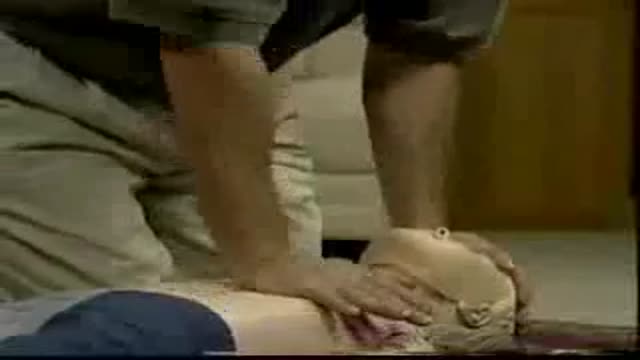

This brief narrated clip explains what to do when an unresponsive child's airway is obstructed. If rescue breaths fail to make the chest rise, the head is repositioned and the breath tried again; if the chest still does not rise, CPR begins, with a look into the throat for a visible object each time the airway is opened.
Michael Marcus, MD Pediatric Pulmonary www.DrMDK.com Maimonides Medical Center Fellowship:Children’s Hospital of Philadelphia www.DrMDK.com
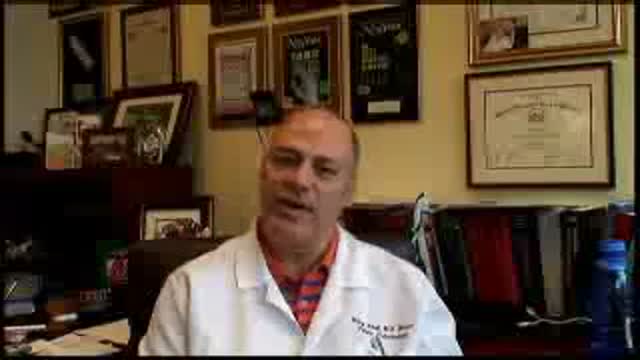
This video explains childhood obesity in an interview with a pediatric endocrinologist. Reduced daily physical activity and larger portions of snacks and junk food are discussed as the main drivers of rising weight in children. The role of genetics, and the balance between calories eaten and calories burned, is also covered.
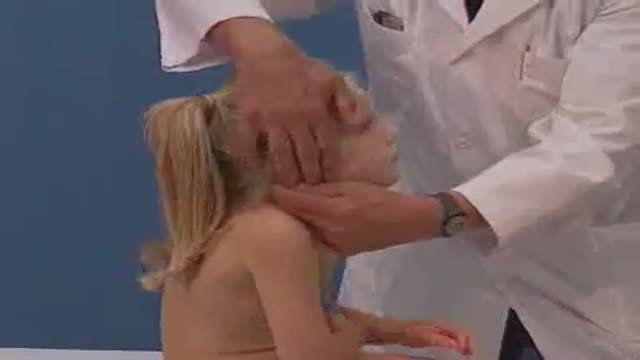

A pediatric examination of the lymph nodes is demonstrated in this clinical video for child health assessment. The examiner palpates the lymph node regions as part of a routine physical examination of a child. The recording is a training resource for students learning pediatric examination skills.
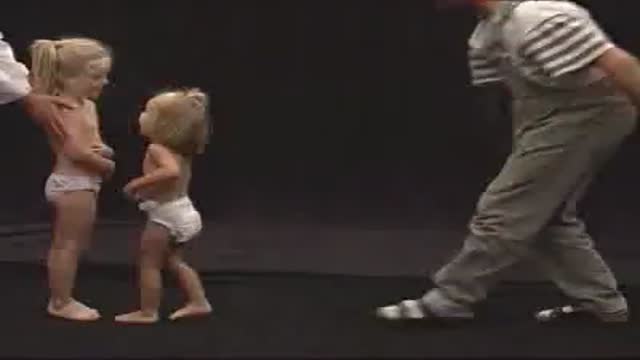
This paediatric teaching film demonstrates the musculoskeletal examination of children. It covers inspection of proportions and posture, examination of the pelvis and spine including the forward-bend check for scoliosis, functional tests such as squatting, and joint assessment, noting the importance of examining the hip when a child reports knee pain. It is a study resource for paediatric examination.
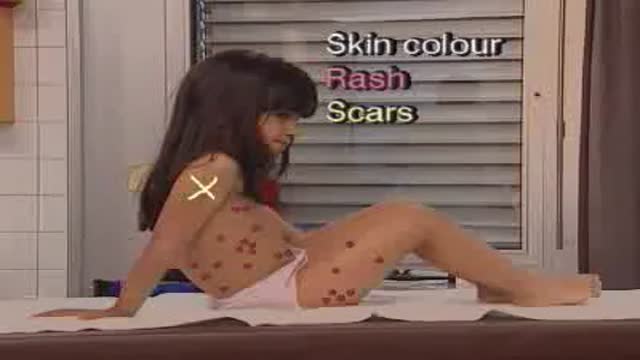
If your body makes too little melanin, your skin gets lighter. Vitiligo is a condition that causes patches of light skin. Albinism is a genetic condition affecting a person's skin. A person with albinism may have no color, lighter than normal skin color, or patchy missing skin color.
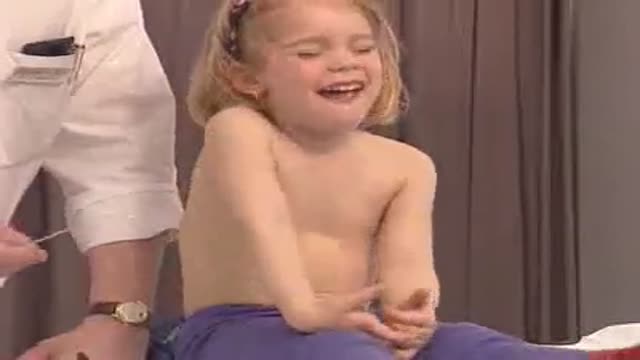
Meningitis is a common life-threatening medical emergency caused by infectious and non-infectious agents. Rapid and accurate evaluation by history and clinical examination is helpful to guide further specific investigation and treatment. Kernig's sign, Brudzinski's sign, and nuchal rigidity are bedside diagnostic signs used to evaluate suspected cases of meningitis. The presence of meningeal irritation, however, is not pathognomonic for meningitis.
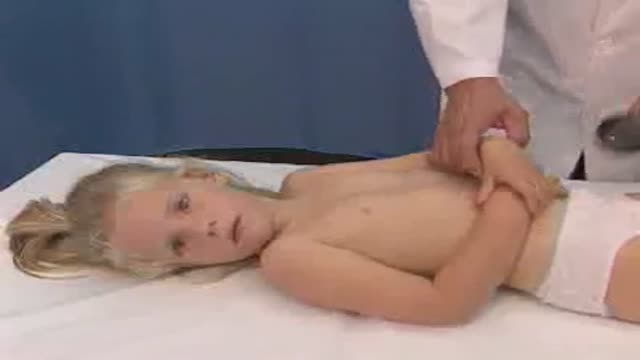
In a normal person, when a muscle tendon is tapped briskly, the muscle immediately contracts due to a two-neuron reflex arc involving the spinal or brainstem segment that innervates the muscle. The afferent neuron whose cell body lies in a dorsal root ganglion innervates the muscle or Golgi tendon organ associated with the muscles; the efferent neuron is an alpha motoneuron in the anterior horn of the cord. The cerebral cortex and a number of brainstem nuclei exert influence over the sensory input of the muscle spindles by means of the gamma motoneurons that are located in the anterior horn; these neurons supply a set of muscle fibers that control the length of the muscle spindle itself. Hyporeflexia is an absent or diminished response to tapping. It usually indicates a disease that involves one or more of the components of the two-neuron reflex arc itself. Hyperreflexia refers to hyperactive or repeating (clonic) reflexes. These usually indicate an interruption of corticospinal and other descending pathways that influence the reflex arc due to a suprasegmental lesion, that is, a lesion above the level of the spinal reflex pathways.
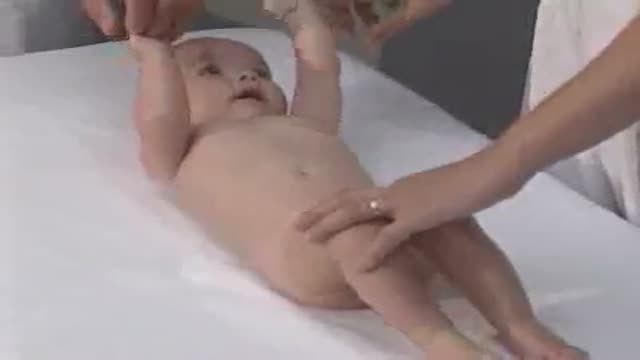
This pediatrics video demonstrates the abdominal examination in a child, using the standard sequence taught at the bedside. The assessment includes inspection, palpation, percussion, and auscultation, adapted for the examination of younger patients. Abdominal examination is a core part of the pediatric physical assessment.
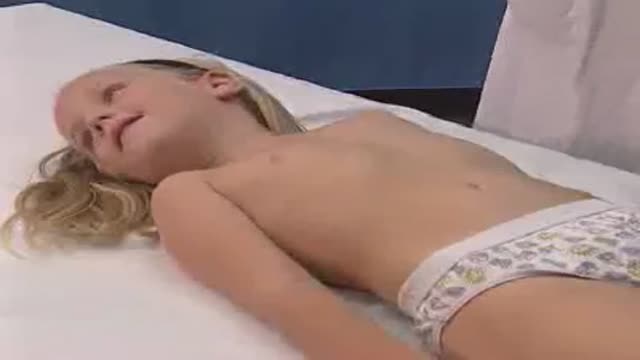
This pediatrics video demonstrates the examination of the lungs and respiration in newborns and children. The assessment covers the breathing pattern, chest movement, and lung sounds, which are central elements of the respiratory examination in young patients. Respiratory assessment is one of the most frequently performed checks in child health.
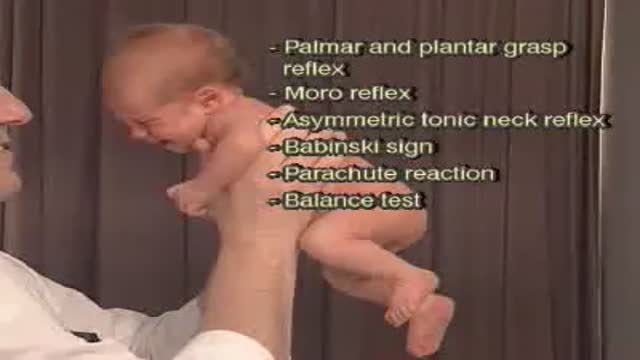
Primitive reflexes are reflex actions originating in the central nervous system that are exhibited by normal infants, but not neurologically intact adults, in response to particular stimuli. These reflexes are absent due to the development of the frontal lobes as a child transitions normally into child development.
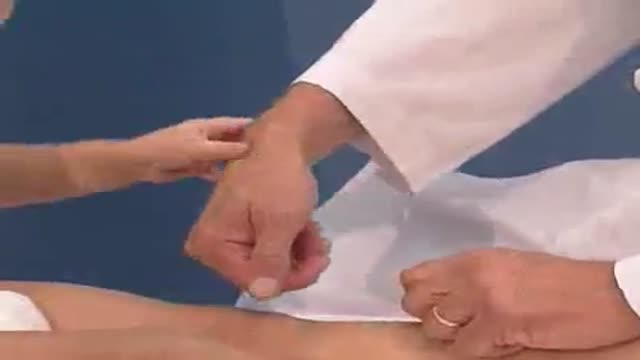
This paediatric teaching clip shows playful testing of muscle strength and tone in children. The examiner has the child pull against the fingertips and stand on tiptoe, demonstrates the Gower sign in muscular dystrophy, and uses the pull-to-sit test in a baby with low tone. It is a study aid for the paediatric neurological examination.
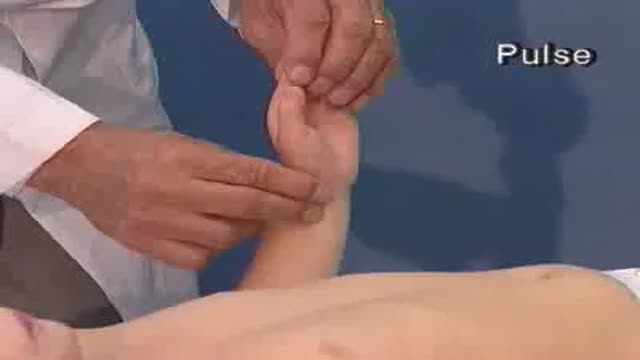
A cardiovascular examination in a child patient is demonstrated in this pediatrics video, covering pulse, blood pressure, and capillary refill time. These bedside checks are core parts of the pediatric physical assessment. A clinical-skills resource for medical students. Educational only — not medical advice.
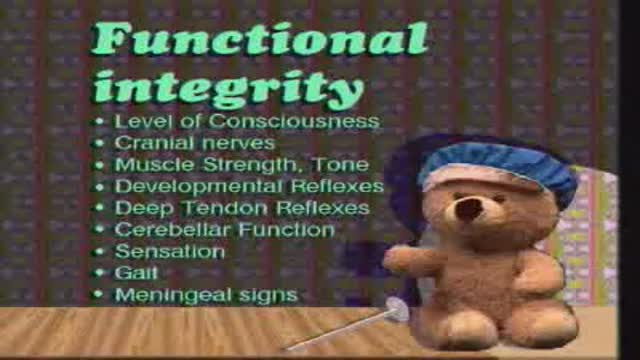
Level of consciousness, cranial nerves, muscle strength and tone, reflexes, cerebellar functions, gait, sensations...
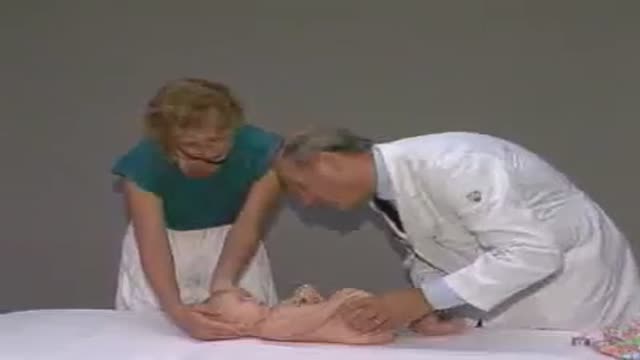
This educational film outlines the pattern of psychomotor development in healthy young children. It follows milestones from the social smile and visual tracking in the first months to first steps and words, two-word combinations, and riding a tricycle at three, and introduces the Denver Developmental Screening Test. It is a study aid for child development.
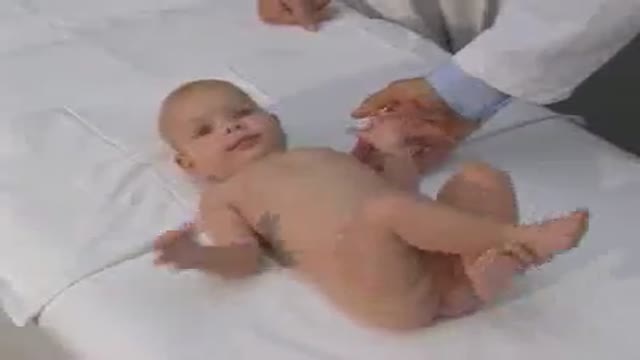
Careful observation of a baby's movements is the subject of this paediatric teaching clip. The narration looks for symmetry, stereotyped movements and postural preferences, and shows a baby who moves one arm much less than the other. It places simple observation within wider developmental and neurological assessment of young children.
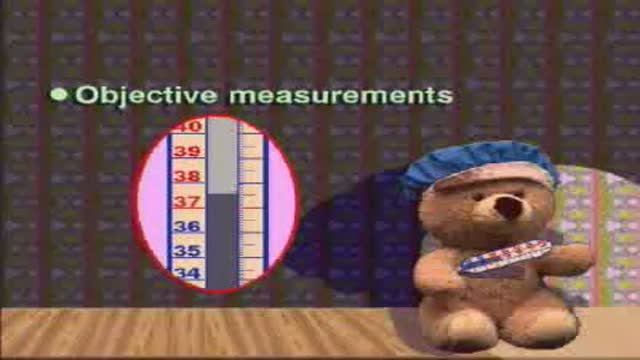
Pediatric measurements are demonstrated in this child health examination video. The recording shows how length, weight, and other standard measurements are taken during assessment of a child. It is an educational resource for students learning the basics of pediatric physical assessment.

This teaching video explains how to take a medical history from a child. It covers history from parents, pregnancy and birth, development, diet, vaccinations and infections, and building trust with child and family. It also describes adapting the examination to the child's age and cooperation, as a study aid for paediatrics.
Medical Videos
Free medical and surgery videos for patients, students and professionals — trusted since 2007.
Founded by Dr. Mohamed Ibrahim, MD, PhD — physician-scientist.
Follow us on Facebook · Instagram