
- Procedures & Tests
- Symptoms A-Z
- Symptom Checker
- Kidney Diet
- First Aid
- Anatomy Atlas
- Ask MedicalVideos
- Drug Guide
- Lab Values
- Vital Signs
- Muscles A–Z
- Clinical Signs
- Medical Abbreviations
- Medical Terminology
- Physical Examination
- Surgical Examination
- Ophthalmology
- Clinical Skills
- Orthopedics
- Surgery Videos
- Laparoscopy
- Pediatrics
- Medical Humor
- Cardiothoracic Surgery
- Nursing Videos
- Plastic Surgery
- Otorhinolaryngology
- Histology and Histopathology
- Neurosurgery
- Dermatology
- Pediatric Surgery
- Urology
- Dentistry
- Oncology and Cancers
- Anatomy Videos
- Health and Fitness
- Radiology
- Anaesthesia
- Physical Therapy
- Pharmacology
- Interventional Radiology
- Cardiology
- Endocrinology
- Gynecology
- Emergency Medicine
- Psychiatry and Psychology
- Childbirth Videos
- General Medical Videos
- Nephrology
- Physiology
- Diet and Food Health
- Diabetes Mellitus
- Neurology
- Women Health
- Osteoporosis
- Gastroenterology
- Pulmonology
- Hematology
- Rheumatology
- Toxicology
- Nuclear Medicine
- Infectious Diseases
- Vascular Disease
- Reproductive Health
- Burns and Wound Healing
- Kidney Zone Podcast
- Other










Minimally Invasive Hysterectomy
King E. Minimally Invasive Hysterectomy [video]. MedicalVideos.com; 2024 Jan 17 [cited 2026 Nov 24]. Available from: https://www.medicalvideos.com/watch/minimally-invasive-hysterectomy_y3WLpEwt5R5UJ3YC0PgF.html
King, E. (2024, January 17). Minimally Invasive Hysterectomy [Video]. MedicalVideos.com. https://www.medicalvideos.com/watch/minimally-invasive-hysterectomy_y3WLpEwt5R5UJ3YC0PgF.html
King, Emery. “Minimally Invasive Hysterectomy.” MedicalVideos.com, 17 Jan. 2024, https://www.medicalvideos.com/watch/minimally-invasive-hysterectomy_y3WLpEwt5R5UJ3YC0PgF.html. Accessed 24 Nov. 2026.
@misc{medicalvideos2024_y3WLpEwt5R5UJ3YC0PgF,
  author = {King, Emery},
  title = {Minimally Invasive Hysterectomy},
  publisher = {MedicalVideos.com},
  year = {2024},
  month = {1},
  url = {https://www.medicalvideos.com/watch/minimally-invasive-hysterectomy_y3WLpEwt5R5UJ3YC0PgF.html},
  note = {Video},
  urldate = {2026-11-24}
}Vancouver (NLM) is the manuscript standard for medical journals. RIS imports into EndNote, Zotero and Mendeley.

Educational only: videos on MedicalVideos.com are for general information and are not medical advice. Always consult your own doctor about your health.
Minimally invasive hysterectomy for large uterine fibroids is featured in this news-style video. A Detroit surgical team describes removing uteruses that fill the abdominal cavity through a very small abdominal opening, in patients who might otherwise need open surgery. Smaller incisions, shorter hospital stays and faster recovery are discussed in the segment.
This video in 30 seconds
This video presents minimally invasive hysterectomy, specifically a laparoscopic hysterectomy. The description contrasts it with a more invasive abdominal hysterectomy.
Key points
- Covers laparoscopic hysterectomy
- Presents a minimally invasive approach
- Contrasts it with abdominal hysterectomy in the description
Video Transcript
This news-style segment follows a patient with very large uterine fibroids treated at a Detroit hospital by a team specializing in minimally invasive laparoscopic removal. The surgeons describe operating on uteruses that fill the abdominal cavity and removing them through a very small abdominal opening. Advantages described in the segment include smaller incisions, lower infection risk, less pain medication, shorter hospital stays and faster recovery.
Read the full transcript
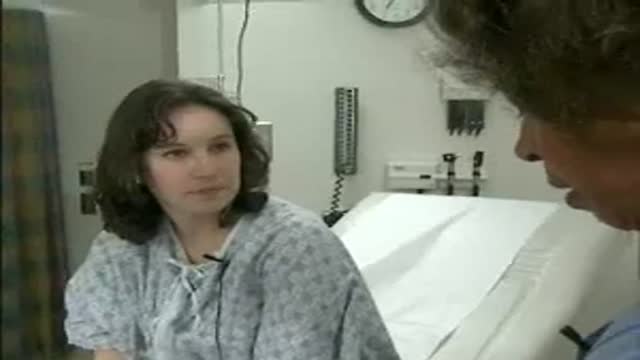
Like many women, Dawn Harris had fibroid tumors in her uterus, but hers had grown very large and were causing very serious problems. I couldn't hold my food down, so certainly it must have been having an effect on my stomach. I had sharp pains in my lower abdomen, so it was pushing on organs beneath my uterus. So it was just painful. Dawn was referred to the Detroit Medical Center's Hutsle Women's Hospital and Dr. Susan Hendricks and David Kamak, one of the most experienced surgical teams in the nation,
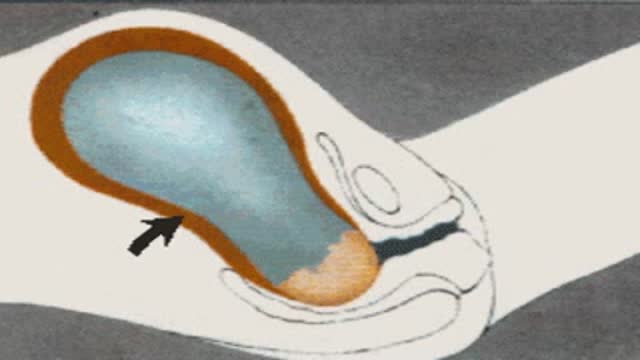
specializing in minimally invasive laparoscopic removal of large fibroid tumors. We operate on women whose uterus is... nobody else would do a laparoscopic minimally invasive surgery on them. They would all be opened up without question. Why wouldn't anyone attempt to do this? It's because it's fairly complex surgery. These uteruses are huge. They fill the entire abdominal cavity. They're bigger than a basketball. And we're taking them out through a tiny little hole in their abdomen. The advantages of minimally invasive surgery are considerable. Smaller incisions, lower risk of infection, less pain medication,
shorter hospital stays, and a much faster recovery. Patients love going home the day after surgery with almost no pain and being able to get back to work right away. The Hendricks Kamak team employed this method when they were presented with the most challenging case they'd ever seen. A woman whose uterus, typically the size of a pair, was the size of a watermelon. It was so large that it was pressing on surrounding organs, causing constipation, frequent urination, back strain, and considerable pain and discomfort. Left unchecked, the tumor could eventually affect the patient's lungs and breathing.
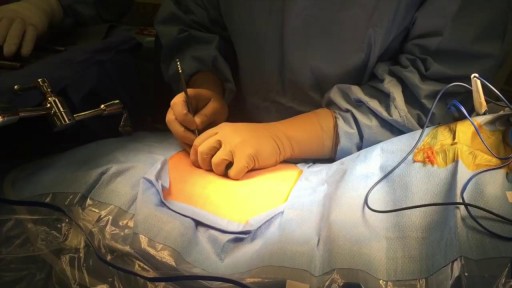
Her uterus originally was up underneath her rib cage. And here's where her rib cage is now. It was back up actually pushing underneath. We gave her medication for six months to try to shrink the uterus enough to be able to do this surgery. Most surgeons would have performed traditional open surgery. Her incision would probably be like this. So she would have approximately a two-foot incision, and her entire abdomen would have to be open. Whereas what we're going to do today is probably make a small incision here.
Yeah, and then two on each side. The doctors made three very small incisions. Through one, they inserted a laparoscope, a long thin tube with a light and camera on the end, which allowed them to see inside the patient. While one surgeon directs the camera and positions the uterus, the other works with special surgical instruments inserted through the other portals, watching it all on a TV monitor. The procedure can be strenuous. They are manipulating an organ which weighs as much as a 14-pound bowling ball. So I'm going to take bites and burn the areas that the blood supply is cut off,
and then I'm going to cut. And as you can see, it creates some smoke, but we have a special smoke evacuator that helps remove that. First, the doctors detached the uterus from the blood supply which feeds it, cauterizing the blood vessels to prevent bleeding. Then, the pain's taking removal through the tiny incisions using a morcelator, which cuts the uterus into thin, removable strips. This is the blade itself, and that is like as sharp as a razor, the tip of it, the razor blade. No, it's hollow. And we put this in through the morcelator.
It's just a hollow tube that we put it through, and it's all hollow because we pull the uterus out through that, and those blades just spin around. And so it is that doctors Hendricks and Kamak make history, removing the largest fibroid tumor ever at the Detroit Medical Center with a laparoscope. The entire process took five hours. Again, the difference in approach that leads to the faster recovery. Open surgery involves a much larger incision, and results in greater risk of infection and a longer recovery than laparoscopic surgery with smaller incisions.
How will the quality of her life be changed? It'll be remarked 100-200% better tomorrow, even with the discomfort from the little incisions that we made. She'll notice a huge difference. You're better a few weeks afterwards you're walking around. You're able to resume a lot of things that you were previously able to do. The symptoms are gone. You get to think about something else other than being sick and holding your stomach, and how long can you last. The Detroit Medical Center's Huxel Women's Hospital, where Dr. Susan Hendricks and Dr. David Kamak are redefining the boundaries of laparoscopic surgery.
It's a hospital that really knows how to care for women having surgery, and that's the benefit of going to a hospital that's been in existence 125 years, just for women. To make an appointment with Dr. Hendricks and Dr. Kamak, or to find out more about Huxel Women's Hospital and these groundbreaking laparoscopic hysterectomies, visit us here at DMC.org. The DMC. We just think it's a better way to get better. I'm memory king.
Transcript auto-generated from the video’s audio for accessibility and study. Educational content only — not medical advice.
Related reading
Save videos for later
Create a free account to build your own watch-later list and playlists, and pick up where you left off on any device.
Medical Videos
Free medical and surgery videos for patients, students and professionals — trusted since 2007.
Founded by Dr. Mohamed Ibrahim, MD, PhD — physician-scientist.
Follow us on Facebook · Instagram
SORT BY-
Top Comments
-
Latest comments