
- Procedures & Tests
- Symptoms A-Z
- Symptom Checker
- Kidney Diet
- First Aid
- Anatomy Atlas
- Ask MedicalVideos
- Drug Guide
- Lab Values
- Vital Signs
- Muscles A–Z
- Clinical Signs
- Medical Abbreviations
- Medical Terminology
- Physical Examination
- Surgical Examination
- Ophthalmology
- Clinical Skills
- Orthopedics
- Surgery Videos
- Laparoscopy
- Pediatrics
- Medical Humor
- Cardiothoracic Surgery
- Nursing Videos
- Plastic Surgery
- Otorhinolaryngology
- Histology and Histopathology
- Neurosurgery
- Dermatology
- Pediatric Surgery
- Urology
- Dentistry
- Oncology and Cancers
- Anatomy Videos
- Health and Fitness
- Radiology
- Anaesthesia
- Physical Therapy
- Pharmacology
- Interventional Radiology
- Cardiology
- Endocrinology
- Gynecology
- Emergency Medicine
- Psychiatry and Psychology
- Childbirth Videos
- General Medical Videos
- Nephrology
- Physiology
- Diet and Food Health
- Diabetes Mellitus
- Neurology
- Women Health
- Osteoporosis
- Gastroenterology
- Pulmonology
- Hematology
- Rheumatology
- Toxicology
- Nuclear Medicine
- Infectious Diseases
- Vascular Disease
- Reproductive Health
- Burns and Wound Healing
- Kidney Zone Podcast
- Other







Barium Enema
Harvard_Student. Barium Enema [video]. MedicalVideos.com; 2024 Jan 17 [cited 2026 Nov 24]. Available from: https://www.medicalvideos.com/watch/barium-enema_h26uasibdgod0xj84iuv.html
Harvard_Student (2024, January 17). Barium Enema [Video]. MedicalVideos.com. https://www.medicalvideos.com/watch/barium-enema_h26uasibdgod0xj84iuv.html
Harvard_Student. “Barium Enema.” MedicalVideos.com, 17 Jan. 2024, https://www.medicalvideos.com/watch/barium-enema_h26uasibdgod0xj84iuv.html. Accessed 24 Nov. 2026.
@misc{medicalvideos2024_h26uasibdgod0xj84iuv,
  author = {Harvard_Student},
  title = {Barium Enema},
  publisher = {MedicalVideos.com},
  year = {2024},
  month = {1},
  url = {https://www.medicalvideos.com/watch/barium-enema_h26uasibdgod0xj84iuv.html},
  note = {Video},
  urldate = {2026-11-24}
}Vancouver (NLM) is the manuscript standard for medical journals. RIS imports into EndNote, Zotero and Mendeley.

Educational only: videos on MedicalVideos.com are for general information and are not medical advice. Always consult your own doctor about your health.
This patient-education video explains the barium enema test for examining the colon. Barium is placed in the large intestine by enema so that x-rays show its outline and reveal abnormalities such as tumours and polyps. The module covers the anatomy, the outpatient procedure, how long it can take and what it feels like.
Video Transcript
This patient-education module explains the barium enema examination. It describes how barium placed in the colon makes abnormalities such as tumours and polyps show on x-rays, that the test is done as an outpatient, roughly how long it takes, and that it may be uncomfortable and bring an urge to empty the bowel.
Read the full transcript
A barium enema is a test that helps your doctors look at the colon, the very end of the intestines, also known as the large intestine. Doctors may recommend a barium enema to help diagnose problems in the colon. If your doctor recommends a barium enema, the decision whether or not to have this procedure is also yours. This patient education module will help you understand better the benefits and risks of this procedure. Anatomy The food you swallow first goes to the esophagus, then down to the stomach. Then it proceeds to the small intestine.
From there it goes to the large intestine or colon before being excreted in the feces. A barium enema test helps detect abnormalities in the colon. These include tumors and polyps. On the left you can see an example of a normal colon. On the right you can see polyps in the colon. Procedure This procedure is usually done on an outpatient basis which means you will be able to go home a few hours after the test. The aim of the procedure is to place barium in the colon so that x-rays can show the colon more clearly.
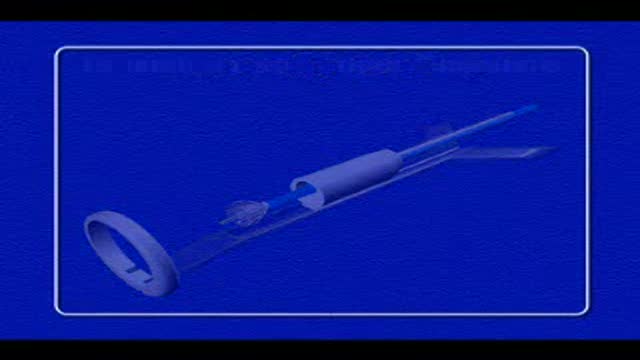
The barium is placed using an enema. Since barium is a substance that shows on x-rays, abnormalities in the colon show up better when it is used. Multiple x-rays need to be done to follow the barium in the colon. The test may take up to a few hours depending on how fast the barium goes through.
This is usually not painful although it may be uncomfortable. You may feel the urge to go to the bathroom but you should try to resist it.
After the first set of x-rays you may be asked to go to the bathroom and empty some of the barium. More x-rays may be taken then. The radiologist may also place some air in the colon and take more pictures.
Once the radiologist is satisfied with the pictures, the test ends. The barium will be excreted in the feces like any other food material. After the test, you may not be able to drive yourself so it is important to have somebody drive you home. Risks and complications
This procedure is very safe. There are however very few possible risks and complications. These are very unlikely but possible. You need to know about them just in case they happen. By being informed you may be able to help your doctor detect complications early.
X-rays are used during this procedure. The amount of radiation during this test is deemed safe. However, this same amount could be dangerous for unborn children. Is therefore very important to make sure you are not pregnant before an elective radiological test. In the very rare instance of an already present perforation, a hole or tear in the colon, the barium may leak around the bowels. This could cause a severe inflammatory response that could potentially be fatal. Very rarely the procedure itself could cause a perforation of the colon.
This is very rare because patients who already have perforations in the bowels are very sick and are not given this test. Some people may not tolerate barium very well. It may upset your stomach. Rarely patients may have an allergic reaction to the latex in the tube used to administer the barium. Summary A barium enema can be helpful in detecting problems in the colon. The test helps detect abnormalities in the colon such as tumors and polyps. The barium enema test is safe. Risks and complications are very rare.
Knowing about them will help you detect them early if they happen.
Transcript auto-generated from the video’s audio for accessibility and study. Educational content only — not medical advice.
Related reading
Save videos for later
Create a free account to build your own watch-later list and playlists, and pick up where you left off on any device.
Medical Videos
Free medical and surgery videos for patients, students and professionals — trusted since 2007.
Founded by Dr. Mohamed Ibrahim, MD, PhD — physician-scientist.
Follow us on Facebook · Instagram
SORT BY-
Top Comments
-
Latest comments