
- Physical Examination
- Surgical Examination
- Ophthalmology
- Clinical Skills
- Orthopedics
- Surgery Videos
- Laparoscopy
- Pediatrics
- Funny Videos
- Cardiothoracic Surgery
- Nursing Videos
- Plastic Surgery
- Otorhinolaryngology
- Histology and Histopathology
- Neurosurgery
- Dermatology
- Pediatric Surgery
- Urology
- Dentistry
- Oncology and Cancers
- Anatomy Videos
- Health and Fitness
- Radiology
- Anaesthesia
- Physical Therapy
- Pharmacology
- Interventional Radiology
- Cardiology
- Endocrinology
- Gynecology
- Emergency Medicine
- Psychiatry and Psychology
- Childbirth Videos
- General Medical Videos
- Nephrology
- Physiology
- Diet and Food Health
- Diabetes Mellitus
- Neurology
- Women Health
- Osteoporosis
- Gastroenterology
- Pulmonology
- Hematology
- Rheumatology
- Toxicology
- Nuclear Medicine
- Infectious Diseases
- Vascular Disease
- Reproductive Health
- Burns and Wound Healing
- Kidney Zone Podcast
- Other
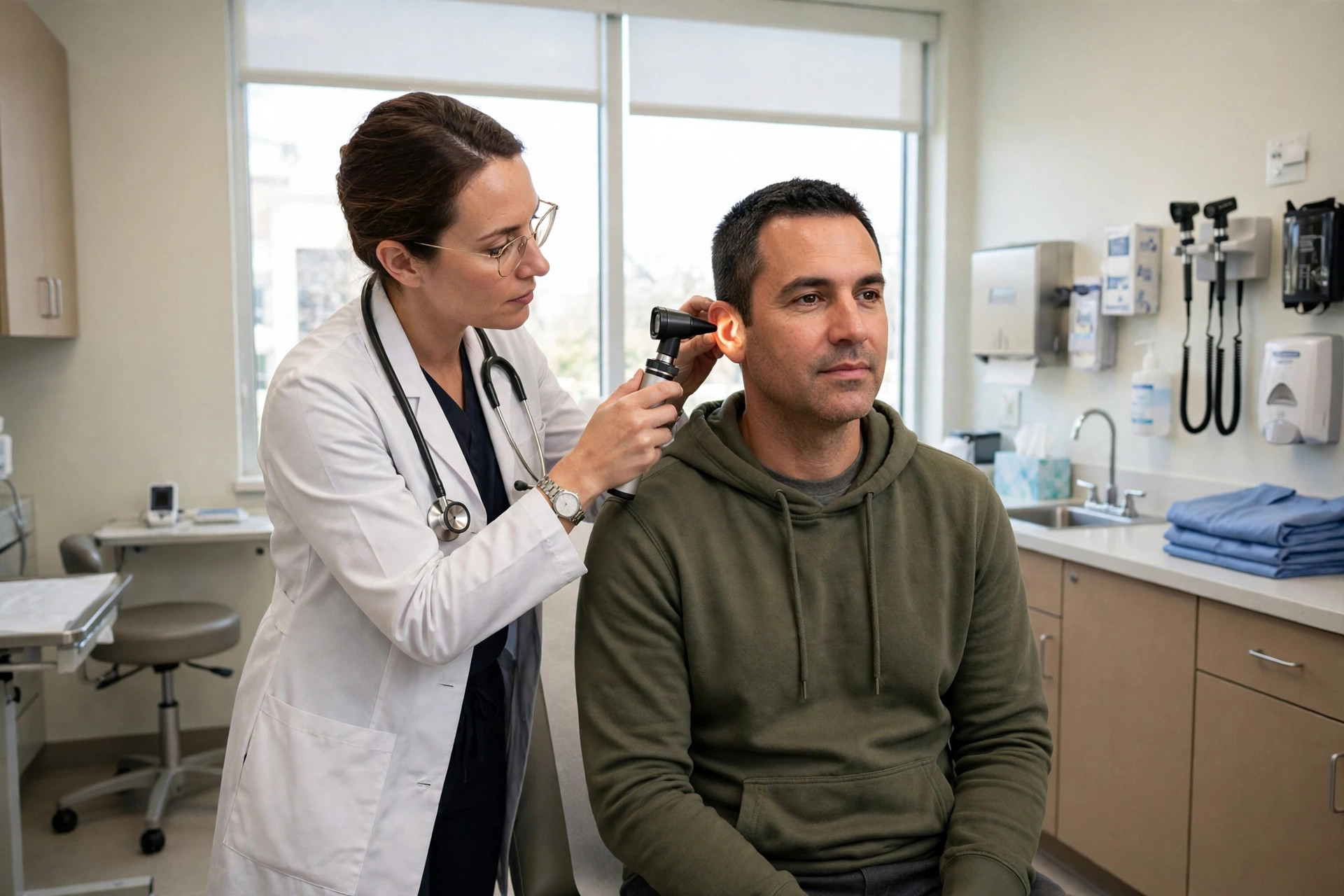
Chapter 8: Diseases of the ear and mastoid process (H60–H95)
Conditions of the ear: ear infections (otitis media and otitis externa), hearing loss, tinnitus, inner-ear balance disorders such as Ménière's disease, and impacted ear wax.
Chapter 8 spans codes H60–H95 in the FY2027 ICD-10-CM tabular list. This guide explains 17 of its most common codes — select a code for its official description, a plain-English explanation and a note on when the code is used.
Codes in this chapter
| Code | Official description | In plain words |
|---|---|---|
| H60.90 | Unspecified otitis externa, unspecified ear | Otitis externa is infection or inflammation of the outer ear canal, often called swimmer's ear. |
| H60.93 | Unspecified otitis externa, bilateral | Otitis externa affecting both ear canals: infection or inflammation of the outer ears. |
| H61.20 | Impacted cerumen, unspecified ear | Impacted cerumen is earwax that has built up and blocks the ear canal, causing muffled hearing. |
| H61.23 | Impacted cerumen, bilateral | Impacted cerumen of both ears: earwax blocking both ear canals. |
| H65.90 | Unspecified nonsuppurative otitis media, unspecified ear | Nonsuppurative otitis media is fluid behind the eardrum without acute infection ('glue ear'), causing muffled hearing. |
| H66.90 | Otitis media, unspecified, unspecified ear | Otitis media is infection or inflammation of the middle ear, common in children, causing earache and fever. |
| H66.93 | Otitis media, unspecified, bilateral | Otitis media affecting both middle ears. |
| H69.90 | Unspecified Eustachian tube disorder, unspecified ear | A disorder of the Eustachian tube, which connects the middle ear to the throat and equalises pressure; side not specified. |
| H72.90 | Unspecified perforation of tympanic membrane, unspecified ear | A perforated eardrum is a hole or tear in the thin membrane separating the ear canal from the middle ear. |
| H81.09 | Meniere's disease, unspecified ear | Ménière's disease is an inner-ear condition causing attacks of vertigo, tinnitus, ear fullness and fluctuating hearing loss. |
| H81.10 | Benign paroxysmal vertigo, unspecified ear | Benign paroxysmal vertigo (BPPV) causes brief spinning sensations when the head moves, from loose crystals in the inner ear. |
| H90.3 | Sensorineural hearing loss, bilateral | Sensorineural hearing loss of both ears: hearing loss from damage to the inner ear or hearing nerve, the most common type in adults. |
| H90.5 | Unspecified sensorineural hearing loss | Sensorineural hearing loss: damage to the inner ear or auditory nerve reduces hearing; side and symmetry not specified. |
| H91.90 | Unspecified hearing loss, unspecified ear | Hearing loss recorded without information about its type or the ear affected. |
| H92.09 | Otalgia, unspecified ear | Otalgia is pain in the ear, which may come from the ear itself or from nearby structures such as teeth or throat. |
| H93.13 | Tinnitus, bilateral | Tinnitus of both ears: the perception of ringing, buzzing or hissing sounds without an external source. |
| H93.19 | Tinnitus, unspecified ear | Tinnitus is hearing ringing or buzzing sounds that are not present in the environment; side not specified here. |
This guide explains ICD-10-CM codes in plain language for patients, students and other readers. It is educational information only — not coding, billing or medical advice. The code recorded for any real encounter is assigned from the full clinical documentation by the treating team and qualified coders, and only they can decide which code fits a specific case.
Other chapters
- Chapter 1: Infectious & Parasitic Diseases
- Chapter 2: Neoplasms
- Chapter 3: Blood & Immune Disorders
- Chapter 4: Endocrine, Nutritional & Metabolic
- Chapter 5: Mental, Behavioral & Neurodevelopmental
- Chapter 6: Nervous System
- Chapter 7: Eye & Adnexa
- Chapter 9: Circulatory System
- Chapter 10: Respiratory System
- Chapter 11: Digestive System
- Chapter 12: Skin & Subcutaneous Tissue
- Chapter 13: Musculoskeletal & Connective Tissue
- Chapter 14: Genitourinary System
- Chapter 15: Pregnancy, Childbirth & Puerperium
- Chapter 16: Perinatal Period
- Chapter 17: Congenital & Genetic Disorders
- Chapter 18: Symptoms, Signs & Abnormal Findings
- Chapter 19: Injury & Poisoning
- Chapter 20: External Causes of Morbidity
- Chapter 21: Factors Influencing Health Status
- Chapter 22: Codes for Special Purposes