
- Physical Examination
- Surgical Examination
- Ophthalmology
- Clinical Skills
- Orthopedics
- Surgery Videos
- Laparoscopy
- Pediatrics
- Funny Videos
- Cardiothoracic Surgery
- Nursing Videos
- Plastic Surgery
- Otorhinolaryngology
- Histology and Histopathology
- Neurosurgery
- Dermatology
- Pediatric Surgery
- Urology
- Dentistry
- Oncology and Cancers
- Anatomy Videos
- Health and Fitness
- Radiology
- Anaesthesia
- Physical Therapy
- Pharmacology
- Interventional Radiology
- Cardiology
- Endocrinology
- Gynecology
- Emergency Medicine
- Psychiatry and Psychology
- Childbirth Videos
- General Medical Videos
- Nephrology
- Physiology
- Diet and Food Health
- Diabetes Mellitus
- Neurology
- Women Health
- Osteoporosis
- Gastroenterology
- Pulmonology
- Hematology
- Rheumatology
- Toxicology
- Nuclear Medicine
- Infectious Diseases
- Vascular Disease
- Reproductive Health
- Burns and Wound Healing
- Kidney Zone Podcast
- Other
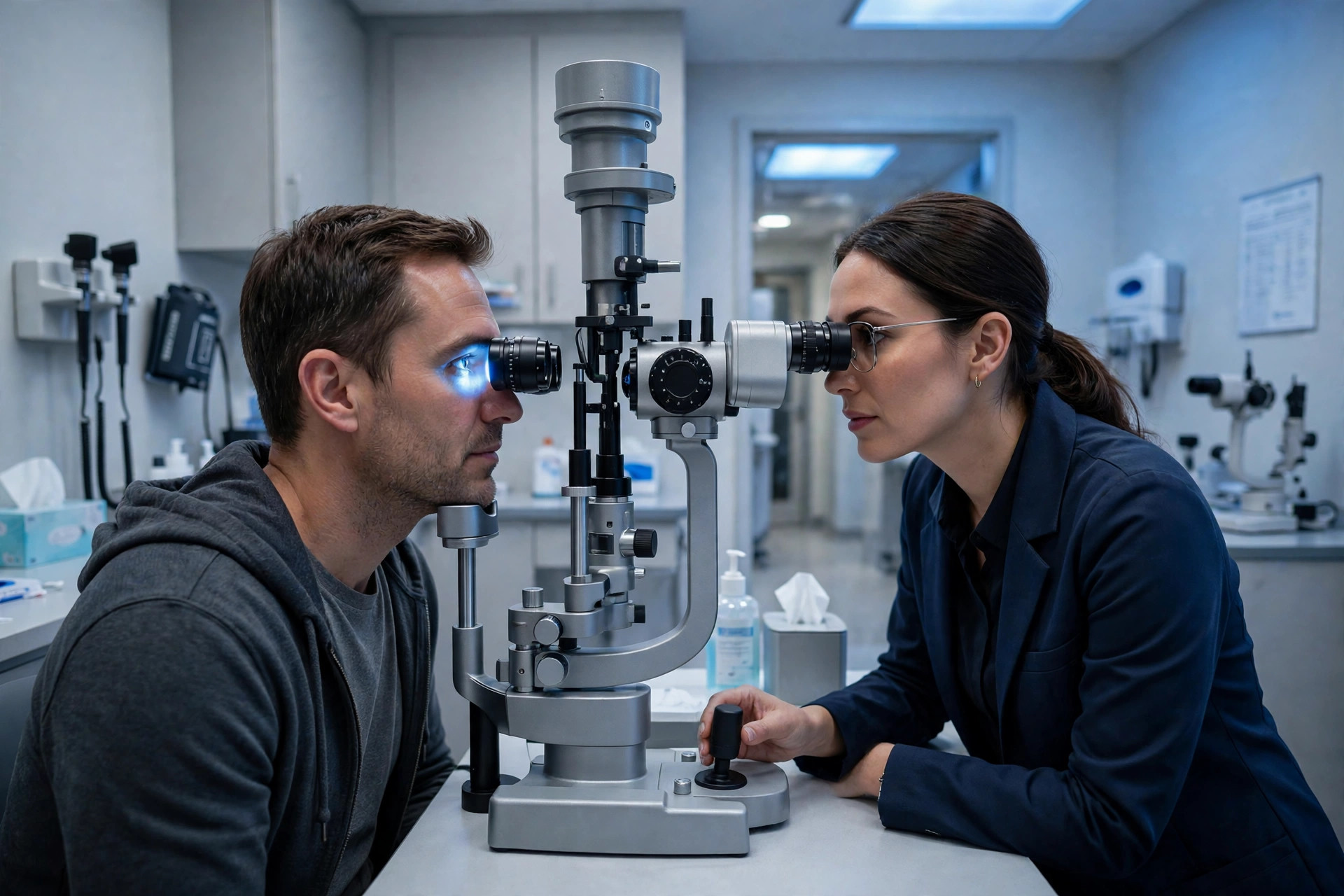
Chapter 7: Diseases of the eye and adnexa (H00–H59)
Conditions of the eye and the structures around it: cataracts, glaucoma, macular degeneration, diabetic eye disease, conjunctivitis and disorders of the eyelids, tear system and retina.
Chapter 7 spans codes H00–H59 in the FY2027 ICD-10-CM tabular list. This guide explains 20 of its most common codes — select a code for its official description, a plain-English explanation and a note on when the code is used.
Codes in this chapter
| Code | Official description | In plain words |
|---|---|---|
| H00.019 | Hordeolum externum unspecified eye, unspecified eyelid | A stye (hordeolum externum) is a small, painful bacterial lump at the edge of the eyelid, at the base of an eyelash. |
| H01.009 | Unspecified blepharitis unspecified eye, unspecified eyelid | Blepharitis is inflammation of the eyelid edges, causing redness, crusting and irritation. |
| H04.123 | Dry eye syndrome of bilateral lacrimal glands | Dry eye syndrome of both eyes: the eyes do not produce enough tears or the tears evaporate too quickly, causing grittiness and soreness. |
| H10.33 | Unspecified acute conjunctivitis, bilateral | Acute conjunctivitis ('pink eye') of both eyes: inflammation of the clear covering of the eye, causing redness and discharge. |
| H10.9 | Unspecified conjunctivitis | Conjunctivitis is inflammation of the conjunctiva, the clear membrane covering the white of the eye and inner eyelids. |
| H25.13 | Age-related nuclear cataract, bilateral | Age-related nuclear cataracts in both eyes: the centre of each lens gradually clouds with age, dimming vision. |
| H25.9 | Unspecified age-related cataract | An age-related cataract is clouding of the eye's lens with ageing, the commonest cause of reversible blindness worldwide. |
| H35.033 | Hypertensive retinopathy, bilateral | Hypertensive retinopathy is damage to the retina's blood vessels from high blood pressure, here affecting both eyes. |
| H35.30 | Unspecified macular degeneration | Macular degeneration is deterioration of the macula, the central part of the retina responsible for detailed central vision. |
| H40.1131 | Primary open-angle glaucoma, bilateral, mild stage | Primary open-angle glaucoma of both eyes, mild stage: raised eye pressure gradually damages the optic nerve and peripheral vision. |
| H40.9 | Unspecified glaucoma | Glaucoma is a group of eye conditions in which the optic nerve is damaged, usually by raised pressure inside the eye. |
| H43.393 | Other vitreous opacities, bilateral | Other vitreous opacities in both eyes are shadows or floaters caused by strands or deposits in the gel filling the eye. |
| H43.813 | Vitreous degeneration, bilateral | Vitreous degeneration of both eyes: the gel inside the eye shrinks and separates with age, often causing floaters. |
| H47.10 | Unspecified papilledema | Papilloedema is swelling of the optic disc at the back of the eye, here without a specified cause. |
| H52.03 | Hypermetropia, bilateral | Hypermetropia (long-sightedness) of both eyes: distant objects are clearer than near ones because the eye focuses images behind the retina. |
| H52.13 | Myopia, bilateral | Myopia (short-sightedness) of both eyes: near objects are clear but distant objects are blurred. |
| H52.4 | Presbyopia | Presbyopia is the age-related loss of the eye's ability to focus on near objects, typically starting in the mid-40s. |
| H53.8 | Other visual disturbances | Other visual disturbances include blurred vision, halos, flashes or other changes not classified elsewhere. |
| H54.7 | Unspecified visual loss | Visual loss recorded without information about its cause, type or the eye affected. |
| H57.10 | Ocular pain, unspecified eye | Pain in or around the eye, without a specified cause or side. |
This guide explains ICD-10-CM codes in plain language for patients, students and other readers. It is educational information only — not coding, billing or medical advice. The code recorded for any real encounter is assigned from the full clinical documentation by the treating team and qualified coders, and only they can decide which code fits a specific case.
Other chapters
- Chapter 1: Infectious & Parasitic Diseases
- Chapter 2: Neoplasms
- Chapter 3: Blood & Immune Disorders
- Chapter 4: Endocrine, Nutritional & Metabolic
- Chapter 5: Mental, Behavioral & Neurodevelopmental
- Chapter 6: Nervous System
- Chapter 8: Ear & Mastoid Process
- Chapter 9: Circulatory System
- Chapter 10: Respiratory System
- Chapter 11: Digestive System
- Chapter 12: Skin & Subcutaneous Tissue
- Chapter 13: Musculoskeletal & Connective Tissue
- Chapter 14: Genitourinary System
- Chapter 15: Pregnancy, Childbirth & Puerperium
- Chapter 16: Perinatal Period
- Chapter 17: Congenital & Genetic Disorders
- Chapter 18: Symptoms, Signs & Abnormal Findings
- Chapter 19: Injury & Poisoning
- Chapter 20: External Causes of Morbidity
- Chapter 21: Factors Influencing Health Status
- Chapter 22: Codes for Special Purposes