
- Physical Examination
- Surgical Examination
- Ophthalmology
- Clinical Skills
- Orthopedics
- Surgery Videos
- Laparoscopy
- Pediatrics
- Funny Videos
- Cardiothoracic Surgery
- Nursing Videos
- Plastic Surgery
- Otorhinolaryngology
- Histology and Histopathology
- Neurosurgery
- Dermatology
- Pediatric Surgery
- Urology
- Dentistry
- Oncology and Cancers
- Anatomy Videos
- Health and Fitness
- Radiology
- Anaesthesia
- Physical Therapy
- Pharmacology
- Interventional Radiology
- Cardiology
- Endocrinology
- Gynecology
- Emergency Medicine
- Psychiatry and Psychology
- Childbirth Videos
- General Medical Videos
- Nephrology
- Physiology
- Diet and Food Health
- Diabetes Mellitus
- Neurology
- Women Health
- Osteoporosis
- Gastroenterology
- Pulmonology
- Hematology
- Rheumatology
- Toxicology
- Nuclear Medicine
- Infectious Diseases
- Vascular Disease
- Reproductive Health
- Burns and Wound Healing
- Kidney Zone Podcast
- Other
Chapter 19: Injury, poisoning and certain other consequences of external causes (S00–T88)
Fractures, sprains, dislocations, wounds, burns, head injuries, poisonings and complications of surgical and medical care — the results of injuries and external events, classified by body site and type of injury.
Chapter 19 spans codes S00–T88 in the FY2027 ICD-10-CM tabular list. This guide explains 38 of its most common codes — select a code for its official description, a plain-English explanation and a note on when the code is used.
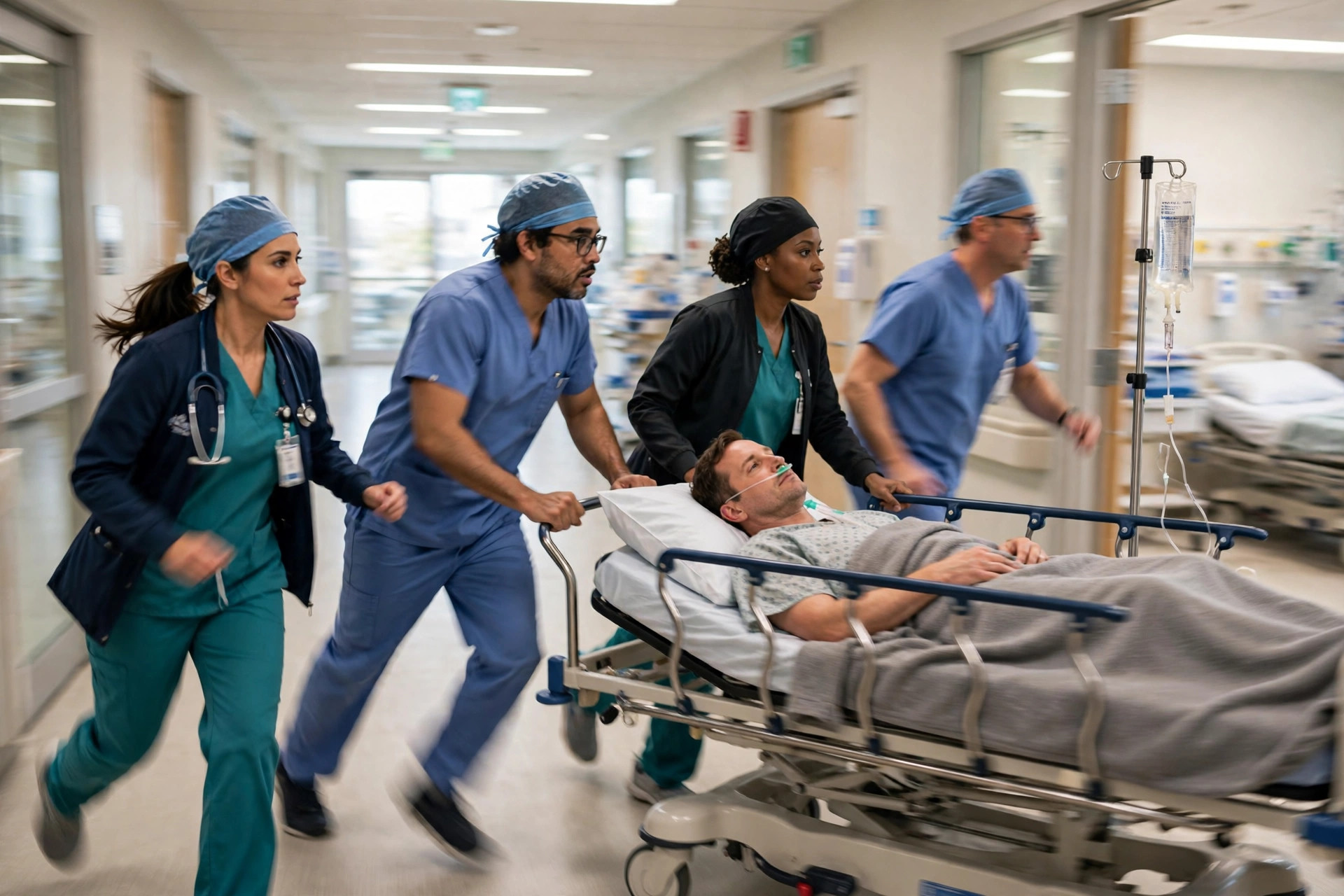
Codes in this chapter
| Code | Official description | In plain words |
|---|---|---|
| S00.93XA | Contusion of unspecified part of head, initial encounter | A contusion (bruise) of the head from a blow, with the exact part of the head not specified; this entry is for the first (initial) encounter. |
| S01.01XA | Laceration without foreign body of scalp, initial encounter | A laceration (cut) of the scalp without a foreign body in it, recorded at the first encounter for care. |
| S02.2XXA | Fracture of nasal bones, initial encounter for closed fracture | A fracture of the nasal bones (broken nose) from injury, closed (skin unbroken), at the first encounter. |
| S05.01XA | Injury of conjunctiva and corneal abrasion without foreign body, right eye, initial encounter | An injury of the conjunctiva and a corneal abrasion (scratch on the eye surface) of the right eye, without a foreign body. |
| S06.0X0A | Concussion without loss of consciousness, initial encounter | Concussion is a mild traumatic brain injury from a blow to the head; this code is for concussion without loss of consciousness, first encounter. |
| S09.90XA | Unspecified injury of head, initial encounter | An injury of the head recorded without the exact injury type being specified, at the first encounter. |
| S13.4XXA | Sprain of ligaments of cervical spine, initial encounter | A sprain of the ligaments of the cervical spine (neck), such as a whiplash-type injury, at the first encounter. |
| S16.1XXA | Strain of muscle, fascia and tendon at neck level, initial encounter | A strain of the muscles and tendons at neck level (a pulled neck muscle), at the first encounter. |
| S30.0XXA | Contusion of lower back and pelvis, initial encounter | A contusion (bruising) of the lower back and pelvis from a blow or fall, at the first encounter. |
| S33.5XXA | Sprain of ligaments of lumbar spine, initial encounter | A sprain of the ligaments of the lumbar spine (lower back), at the first encounter. |
| S39.012A | Strain of muscle, fascia and tendon of lower back, initial encounter | A strain of the muscles and tendons of the lower back (a pulled back), at the first encounter. |
| S40.011A | Contusion of right shoulder, initial encounter | A contusion (bruise) of the right shoulder from a blow or fall, at the first encounter. |
| S42.201A | Unspecified fracture of upper end of right humerus, initial encounter for closed fracture | A fracture of the upper end of the right humerus (the arm bone near the shoulder), closed, at the first encounter; type unspecified. |
| S52.501A | Unspecified fracture of the lower end of right radius, initial encounter for closed fracture | A Colles' fracture is a break of the right radius near the wrist, typically from falling on an outstretched hand; first encounter, closed. |
| S52.502A | Unspecified fracture of the lower end of left radius, initial encounter for closed fracture | A Colles' fracture of the left radius near the wrist, typically from falling on an outstretched hand; first encounter, closed. |
| S61.411A | Laceration without foreign body of right hand, initial encounter | A laceration (cut) of the right hand without a foreign body in the wound, at the first encounter. |
| S63.501A | Unspecified sprain of right wrist, initial encounter | A sprain of the right wrist (stretched or torn wrist ligaments), at the first encounter; the ligament is not specified. |
| S72.001A | Fracture of unspecified part of neck of right femur, initial encounter for closed fracture | A fracture of the neck of the right femur (a hip fracture), closed, at the first encounter; the exact part is not specified. |
| S80.01XA | Contusion of right knee, initial encounter | A contusion (bruise) of the right knee from a blow or fall, at the first encounter. |
| S82.61XA | Displaced fracture of lateral malleolus of right fibula, initial encounter for closed fracture | A displaced fracture of the lateral malleolus of the right fibula (the outer ankle bone), closed, at the first encounter. |
| S83.241A | Other tear of medial meniscus, current injury, right knee, initial encounter | A tear of the medial meniscus (knee cartilage) of the right knee from a current injury, other specified type, at the first encounter. |
| S83.511A | Sprain of anterior cruciate ligament of right knee, initial encounter | A sprain (tear) of the anterior cruciate ligament (ACL) of the right knee, at the first encounter. |
| S83.90XA | Sprain of unspecified site of unspecified knee, initial encounter | A sprain of a knee, with the site (ligament), side and knee not specified, at the first encounter. |
| S86.011A | Strain of right Achilles tendon, initial encounter | A strain of the right Achilles tendon (a stretch or partial tear injury), at the first encounter. |
| S92.351A | Displaced fracture of fifth metatarsal bone, right foot, initial encounter for closed fracture | A displaced fracture of the fifth metatarsal bone of the right foot (the long bone to the little toe), closed, first encounter. |
| S93.401A | Sprain of unspecified ligament of right ankle, initial encounter | A sprain of a ligament of the right ankle (a twisted ankle), ligament unspecified, at the first encounter. |
| S93.402A | Sprain of unspecified ligament of left ankle, initial encounter | A sprain of a ligament of the left ankle (a twisted ankle), ligament unspecified, at the first encounter. |
| S93.409A | Sprain of unspecified ligament of unspecified ankle, initial encounter | An ankle sprain with the ligament and side not specified, at the first encounter. |
| T14.8XXA | Other injury of unspecified body region, initial encounter | Another injury of an unspecified body region, such as superficial injuries like abrasions, at the first encounter. |
| T14.90XA | Injury, unspecified, initial encounter | An injury recorded without the type or body region being specified, at the first encounter. |
| T16.1XXA | Foreign body in right ear, initial encounter | A foreign body (such as an insect or small object) in the right ear, at the first encounter. |
| T30.0 | Burn of unspecified body region, unspecified degree | A burn or scald of an unspecified body region and unspecified degree, recorded in general terms. |
| T63.441A | Toxic effect of venom of bees, accidental (unintentional), initial encounter | Toxic effect of bee venom (a bee sting reaction), accidental, at the first encounter. |
| T67.5XXA | Heat exhaustion, unspecified, initial encounter | Heat exhaustion from exposure to high temperatures, causing dizziness, nausea and heavy sweating; type unspecified, first encounter. |
| T78.00XA | Anaphylactic reaction due to unspecified food, initial encounter | An anaphylactic (severe allergic) reaction to an unspecified food, at the first encounter. |
| T78.2XXA | Anaphylactic shock, unspecified, initial encounter | Anaphylactic shock is a severe, whole-body allergic reaction with falling blood pressure and breathing difficulty; cause unspecified, first encounter. |
| T78.3XXA | Angioneurotic edema, initial encounter | Angioneurotic oedema (angioedema) is rapid swelling of the deeper skin and mucous membranes, often of lips, tongue or airway; first encounter. |
| T78.40XA | Allergy, unspecified, initial encounter | An allergy recorded without the substance or reaction type being specified, at the first encounter. |
This guide explains ICD-10-CM codes in plain language for patients, students and other readers. It is educational information only — not coding, billing or medical advice. The code recorded for any real encounter is assigned from the full clinical documentation by the treating team and qualified coders, and only they can decide which code fits a specific case.
Other chapters
- Chapter 1: Infectious & Parasitic Diseases
- Chapter 2: Neoplasms
- Chapter 3: Blood & Immune Disorders
- Chapter 4: Endocrine, Nutritional & Metabolic
- Chapter 5: Mental, Behavioral & Neurodevelopmental
- Chapter 6: Nervous System
- Chapter 7: Eye & Adnexa
- Chapter 8: Ear & Mastoid Process
- Chapter 9: Circulatory System
- Chapter 10: Respiratory System
- Chapter 11: Digestive System
- Chapter 12: Skin & Subcutaneous Tissue
- Chapter 13: Musculoskeletal & Connective Tissue
- Chapter 14: Genitourinary System
- Chapter 15: Pregnancy, Childbirth & Puerperium
- Chapter 16: Perinatal Period
- Chapter 17: Congenital & Genetic Disorders
- Chapter 18: Symptoms, Signs & Abnormal Findings
- Chapter 20: External Causes of Morbidity
- Chapter 21: Factors Influencing Health Status
- Chapter 22: Codes for Special Purposes