
- Physical Examination
- Surgical Examination
- Ophthalmology
- Clinical Skills
- Orthopedics
- Surgery Videos
- Laparoscopy
- Pediatrics
- Funny Videos
- Cardiothoracic Surgery
- Nursing Videos
- Plastic Surgery
- Otorhinolaryngology
- Histology and Histopathology
- Neurosurgery
- Dermatology
- Pediatric Surgery
- Urology
- Dentistry
- Oncology and Cancers
- Anatomy Videos
- Health and Fitness
- Radiology
- Anaesthesia
- Physical Therapy
- Pharmacology
- Interventional Radiology
- Cardiology
- Endocrinology
- Gynecology
- Emergency Medicine
- Psychiatry and Psychology
- Childbirth Videos
- General Medical Videos
- Nephrology
- Physiology
- Diet and Food Health
- Diabetes Mellitus
- Neurology
- Women Health
- Osteoporosis
- Gastroenterology
- Pulmonology
- Hematology
- Rheumatology
- Toxicology
- Nuclear Medicine
- Infectious Diseases
- Vascular Disease
- Reproductive Health
- Burns and Wound Healing
- Kidney Zone Podcast
- Other
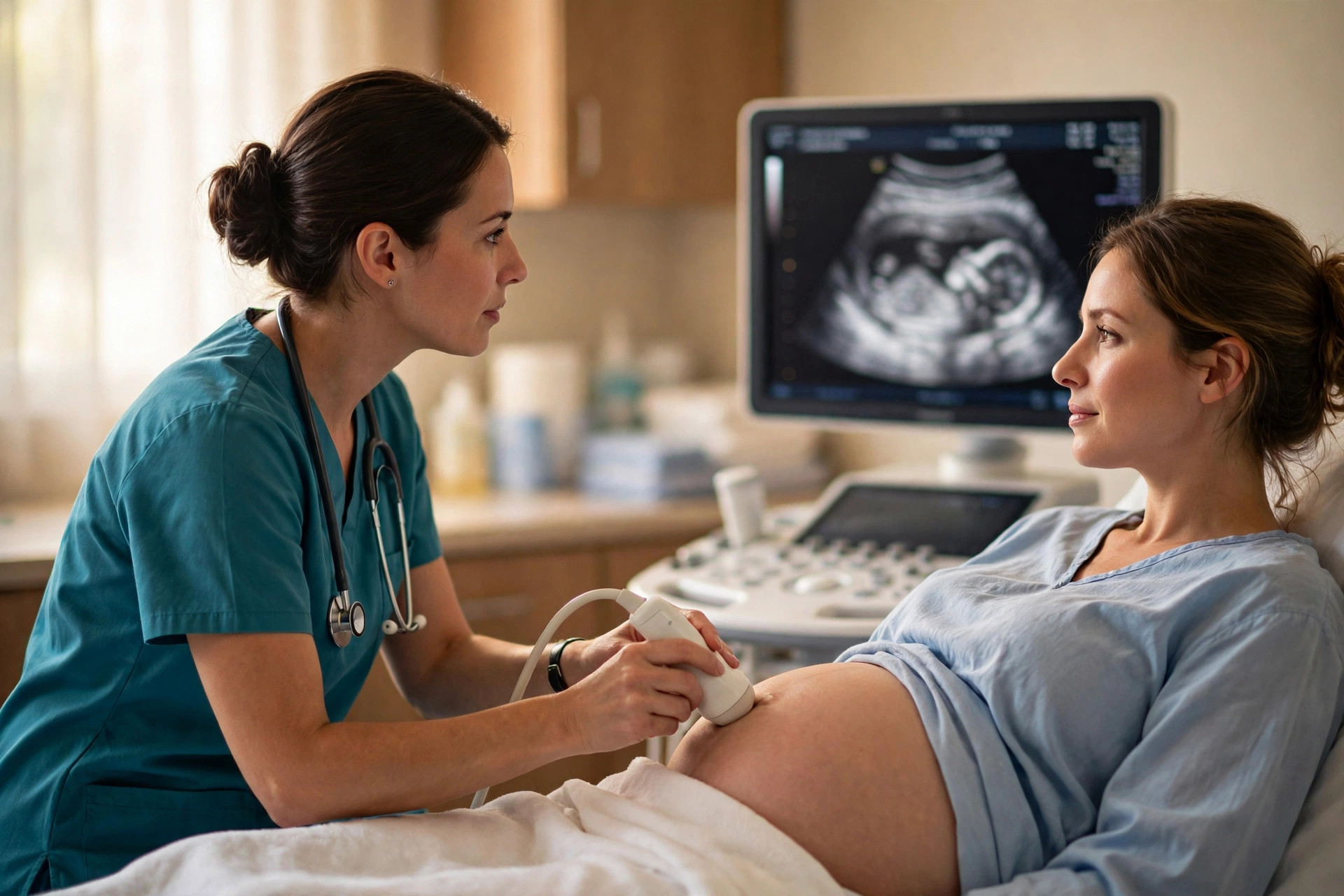
Chapter 15: Pregnancy, childbirth and the puerperium (O00–O9A)
Pregnancy, childbirth and the weeks after delivery: antenatal conditions such as pre-eclampsia and gestational diabetes, labour and delivery, caesarean birth, and postpartum complications.
Chapter 15 spans codes O00–O9A in the FY2027 ICD-10-CM tabular list. This guide explains 18 of its most common codes — select a code for its official description, a plain-English explanation and a note on when the code is used.
Codes in this chapter
| Code | Official description | In plain words |
|---|---|---|
| O03.9 | Complete or unspecified spontaneous abortion without complication | A spontaneous abortion (miscarriage) that is complete or unspecified, without complications being recorded. |
| O09.90 | Supervision of high risk pregnancy, unspecified, unspecified trimester | Supervision of a high-risk pregnancy, recorded without the trimester or the specific risk being stated. |
| O10.919 | Unspecified pre-existing hypertension complicating pregnancy, unspecified trimester | Pre-existing hypertension (high blood pressure present before pregnancy) complicating pregnancy; trimester not specified. |
| O13.9 | Gestational [pregnancy-induced] hypertension without significant proteinuria, unspecified trimester | Gestational hypertension is new high blood pressure arising in pregnancy without significant protein in the urine; trimester unspecified. |
| O14.90 | Unspecified pre-eclampsia, unspecified trimester | Pre-eclampsia is a pregnancy condition of high blood pressure with protein in the urine or organ effects; severity and trimester unspecified. |
| O20.0 | Threatened abortion | Threatened abortion is vaginal bleeding in early pregnancy with a closed cervix, where the pregnancy may continue. |
| O21.0 | Mild hyperemesis gravidarum | Mild hyperemesis gravidarum is excessive vomiting in pregnancy beyond ordinary morning sickness, without metabolic disturbance. |
| O21.9 | Vomiting of pregnancy, unspecified | Vomiting in pregnancy ('morning sickness' and related vomiting) recorded without severity or timing specified. |
| O23.40 | Unspecified infection of urinary tract in pregnancy, unspecified trimester | A urinary tract infection occurring in pregnancy; the trimester is not specified. |
| O24.419 | Gestational diabetes mellitus in pregnancy, unspecified control | Gestational diabetes is diabetes first recognised in pregnancy, usually screened for at 24–28 weeks; control method unspecified. |
| O26.899 | Other specified pregnancy related conditions, unspecified trimester | Another specified pregnancy-related condition affecting the mother, not covered by the more specific pregnancy codes. |
| O34.219 | Maternal care for unspecified type scar from previous cesarean delivery | Care in pregnancy for a woman who has a scar on the uterus from a previous caesarean delivery. |
| O42.90 | Premature rupture of membranes, unspecified as to length of time between rupture and onset of labor, unspecified weeks of gestation | Preterm premature rupture of membranes: the waters break before 37 weeks, with the onset of labour not specified. |
| O47.9 | False labor, unspecified | False labour (Braxton Hicks contractions) means contractions that do not progress to true labour; gestation not specified. |
| O60.00 | Preterm labor without delivery, unspecified trimester | Threatened preterm labour means signs suggesting labour may start before 37 weeks, recorded without delivery following at that stage. |
| O72.1 | Other immediate postpartum hemorrhage | Other immediate postpartum haemorrhage is heavy bleeding shortly after delivery from causes covered by this code. |
| O80 | Encounter for full-term uncomplicated delivery | An encounter for a full-term delivery that proceeds without complications, with a single live-born baby. |
| O82 | Encounter for cesarean delivery without indication | An encounter for a caesarean delivery performed without a specific medical indication being recorded. |
This guide explains ICD-10-CM codes in plain language for patients, students and other readers. It is educational information only — not coding, billing or medical advice. The code recorded for any real encounter is assigned from the full clinical documentation by the treating team and qualified coders, and only they can decide which code fits a specific case.
Other chapters
- Chapter 1: Infectious & Parasitic Diseases
- Chapter 2: Neoplasms
- Chapter 3: Blood & Immune Disorders
- Chapter 4: Endocrine, Nutritional & Metabolic
- Chapter 5: Mental, Behavioral & Neurodevelopmental
- Chapter 6: Nervous System
- Chapter 7: Eye & Adnexa
- Chapter 8: Ear & Mastoid Process
- Chapter 9: Circulatory System
- Chapter 10: Respiratory System
- Chapter 11: Digestive System
- Chapter 12: Skin & Subcutaneous Tissue
- Chapter 13: Musculoskeletal & Connective Tissue
- Chapter 14: Genitourinary System
- Chapter 16: Perinatal Period
- Chapter 17: Congenital & Genetic Disorders
- Chapter 18: Symptoms, Signs & Abnormal Findings
- Chapter 19: Injury & Poisoning
- Chapter 20: External Causes of Morbidity
- Chapter 21: Factors Influencing Health Status
- Chapter 22: Codes for Special Purposes