
- Physical Examination
- Surgical Examination
- Ophthalmology
- Clinical Skills
- Orthopedics
- Surgery Videos
- Laparoscopy
- Pediatrics
- Funny Videos
- Cardiothoracic Surgery
- Nursing Videos
- Plastic Surgery
- Otorhinolaryngology
- Histology and Histopathology
- Neurosurgery
- Dermatology
- Pediatric Surgery
- Urology
- Dentistry
- Oncology and Cancers
- Anatomy Videos
- Health and Fitness
- Radiology
- Anaesthesia
- Physical Therapy
- Pharmacology
- Interventional Radiology
- Cardiology
- Endocrinology
- Gynecology
- Emergency Medicine
- Psychiatry and Psychology
- Childbirth Videos
- General Medical Videos
- Nephrology
- Physiology
- Diet and Food Health
- Diabetes Mellitus
- Neurology
- Women Health
- Osteoporosis
- Gastroenterology
- Pulmonology
- Hematology
- Rheumatology
- Toxicology
- Nuclear Medicine
- Infectious Diseases
- Vascular Disease
- Reproductive Health
- Burns and Wound Healing
- Kidney Zone Podcast
- Other
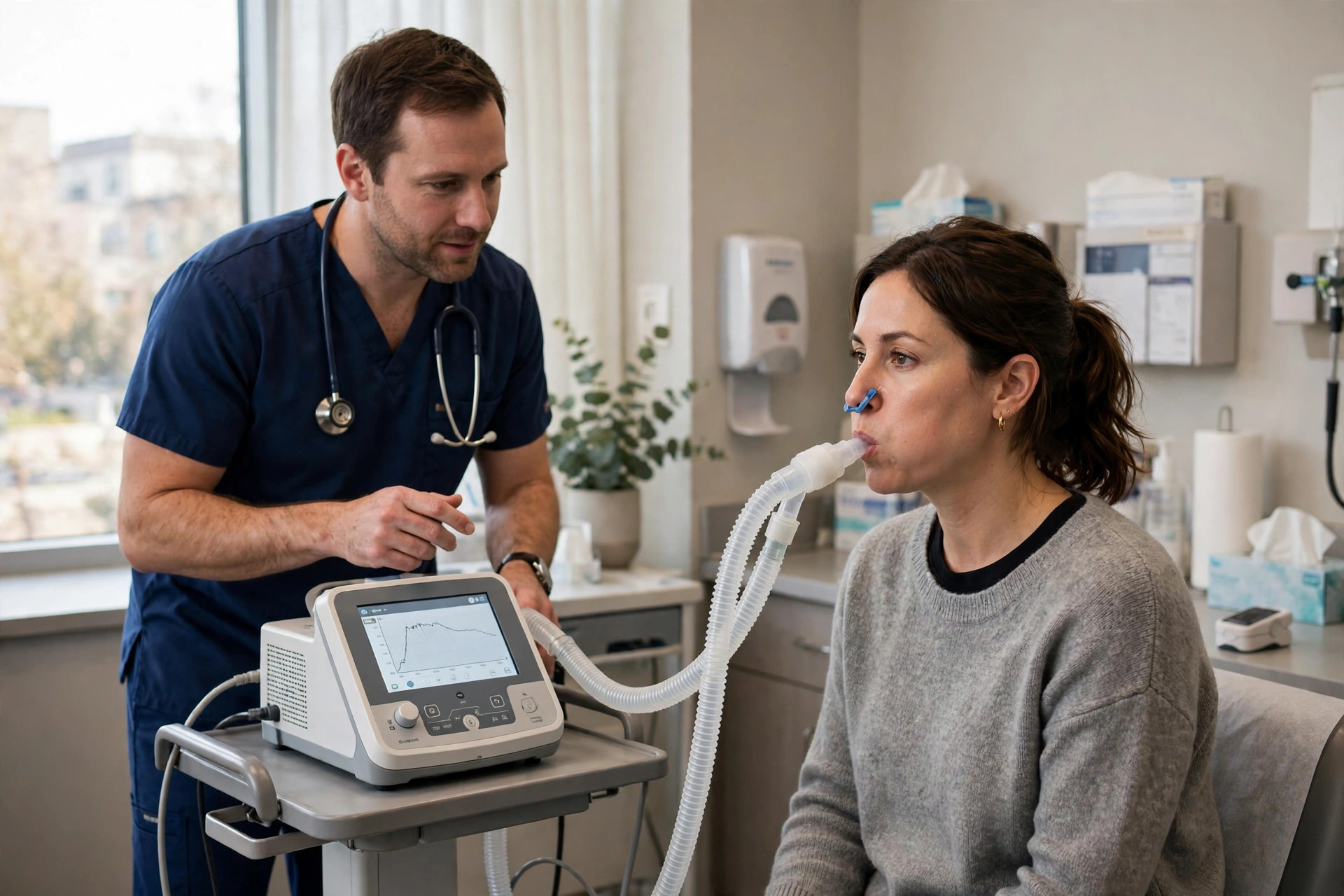
Chapter 10: Diseases of the respiratory system (J00–J99)
Diseases of the airways and lungs: the common cold, flu and pneumonia, asthma, COPD and bronchitis, sinusitis, tonsillitis, sleep apnoea and respiratory failure.
Chapter 10 spans codes J00–J99 in the FY2027 ICD-10-CM tabular list. This guide explains 39 of its most common codes — select a code for its official description, a plain-English explanation and a note on when the code is used.
Codes in this chapter
| Code | Official description | In plain words |
|---|---|---|
| J00 | Acute nasopharyngitis [common cold] | The common cold: a mild viral infection of the nose and throat causing a blocked or runny nose, sneezing and sore throat. |
| J01.90 | Acute sinusitis, unspecified | Acute sinusitis is sudden inflammation and infection of the air-filled sinuses around the nose, causing facial pain and congestion. |
| J02.0 | Streptococcal pharyngitis | Streptococcal pharyngitis ('strep throat') is a bacterial throat infection caused by group A streptococcus. |
| J02.9 | Acute pharyngitis, unspecified | Acute pharyngitis is a sore, inflamed throat, most often caused by a virus. |
| J03.90 | Acute tonsillitis, unspecified | Acute tonsillitis is sudden inflammation of the tonsils, causing severe sore throat, fever and pain on swallowing. |
| J04.0 | Acute laryngitis | Acute laryngitis is inflammation of the voice box (larynx), causing hoarseness or loss of voice. |
| J06.9 | Acute upper respiratory infection, unspecified | An acute upper respiratory infection is a viral illness of the nose, throat and upper airways (a cold-like illness). |
| J10.1 | Influenza due to other identified influenza virus with other respiratory manifestations | Influenza (flu) from a laboratory-identified influenza virus, with other respiratory symptoms such as cough and sore throat. |
| J11.1 | Influenza due to unidentified influenza virus with other respiratory manifestations | Influenza (flu) diagnosed clinically without the virus being identified, with other respiratory symptoms. |
| J12.82 | Pneumonia due to coronavirus disease 2019 | Pneumonia (lung infection and inflammation) occurring as a complication of COVID-19. |
| J18.9 | Pneumonia, unspecified organism | Pneumonia is infection and inflammation of the air sacs of the lungs, causing cough, fever and breathlessness. |
| J20.9 | Acute bronchitis, unspecified | Acute bronchitis is inflammation of the large airways (bronchi), usually viral, causing a cough that lasts days to weeks. |
| J21.0 | Acute bronchiolitis due to respiratory syncytial virus | Acute bronchiolitis caused by respiratory syncytial virus (RSV), mainly affecting babies and toddlers, with wheezing and feeding difficulty. |
| J30.1 | Allergic rhinitis due to pollen | Allergic rhinitis caused by pollen (hay fever): sneezing, itchy eyes and a blocked or runny nose in pollen season. |
| J30.9 | Allergic rhinitis, unspecified | Allergic rhinitis is inflammation of the nose lining from an allergy, causing sneezing, itching and congestion. |
| J32.9 | Chronic sinusitis, unspecified | Chronic sinusitis is long-term inflammation of the sinuses lasting over 12 weeks, with congestion and facial pressure. |
| J34.2 | Deviated nasal septum | A deviated nasal septum means the wall between the nostrils is off-centre, which can block airflow on one side. |
| J35.1 | Hypertrophy of tonsils | Hypertrophy of the tonsils means enlarged tonsils, common in children and a cause of snoring and sleep apnoea. |
| J40 | Bronchitis, not specified as acute or chronic | Bronchitis is inflammation of the airways causing cough; this code is used when it is not recorded as acute or chronic. |
| J43.9 | Emphysema, unspecified | Emphysema is lung damage in which the tiny air sacs are destroyed, trapping air and causing progressive breathlessness. |
| J44.0 | Chronic obstructive pulmonary disease with (acute) lower respiratory infection | Chronic obstructive pulmonary disease (COPD) occurring together with an acute lower respiratory infection such as bronchitis or pneumonia. |
| J44.1 | Chronic obstructive pulmonary disease with (acute) exacerbation | A COPD exacerbation is a flare-up of chronic obstructive pulmonary disease with worsening breathlessness, cough and sputum. |
| J44.9 | Chronic obstructive pulmonary disease, unspecified | Chronic obstructive pulmonary disease (COPD) is a long-term lung condition of airflow limitation, usually from smoking, causing breathlessness. |
| J45.20 | Mild intermittent asthma, uncomplicated | Mild intermittent asthma: asthma symptoms occur on two or fewer days a week, without a current flare. |
| J45.30 | Mild persistent asthma, uncomplicated | Mild persistent asthma: symptoms occur more than twice a week but not daily, without a current flare. |
| J45.40 | Moderate persistent asthma, uncomplicated | Moderate persistent asthma: daily symptoms and some limitation of activity, without a current flare. |
| J45.50 | Severe persistent asthma, uncomplicated | Severe persistent asthma: symptoms throughout the day and frequent night waking, without a current flare. |
| J45.901 | Unspecified asthma with (acute) exacerbation | An asthma attack (exacerbation): a sudden worsening of asthma with wheezing, cough and breathlessness, in unspecified asthma. |
| J45.909 | Unspecified asthma, uncomplicated | Asthma is a long-term condition in which the airways narrow and swell, causing wheezing, cough and breathlessness. |
| J47.9 | Bronchiectasis, uncomplicated | Bronchiectasis is permanent widening of the airways, leading to a chronic cough with thick sputum and repeated infections. |
| J69.0 | Pneumonitis due to inhalation of food and vomit | Aspiration pneumonitis is lung inflammation and infection caused by inhaling food, drink or vomit into the lungs. |
| J81.0 | Acute pulmonary edema | Acute pulmonary oedema is a sudden build-up of fluid in the lungs, usually from heart failure, causing severe breathlessness. |
| J84.10 | Pulmonary fibrosis, unspecified | Pulmonary fibrosis is scarring and stiffening of the lung tissue, making breathing progressively harder. |
| J90 | Pleural effusion, not elsewhere classified | A pleural effusion is a build-up of fluid between the lungs and the chest wall, which can cause breathlessness. |
| J93.9 | Pneumothorax, unspecified | A pneumothorax is a collapsed lung caused by air leaking into the space between the lung and chest wall. |
| J96.01 | Acute respiratory failure with hypoxia | Acute respiratory failure with hypoxia: the lungs suddenly cannot take in enough oxygen. |
| J96.02 | Acute respiratory failure with hypercapnia | Acute respiratory failure with hypercapnia: the lungs suddenly cannot clear carbon dioxide adequately. |
| J96.90 | Respiratory failure, unspecified, unspecified whether with hypoxia or hypercapnia | Respiratory failure means the lungs cannot maintain normal oxygen and carbon dioxide levels; type and cause unspecified here. |
| J98.11 | Atelectasis | Atelectasis is partial collapse of lung tissue, often after surgery or from a blocked airway, usually temporary. |
This guide explains ICD-10-CM codes in plain language for patients, students and other readers. It is educational information only — not coding, billing or medical advice. The code recorded for any real encounter is assigned from the full clinical documentation by the treating team and qualified coders, and only they can decide which code fits a specific case.
Other chapters
- Chapter 1: Infectious & Parasitic Diseases
- Chapter 2: Neoplasms
- Chapter 3: Blood & Immune Disorders
- Chapter 4: Endocrine, Nutritional & Metabolic
- Chapter 5: Mental, Behavioral & Neurodevelopmental
- Chapter 6: Nervous System
- Chapter 7: Eye & Adnexa
- Chapter 8: Ear & Mastoid Process
- Chapter 9: Circulatory System
- Chapter 11: Digestive System
- Chapter 12: Skin & Subcutaneous Tissue
- Chapter 13: Musculoskeletal & Connective Tissue
- Chapter 14: Genitourinary System
- Chapter 15: Pregnancy, Childbirth & Puerperium
- Chapter 16: Perinatal Period
- Chapter 17: Congenital & Genetic Disorders
- Chapter 18: Symptoms, Signs & Abnormal Findings
- Chapter 19: Injury & Poisoning
- Chapter 20: External Causes of Morbidity
- Chapter 21: Factors Influencing Health Status
- Chapter 22: Codes for Special Purposes