
- Physical Examination
- Surgical Examination
- Ophthalmology
- Clinical Skills
- Orthopedics
- Surgery Videos
- Laparoscopy
- Pediatrics
- Funny Videos
- Cardiothoracic Surgery
- Nursing Videos
- Plastic Surgery
- Otorhinolaryngology
- Histology and Histopathology
- Neurosurgery
- Dermatology
- Pediatric Surgery
- Urology
- Dentistry
- Oncology and Cancers
- Anatomy Videos
- Health and Fitness
- Radiology
- Anaesthesia
- Physical Therapy
- Pharmacology
- Interventional Radiology
- Cardiology
- Endocrinology
- Gynecology
- Emergency Medicine
- Psychiatry and Psychology
- Childbirth Videos
- General Medical Videos
- Nephrology
- Physiology
- Diet and Food Health
- Diabetes Mellitus
- Neurology
- Women Health
- Osteoporosis
- Gastroenterology
- Pulmonology
- Hematology
- Rheumatology
- Toxicology
- Nuclear Medicine
- Infectious Diseases
- Vascular Disease
- Reproductive Health
- Burns and Wound Healing
- Kidney Zone Podcast
- Other
Chapter 14: Diseases of the genitourinary system (N00–N99)
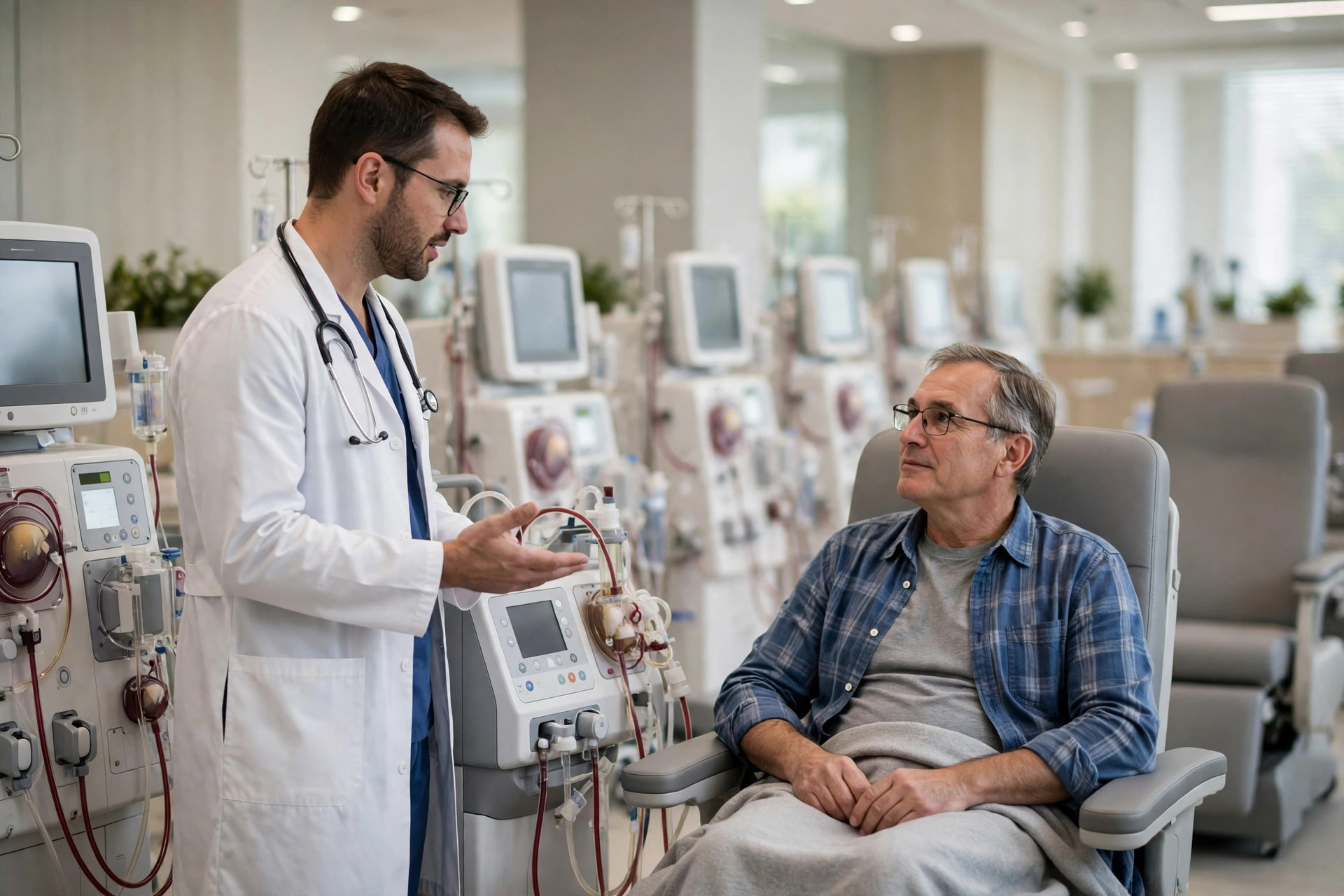
Kidney, bladder, prostate and genital conditions: chronic kidney disease and kidney failure, urinary infections and kidney stones, prostate enlargement, incontinence, and disorders of the male and female genital organs.
Chapter 14 spans codes N00–N99 in the FY2027 ICD-10-CM tabular list. This guide explains 63 of its most common codes — select a code for its official description, a plain-English explanation and a note on when the code is used.
Codes in this chapter
| Code | Official description | In plain words |
|---|---|---|
| N02.8 | Recurrent and persistent hematuria with other morphologic changes | Recurrent and persistent blood in the urine with other specified changes seen on kidney biopsy, historically used for many glomerular diseases including IgA nephropathy. |
| N02.B1 | Recurrent and persistent immunoglobulin A nephropathy with glomerular lesion | Primary IgA nephropathy is the commonest glomerular disease, in which IgA antibody deposits damage the kidney filters, often causing blood in the urine. |
| N04.9 | Nephrotic syndrome with unspecified morphologic changes | Nephrotic syndrome is heavy protein leakage through the kidney filters, causing low blood albumin, swelling and raised cholesterol; biopsy type unspecified. |
| N05.9 | Unspecified nephritic syndrome with unspecified morphologic changes | Nephritic syndrome is inflammation of the kidney filters causing blood in the urine, raised blood pressure and reduced kidney function; type unspecified. |
| N10 | Acute pyelonephritis | Acute pyelonephritis is a bacterial infection of the kidney itself, causing fever, loin pain and urinary symptoms. |
| N12 | Tubulo-interstitial nephritis, not specified as acute or chronic | Tubulo-interstitial nephritis is inflammation of the kidney's tubules and surrounding tissue, recorded without stating whether it is acute or chronic. |
| N13.2 | Hydronephrosis with renal and ureteral calculous obstruction | Hydronephrosis with blockage of the kidney and ureter by a stone: urine backs up and swells the kidney because a stone obstructs the ureter. |
| N13.30 | Unspecified hydronephrosis | Hydronephrosis is swelling of a kidney from urine building up behind a blockage; the cause is not specified here. |
| N14.11 | Contrast-induced nephropathy | Contrast-induced nephropathy is kidney injury occurring after iodinated contrast dye used for scans such as CT or angiography. |
| N17.0 | Acute kidney failure with tubular necrosis | Acute kidney failure with tubular necrosis: sudden kidney failure in which the kidney's tubule cells are damaged, often by low blood flow or toxins. |
| N17.9 | Acute kidney failure, unspecified | Acute kidney failure (acute kidney injury, AKI) is a sudden fall in kidney function over hours to days; the type is not specified here. |
| N18.1 | Chronic kidney disease, stage 1 | Chronic kidney disease stage 1: kidney damage (such as protein in the urine) with a normal filtration rate (GFR 90 or above). |
| N18.2 | Chronic kidney disease, stage 2 (mild) | Chronic kidney disease stage 2: kidney damage with a mildly reduced filtration rate (GFR 60–89). |
| N18.30 | Chronic kidney disease, stage 3 unspecified | Chronic kidney disease stage 3: a moderately reduced filtration rate (GFR 30–59), without the 3a/3b subdivision being recorded. |
| N18.31 | Chronic kidney disease, stage 3a | Chronic kidney disease stage 3a: a mildly-to-moderately reduced filtration rate (GFR 45–59). |
| N18.32 | Chronic kidney disease, stage 3b | Chronic kidney disease stage 3b: a moderately-to-severely reduced filtration rate (GFR 30–44). |
| N18.4 | Chronic kidney disease, stage 4 (severe) | Chronic kidney disease stage 4: a severely reduced filtration rate (GFR 15–29), one stage before kidney failure. |
| N18.5 | Chronic kidney disease, stage 5 | Chronic kidney disease stage 5: a filtration rate below 15, the most advanced stage before or approaching kidney failure. |
| N18.6 | End stage renal disease | End-stage renal disease (ESRD) is kidney failure requiring dialysis or transplantation to sustain life. |
| N18.9 | Chronic kidney disease, unspecified | Chronic kidney disease (CKD) is long-term loss of kidney function; the stage is not specified here. |
| N19 | Unspecified kidney failure | Kidney failure recorded without stating whether it is acute or chronic. |
| N20.0 | Calculus of kidney | A kidney stone (calculus) is a hard deposit of minerals that forms in the kidney and can cause severe loin pain if it moves. |
| N20.1 | Calculus of ureter | A stone (calculus) lodged in the ureter, the tube carrying urine from kidney to bladder, typically causing renal colic. |
| N20.9 | Urinary calculus, unspecified | A urinary calculus (stone) somewhere in the urinary tract; the exact site is not specified. |
| N23 | Unspecified renal colic | Renal colic is severe, wave-like loin-to-groin pain, usually from a stone moving down the ureter; cause unspecified here. |
| N25.0 | Renal osteodystrophy | Renal osteodystrophy is bone disease caused by the mineral and hormone disturbances of chronic kidney disease. |
| N25.1 | Nephrogenic diabetes insipidus | Nephrogenic diabetes insipidus is inability of the kidneys to respond to the water-saving hormone ADH, causing large volumes of dilute urine. |
| N25.81 | Secondary hyperparathyroidism of renal origin | Secondary hyperparathyroidism of kidney origin: the parathyroid glands overwork because of chronic kidney disease's mineral disturbances. |
| N28.1 | Cyst of kidney, acquired | An acquired cyst of the kidney is a fluid-filled sac in the kidney, usually a simple cyst found on a scan. |
| N28.9 | Disorder of kidney and ureter, unspecified | A disorder of the kidney or ureter recorded without further detail. |
| N30.00 | Acute cystitis without hematuria | Acute cystitis is a sudden bladder infection causing burning on urination and urgency, here without blood in the urine. |
| N30.01 | Acute cystitis with hematuria | Acute cystitis (bladder infection) in which blood is visible in the urine. |
| N30.90 | Cystitis, unspecified without hematuria | Cystitis is inflammation of the bladder, usually from infection; here without blood in the urine and without acuity stated. |
| N32.81 | Overactive bladder | Overactive bladder is a pattern of urgency to urinate, usually with frequency and night-time urination, sometimes with leakage. |
| N39.0 | Urinary tract infection, site not specified | A urinary tract infection (UTI) is a bacterial infection of the urinary system; the exact site is not specified here. |
| N39.3 | Stress incontinence (female) (male) | Stress incontinence is leakage of urine when pressure rises in the abdomen, such as coughing, sneezing or exercise. |
| N39.41 | Urge incontinence | Urge incontinence is leakage of urine that follows a sudden, hard-to-defer need to urinate. |
| N39.46 | Mixed incontinence | Mixed incontinence is urinary leakage with features of both stress and urge incontinence. |
| N40.0 | Benign prostatic hyperplasia without lower urinary tract symptoms | An enlarged prostate (benign prostatic enlargement) without lower urinary tract symptoms being recorded. |
| N40.1 | Benign prostatic hyperplasia with lower urinary tract symptoms | An enlarged prostate causing lower urinary tract symptoms such as slow stream, hesitancy, frequency and night-time urination. |
| N41.0 | Acute prostatitis | Acute prostatitis is a sudden bacterial infection and inflammation of the prostate gland, causing fever and urinary pain. |
| N41.9 | Inflammatory disease of prostate, unspecified | Inflammatory disease of the prostate (prostatitis) recorded without stating whether it is acute or chronic. |
| N45.1 | Epididymitis | Epididymitis is inflammation of the epididymis, the coiled tube behind the testicle, causing scrotal pain and swelling. |
| N47.1 | Phimosis | Phimosis is a tight foreskin that cannot be pulled back over the head of the penis. |
| N48.1 | Balanitis | Balanitis is inflammation of the head of the penis, causing soreness, redness and sometimes discharge. |
| N50.819 | Testicular pain, unspecified | Pain in the testicle, recorded as a finding without the side or cause being specified. |
| N52.9 | Male erectile dysfunction, unspecified | Erectile dysfunction is difficulty getting or keeping an erection firm enough for sex; cause not specified here. |
| N61.0 | Mastitis without abscess | Mastitis is inflammation of breast tissue, usually with infection during breastfeeding; here without an abscess. |
| N63.0 | Unspecified lump in unspecified breast | A lump in the breast whose side and position are not specified; most breast lumps are benign but need assessment. |
| N64.4 | Mastodynia | Mastodynia is pain in the breast, which is commonly hormonal and cyclical. |
| N73.9 | Female pelvic inflammatory disease, unspecified | Pelvic inflammatory disease (PID) is infection of the uterus, fallopian tubes or ovaries, usually sexually transmitted. |
| N76.0 | Acute vaginitis | Acute vaginitis is sudden inflammation of the vagina, usually from infection such as thrush or bacterial vaginosis. |
| N80.9 | Endometriosis, unspecified | Endometriosis is a condition in which tissue like the womb lining grows outside the uterus, causing pain and sometimes infertility. |
| N81.4 | Uterovaginal prolapse, unspecified | Uterovaginal prolapse is descent of the uterus and vaginal walls from their normal position; degree not specified. |
| N83.209 | Unspecified ovarian cyst, unspecified side | An ovarian cyst is a fluid-filled sac on an ovary; side and type not specified. Most are benign and resolve on their own. |
| N91.2 | Amenorrhea, unspecified | Amenorrhoea is the absence of menstrual periods; whether primary or secondary is not specified here. |
| N92.0 | Excessive and frequent menstruation with regular cycle | Excessive and frequent menstruation with a regular cycle: periods that are heavy, frequent, or both, coming regularly (menorrhagia). |
| N92.6 | Irregular menstruation, unspecified | Irregular menstruation means periods that vary unpredictably in timing or flow; pattern not specified here. |
| N93.9 | Abnormal uterine and vaginal bleeding, unspecified | Abnormal bleeding from the uterus or vagina that does not fit a normal period pattern; cause not specified. |
| N94.6 | Dysmenorrhea, unspecified | Dysmenorrhoea is painful periods, with cramping lower abdominal pain around menstruation; type not specified. |
| N95.0 | Postmenopausal bleeding | Postmenopausal bleeding is any vaginal bleeding occurring after the menopause and always needs assessment. |
| N95.1 | Menopausal and female climacteric states | Menopausal and female climacteric states cover the symptoms of the menopause transition, such as hot flushes and night sweats. |
| N97.9 | Female infertility, unspecified | Female infertility is difficulty conceiving after a period of trying; the cause is not specified here. |
This guide explains ICD-10-CM codes in plain language for patients, students and other readers. It is educational information only — not coding, billing or medical advice. The code recorded for any real encounter is assigned from the full clinical documentation by the treating team and qualified coders, and only they can decide which code fits a specific case.
Other chapters
- Chapter 1: Infectious & Parasitic Diseases
- Chapter 2: Neoplasms
- Chapter 3: Blood & Immune Disorders
- Chapter 4: Endocrine, Nutritional & Metabolic
- Chapter 5: Mental, Behavioral & Neurodevelopmental
- Chapter 6: Nervous System
- Chapter 7: Eye & Adnexa
- Chapter 8: Ear & Mastoid Process
- Chapter 9: Circulatory System
- Chapter 10: Respiratory System
- Chapter 11: Digestive System
- Chapter 12: Skin & Subcutaneous Tissue
- Chapter 13: Musculoskeletal & Connective Tissue
- Chapter 15: Pregnancy, Childbirth & Puerperium
- Chapter 16: Perinatal Period
- Chapter 17: Congenital & Genetic Disorders
- Chapter 18: Symptoms, Signs & Abnormal Findings
- Chapter 19: Injury & Poisoning
- Chapter 20: External Causes of Morbidity
- Chapter 21: Factors Influencing Health Status
- Chapter 22: Codes for Special Purposes